AnnaMaria
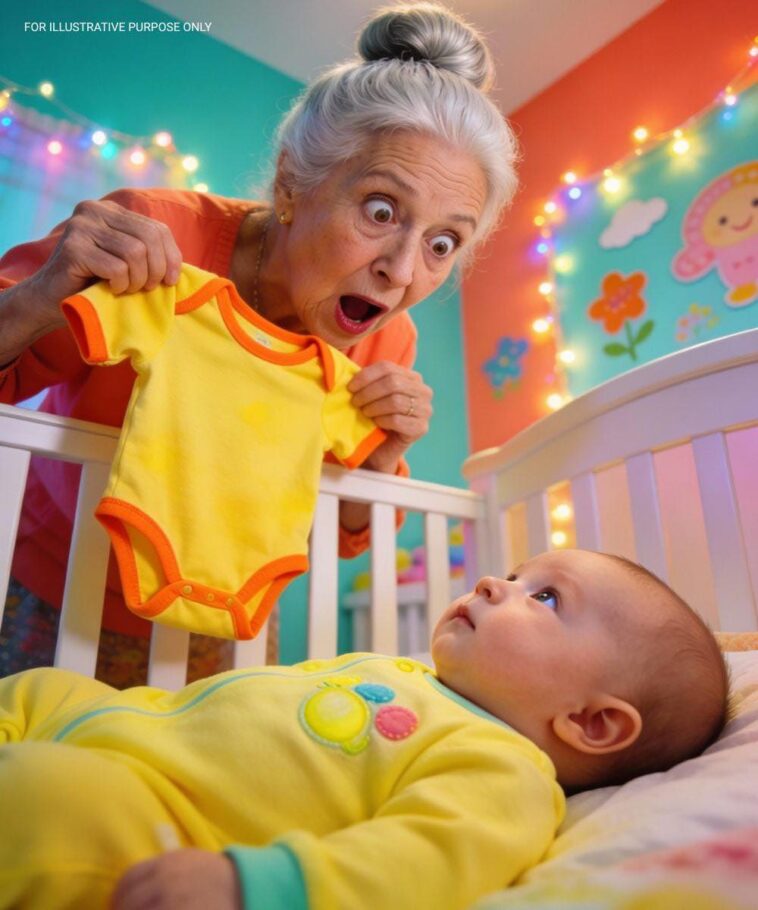
I will never forget that Saturday afternoon in Madrid.
My son and daughter-in-law asked me to watch their two-month-old baby while they went shopping. I said yes without hesitation. He was my first grandchild, and any moment with him felt like a gift.
When they arrived, he was sleeping peacefully in his stroller, wrapped in a pale-blue blanket. A quick goodbye. A soft click of the door.
And suddenly, it was just the two of us.
The Cry That Didn’t Sound Right
At first, everything felt normal.
I warmed a bottle. Adjusted the room temperature. Sat down on the sofa with him resting against my chest. But within minutes, he began to cry.
Not a hungry cry.
Not a sleepy cry.
This was different.
It was sharp, desperate, and unrelenting—the kind of cry that doesn’t fade when you soothe it. The kind that tightens your chest before your mind can catch up.
I rocked him gently. Sang the same lullabies I used to sing to my own children. The more I tried to calm him, the more rigid his tiny body became. His cries grew louder. More frantic.
Something was wrong.
Trusting the Instinct You Can’t Explain
I thought it might be gas. I placed him against my shoulder and tapped his back softly.
The crying intensified.
That’s when instinct took over.
I laid him down carefully and checked his diaper.
What I saw made my hands tremble.
His skin was angry red, raw, and visibly irritated—far worse than any diaper rash I’d ever seen. There was swelling. And worse… signs of bleeding from friction.
“My God…” I whispered, my heart racing.
The baby screamed, and that sound snapped me into motion.
The Fastest Decision I’ve Ever Made
I didn’t stop to call anyone.
I wrapped him in his blanket, grabbed my keys, and rushed outside. A taxi screeched to a halt as I waved frantically.
The drive felt endless.
Every traffic light. Every pause. Every second stretched too long.
I stroked his forehead, murmuring to him, trying to keep my voice steady even as fear roared inside my chest.
The driver glanced at the baby and didn’t need explanation.
“We’re almost there,” he said quietly, accelerating.
Inside the Emergency Room
At the emergency entrance of San Carlos Clinical Hospital, a nurse rushed toward me the moment she saw my face.
“It’s my grandson,” I said, breathless. “He won’t stop crying. I found something… please help him.”
They took him immediately.
Two pediatricians appeared within moments. I tried to explain what I’d seen, my words tumbling over each other. Then they asked me to wait outside.
The Longest Minutes of My Life
I paced the hallway.
Over and over.
Guilt crept in, irrational but heavy. Had I missed something earlier? Had I waited too long?
Finally, one of the doctors stepped out.
“Your grandson is stable,” he said calmly. “You did the right thing bringing him in so quickly.”
The First Answer — And the Relief
The cause was severe diaper-area irritation, made worse by a poorly fitting diaper and an allergic reaction to a new soap his parents had likely just started using.
What terrified me—what I couldn’t unsee—was inflamed skin with superficial bleeding from constant friction.
“It looks frightening,” the doctor explained, “but it’s not dangerous. Just extremely painful for a baby this small.”
Relief washed over me.
But it didn’t last.
“There’s Something Else We Need to Discuss”
When my son and daughter-in-law arrived, shaken and pale, the doctors reassured them. Allergic reactions happen—even to attentive parents.
We thought that was the end.
Then the doctor returned.
“There’s something else,” he said.
My stomach dropped.
During the examination, they had discovered a developing inguinal hernia—common in newborns, often unnoticed, but painful if ignored. It wasn’t an emergency yet. No surgery needed immediately. But it required close monitoring.
My daughter-in-law cried. My son stared at the floor.
“This is nobody’s fault,” the pediatrician said firmly. “The important thing is that he was brought in quickly. That made all the difference.”
Walking Out Changed
When we finally saw the baby again, he was sleeping peacefully. His skin treated. His pain eased.
We left the hospital close to midnight.
Madrid glistened under the streetlights. The cool air felt like a release after hours of tension. We talked quietly—about gentler soaps, better diapers, follow-up appointments.
And as my grandson slept in his mother’s arms, unaware of everything that had happened, one thought stayed with me:
He will never remember this night.
But it changed all of us.
There it is.