AnnaMaria
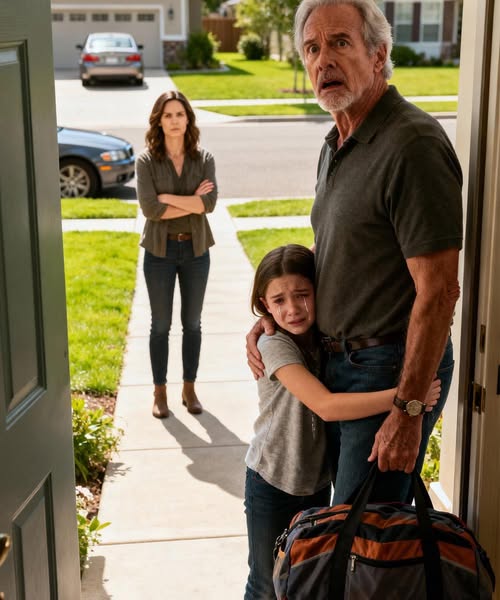
My late son’s wife dropped my granddaughter off with me “just for one day”—and then vanished. Nine years later, she returned, learned about the inheritance my son had left his child, and came with the police, accusing me of kidnapping.
But when I handed the judge an envelope, everything changed.
A Responsibility I Never Expected
My name is Frank Whitman, and for nine years I carried the responsibility my son’s wife abandoned.
After my son Daniel died in a multi-car crash, his widow Melissa Carter appeared at my door with our six-year-old granddaughter, Lily, and a single duffel bag. She hugged Lily tightly, kissed my cheek, and said:
“Just one day, Frank. I need to deal with paperwork. I’ll come back tomorrow.”
She never did.
Taking Control for Lily’s Sake
At first, I clung to hope. I called, sent messages, tried everything—but her phone was disconnected. Weeks became months. Eventually, I filed for temporary guardianship, then permanent, because Lily needed stability.
I enrolled her in school under my address, kept her medical care consistent, and protected every document in a fireproof box—including a sealed envelope Daniel had pressed into my hand before he died:
“If anything happens, don’t open it unless you have to.”
The Accusation
Nine years later, on an ordinary Tuesday, the doorbell rang.
Two police officers stood on my porch. Behind them, Melissa’s eyes were cold and focused. She pointed at me:
“That’s him. He stole my daughter.”
I tried to explain: “She left Lily with me. She disappeared.”
Melissa didn’t waver. The officers escorted me to the station, and Lily sobbed quietly in my brother’s car.
At the precinct, I slid my guardianship papers across the table. The detective studied them but warned:
“The complaint is still moving forward. She’s claiming these documents are forged.”
The Envelope That Changed Everything
By Friday, we were in family court. Melissa’s attorney painted me as a bitter old man seeking control. My lawyer asked a simple question:
“Is there anything else you’d like to submit, Mr. Whitman?”
I placed Daniel’s sealed envelope on the clerk’s table. Silence fell.
Inside were two notarized documents:
-
Temporary Care and Guardianship Authorization Melissa had signed after the crash, granting me legal authority.
-
Daniel’s estate attorney’s letter, outlining the trust he had created for Lily.
Daniel’s note explained:
“If Melissa abandons Lily for more than ninety days without contact, she forfeits any claim to manage the trust or receive funds on Lily’s behalf.”
The judge called a recess, summoned Melissa, and reviewed the documents. By the end, the kidnapping claim was dismissed outright.
Holding the Line
Melissa could petition for visitation—but custody and the trust remained under strict oversight. Any attempt to access Lily’s inheritance improperly would trigger immediate court action.
When I finally answered her panicked call, I asked simply:
“Where were you for nine years?”
She admitted fear, panic, and financial struggles. “Then I heard Daniel left something for Lily. I thought… I could fix everything.”
I reminded her firmly:
“We had an understanding—the one you signed.”
Rebuilding With Boundaries
The weeks that followed were painstaking: hearings, paperwork, supervised visitations. Lily learned she had choices and could assert her own feelings safely. Melissa had to earn trust through action, not words.
The trust remained intact, protecting Lily’s future. And slowly, step by step, Lily could enjoy childhood again—math quizzes, chocolate milk, and milestones like her first high school acceptance letter, taped proudly to the fridge.
In that moment, I understood justice:
Not drama. Not revenge. Just a child who feels safe enough to plan for her future.