AnnaMaria
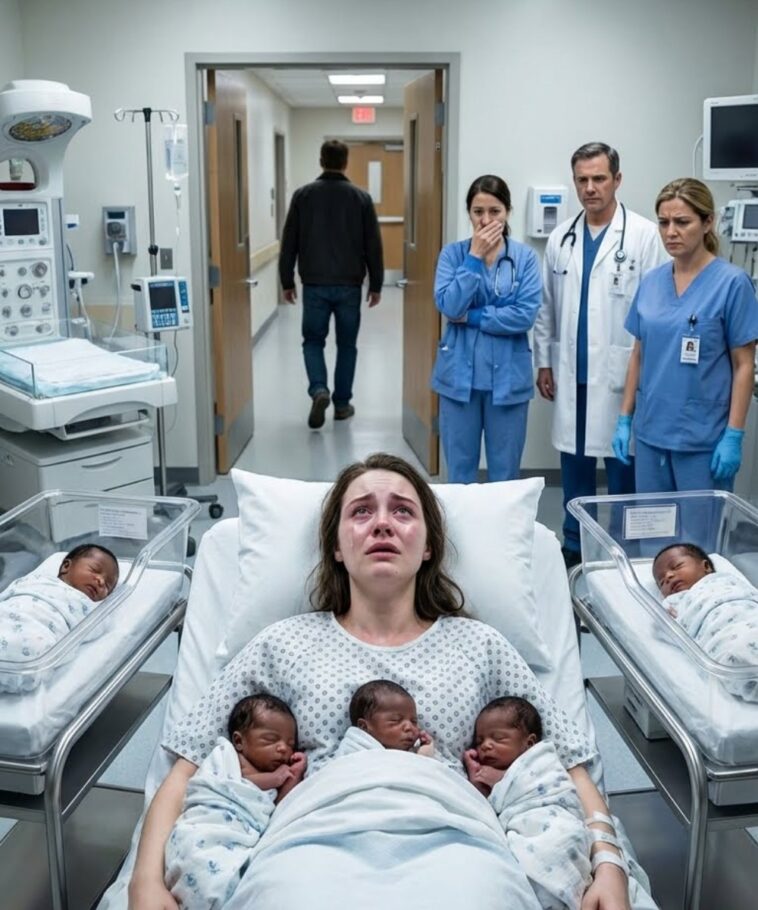
I never imagined that the most important day of my life would begin with a scream.
My name is María Fernández. Thirty years ago, in a public hospital in Seville, I gave birth to five babies.
The labor was endless. Pain blurred into fear, fear into exhaustion. Before I lost consciousness, I remember one clear thought: please, let them be alive.
When I woke up, the room was unnaturally quiet. A soft machine beeped somewhere behind me. Footsteps echoed faintly in the corridor.
Then I saw them.
Five cribs.
Perfectly aligned.
Five tiny bodies wrapped in identical white blankets.
They were impossibly small. Fragile. Beautiful.
And every single one of them was Black.
For a moment, my mind simply refused to function. Confusion rose — but it was immediately drowned by love so fierce it hurt. I reached out, touching tiny fingers, whispering promises I didn’t yet know how I would keep.
Before I could ask a single question, the door flew open.
The Moment Everything Collapsed
My husband, Javier Morales, stormed into the room.
He looked at one crib.
Then another.
Then all five.
The color drained from his face. Shock hardened into rage. His jaw tightened, his eyes burning.
“These aren’t my children!” he shouted. “You’ve betrayed me!”
The room froze.
Nurses rushed in, speaking quickly — about tests, about medical explanations, about time and verification. They tried to calm him, to slow the moment down.
Javier didn’t listen.
He pointed at me like I was something contaminated.
“I will not carry this shame,” he said coldly.
And then he turned around and walked out.
No questions.
No proof.
No second glance.
The door closed with a soft click that echoed louder than his scream.
I was left there — alone — with five newborns and a silence so heavy it felt suffocating.
Left With Five Lives and No Answers
The days that followed were worse.
Whispers followed me through the ward. Awkward looks. Rumors spreading faster than facts. Some believed I had been unfaithful. Others suggested a hospital mistake.
Javier never came back.
He changed his number. Moved away. Erased our life together as if it had never existed.
I signed every document myself. I named my children — Daniel, Samuel, Lucía, Andrés, and Raquel. I left the hospital with a borrowed stroller, five fragile lives, and a heart split clean in two.
That first night at home, surrounded by five sleeping babies, I made a promise:
I would find the truth one day.
Not to punish him.
Not for revenge.
But so my children would never grow up believing they were a mistake.
Survival Is Not Heroic — It’s Necessary
Raising five children alone wasn’t heroic.
It was survival.
I cleaned houses in the mornings. Sewed at night until my fingers ached. Some days, dinner was nothing more than rice and bread.
But there was always warmth.
Always laughter.
Always love.
As they grew, the questions came.
“Mom, why do people stare at us?”
“Why don’t we look like you?”
“Where is our father?”
I told them the truth as far as I knew it. That he left without listening. That confusion destroyed our family. I never spoke with hatred — even though it lived quietly inside me.
The Truth Science Finally Revealed
When they turned eighteen, we decided together to do DNA tests.
The results confirmed what I had always known in my heart: all five were my biological children.
But something still didn’t add up.
The geneticist hesitated. Then suggested deeper analysis.
That’s when the real answer appeared.
I carried a rare hereditary genetic mutation, dormant for generations, capable of producing children with African features despite my own appearance.
It was scientific.
Documented.
Undeniable.
I cried — not from victory, but from grief for everything that ignorance and pride had destroyed.
Thirty Years Later, He Came Back
Javier never knew the truth.
Until thirty years later, when he stood in front of us again.
Gray-haired. Expensive suit. Fear behind his eyes.
He was sick. He needed a compatible transplant. A private investigator led him back to us.
He asked to meet. I agreed — not for him, but for my children.
We sat facing each other. His eyes moved over their faces, still searching for doubt.
Daniel placed the documents on the table. DNA results. Medical reports. Everything.
Javier went pale.
“So…” he whispered, “they were mine?”
No one answered immediately.
The silence was heavier than any accusation.
The Answer He Wasn’t Ready For
Javier cried. He begged for forgiveness. He spoke of fear, of social pressure, of confusion.
My children listened quietly.
Not with anger.
Not with revenge.
With clarity.
Finally, Lucía spoke.
“We don’t need your apologies to keep living,” she said calmly. “We already did that for thirty years without you.”
Andrés followed.
“We’re not here to judge you,” he said. “But we’re not here to save you either.”
The transplant was his problem. Not an emotional debt they owed him.
When Javier looked at me, searching for something — forgiveness, perhaps — I answered honestly:
“I didn’t hate you. But I didn’t save you a place either.”
He left smaller than he arrived.
We stayed — whole.
What Remains After the Truth
That meeting didn’t break us. It healed something that had been open far too long.
Today, my five children are strong adults. Proud of who they are. Aware of where they come from.
They didn’t grow up with a father.
But they grew up with truth, hard work, and love.
And I learned something important:
Dignity isn’t begged for. It’s built — day by day.
Sometimes, decisions made in seconds echo for a lifetime.
Just that.