AnnaMaria
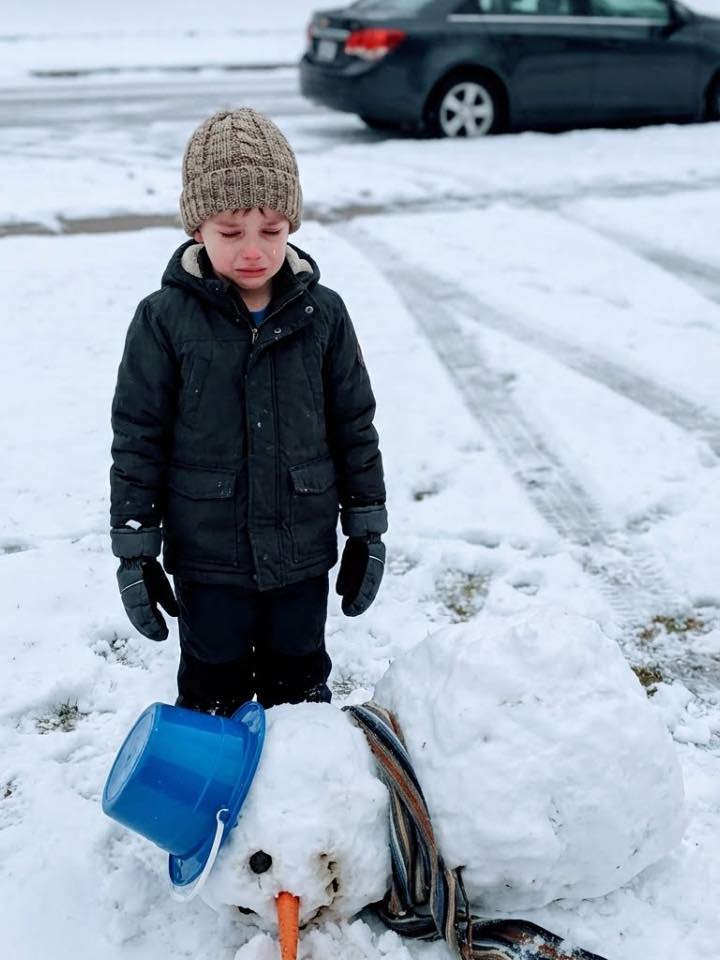
That winter, my eight-year-old son claimed a small corner of our front yard as his entire world. Each afternoon after school, he would drop his backpack by the door, pull on his boots, and race outside with the urgency only children possess. His cheeks flushed red from the cold as he knelt in the snow, shaping it carefully, patiently—as if each snowman mattered, because to him, it did.
Every Snowman Had a Story
Each snowman had a name, a personality, and a story. Every one wore the same red scarf, wrapped just right, like a final touch that made them real. From the kitchen window, I watched him work, and in those moments, the world felt softer, gentler. His laughter carried across the yard, and for a little while, nothing else mattered.
Until the tire tracks appeared.
When Indifference Hits Hard
Our neighbor had developed a habit—small to him, devastating to my son. Every time he drove into his driveway, he would cut across that corner of our lawn. Not once. Not by accident. Routinely. And every time, my son’s carefully built snowmen were flattened into shapeless piles.
The first time, I brushed it off. The second, I politely asked him to stop.
“It’s just snow,” he said, shrugging. “It’ll melt anyway.”
I tried again. I explained that my son built them every day, that it mattered to him, that the repeated destruction hurt.
Still, nothing changed.
The Silent Pain
After that, my son came inside quieter. He didn’t cry—not at first. He would sit at the table, boots on, hands wrapped tightly around a mug of hot chocolate, and tell me another snowman had been destroyed. Sometimes his voice wobbled; sometimes he just stared at the floor.
I suggested moving them closer to the house, somewhere safer. Each time, he shook his head.
“That spot is where they belong,” he said simply.
Even at eight years old, he understood something profound: he wasn’t doing anything wrong. That made the repeated disrespect sting more than the loss itself.
I spoke to the neighbor again—just asked, didn’t demand, for basic respect. Nothing changed.
A Child’s Quiet Resolve
One afternoon, my son came inside differently. Calm. Thoughtful. Resolved.
He told me another snowman had been destroyed. Then he looked up and said, “You don’t have to talk to him anymore.”
I asked what he meant.
“I have a plan,” he said. “It won’t hurt anyone. I promise.”
I assumed it was some harmless boundary marker, something childlike—but the next day proved me wrong.
The Snowman Boundary
From my window, I watched him build a snowman bigger than the others—wide, solid, and carefully placed at the edge of the lawn where the grass met the street. I noticed flashes of red beneath the snow, but I didn’t think much of it.
That evening, the quiet shattered. A loud crash. A shout. The unmistakable roar of rushing water.
We ran to the window. Our neighbor’s car sat crooked near the curb. A fire hydrant—once hidden beneath the snow—had been struck, sending water blasting into the air and flooding the street. The snowman had served its purpose: marking a boundary that should never have been crossed.
City crews arrived, reports were filed, and insurance claims were processed. No one was injured, but the message was unmistakable.
Lessons in Respect and Safety
From that day forward, the tire tracks never returned. My son kept building snowmen for the rest of the winter. Some melted, some leaned, some surrendered quietly to the wind—but none were crushed by careless wheels again.
Every time I looked at that corner of our yard, I realized something important:
-
Boundaries don’t always need anger.
-
Sometimes, they just need to be clearly placed—and respected.
-
Persistence, creativity, and quiet resolve can teach even adults a lesson in responsibility and neighborhood respect.
This small winter lesson extends beyond snowmen. It’s about property protection, safety, and personal boundaries—whether in your home, yard, or life. Insurance, legal protections, and simple communication all matter, but so does teaching children the value of standing their ground thoughtfully.
There it is.