AnnaMaria
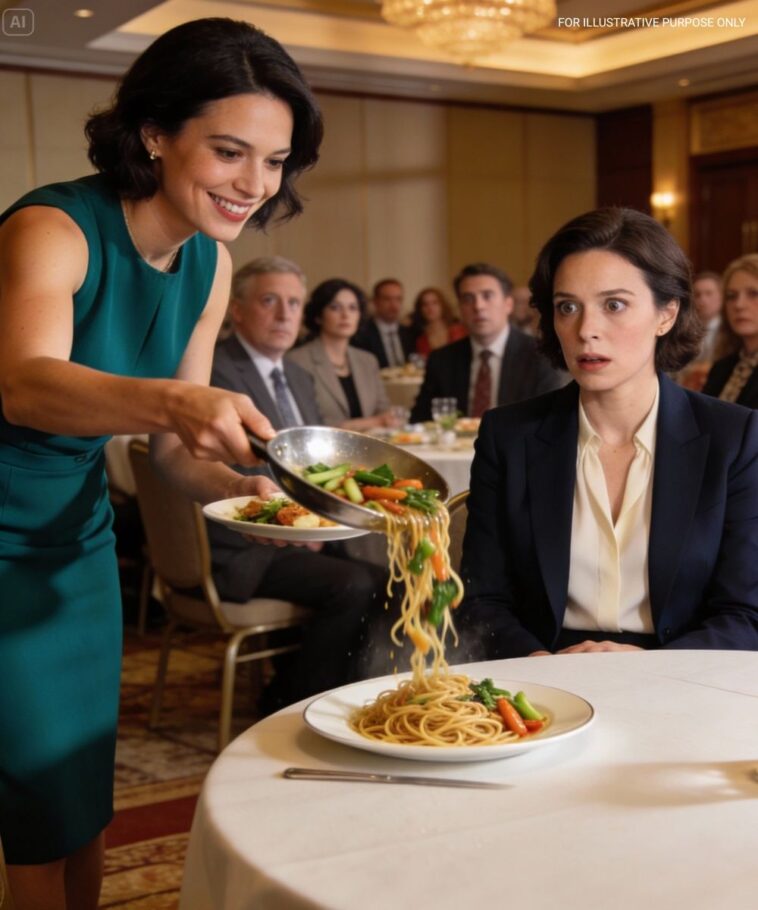
The hotel ballroom buzzed with laughter, clinking glasses, and nostalgia—more performative than real. It was my high school reunion, twenty years later. I hadn’t planned to attend, but something quiet inside me pushed me to go.
I slipped in unnoticed. Plain suit. Calm posture. No effort to stand out.
Then I saw her.
Valeria Montes—tall, confident, designer clothes, surrounded by people hanging on her every word. She spoke of investments, travel, and influential connections. Whether she truly had wealth or just wanted to project it didn’t matter. She was performing flawlessly.
Valeria had tormented me in school. Shoving me in hallways, hiding my notebooks, mocking my worn clothes. One memory still burned: the day she knocked my lunch tray onto me and announced that I “didn’t deserve to eat with normal people.” The cafeteria erupted in laughter. I laughed too—out of shame.
Now, she approached, oblivious to me. She brushed past and shoved her nearly full plate onto my jacket.
“Oh—sorry,” she said, without sincerity. “You should be more careful. Not everyone’s used to places like this.”
Laughter followed.
I took a breath, met her eyes, and calmly placed a card onto her sauce-stained plate.
“Read my name. You have thirty seconds.”
Annoyed, she picked it up. Her smile faltered. The chatter softened and then stopped.
She read it once. Then again. Her fingers trembled slightly.
“Alejandro Ruiz?” she whispered. “That… Alejandro?”
I nodded. The name she had mocked for years now stood between us.
“You mean… the nobody? The poor kid in the back row?”
“Yes,” I said evenly.
The card showed more than my name. My role—CEO of a financial consulting firm. My firm had recently acquired the company where Valeria held a minor stake.
Her face drained.
“This isn’t real,” she said. “It can’t be you.”
“It’s not a joke,” I replied. “And it’s not revenge. It’s just time.”
“You know what’s ironic?” I added. “I didn’t come to embarrass you. I came to see whether the past still hurt. Now I know.”
I walked away. Silence filled the room.
The story didn’t end there.
A week later, Valeria requested an urgent meeting. No flashy outfit. No confidence in her voice. She apologized—awkwardly, imperfectly, honestly. She admitted she had been cruel and never considered the impact of her actions.
“I don’t expect forgiveness,” she said. “I just needed to say it.”
“I don’t owe you forgiveness,” I replied. “But I acknowledge your words.”
The meeting ended without promises. Professionally, things continued as usual. Personally, something closed—not because she fell, but because I was no longer beneath her.
Sometimes, the greatest victory isn’t humiliating someone who hurt you. It’s proving—quietly—that you survived, grew stronger, and no longer carry the weight they gave you.
If this story reminds you of someone from your past, a wound that still lingers, or a moment that shaped you, share it in the comments.
Do you believe in second chances—or that time eventually puts everyone where they belong?