AnnaMaria
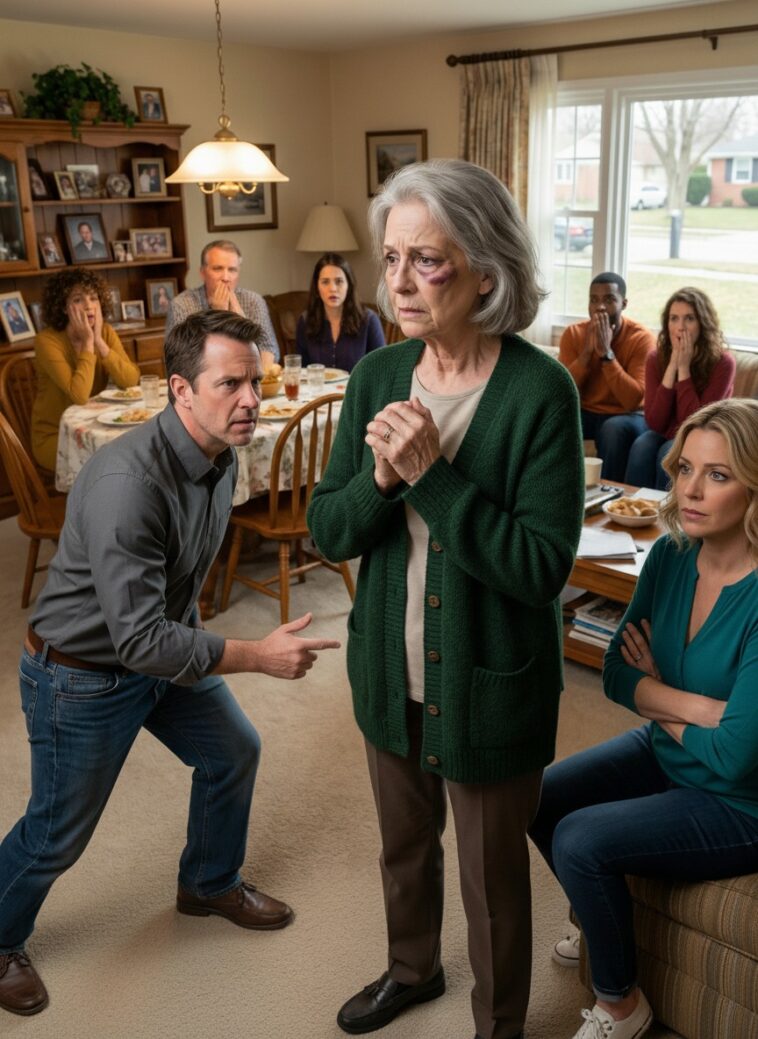
I walked into the room on my seventieth birthday with a dark bruise beneath my eye, and the laughter vanished instantly. Someone murmured, “What happened?” But before I could answer, my eldest son spoke.
“My wife,” he said flatly. “She taught her lesson.”
Karen, his wife, didn’t argue—she smiled. And then my younger son, Daniel, stepped forward, his calm voice slicing through the tense silence.
“If you’re going to tell the truth,” he said, eyes locked on Mark, “tell all of it. You didn’t ‘teach her a lesson.’ You assaulted her. And I’ve already called the police.”
The room collapsed into chaos. Karen tried to argue, Mark turned furious, but Daniel stayed steady. “I saw the security footage, Mark. From Mom’s apartment hallway. You and your wife showed up uninvited. She hit her. Hard. More than once. It’s all backed up.”
The officers arrived soon after. The cake sat untouched, melted candles dripping wax. Saying yes to being a victim felt strange, almost foreign. But the evidence spoke louder than anyone’s words. Karen was escorted out, panicked. Mark avoided my gaze entirely.
Daniel drove me home afterward. In the quiet evening air, he said simply, “I’m sorry it took me so long. But it stops now.”
For the first time in years, I felt safe. The following days were heavy with calls, opinions, and sides being taken. Some called me brave; I just felt exhausted—but lighter.
That evening, Daniel brought a small cake. No candles. Just frosting and a card: You deserved better. Always.
It struck me how many years I’d spent teaching my children to be strong without learning to protect myself. Love doesn’t require silence. Family doesn’t excuse harm. Respect isn’t earned by enduring pain.
This isn’t a story for pity. It’s a story about boundaries, courage, and realizing it’s never too late to stand up for yourself.
What would you have done in that room? Should family loyalty ever outweigh accountability?
Sometimes, the hardest truths are the ones that finally set us free.