AnnaMaria
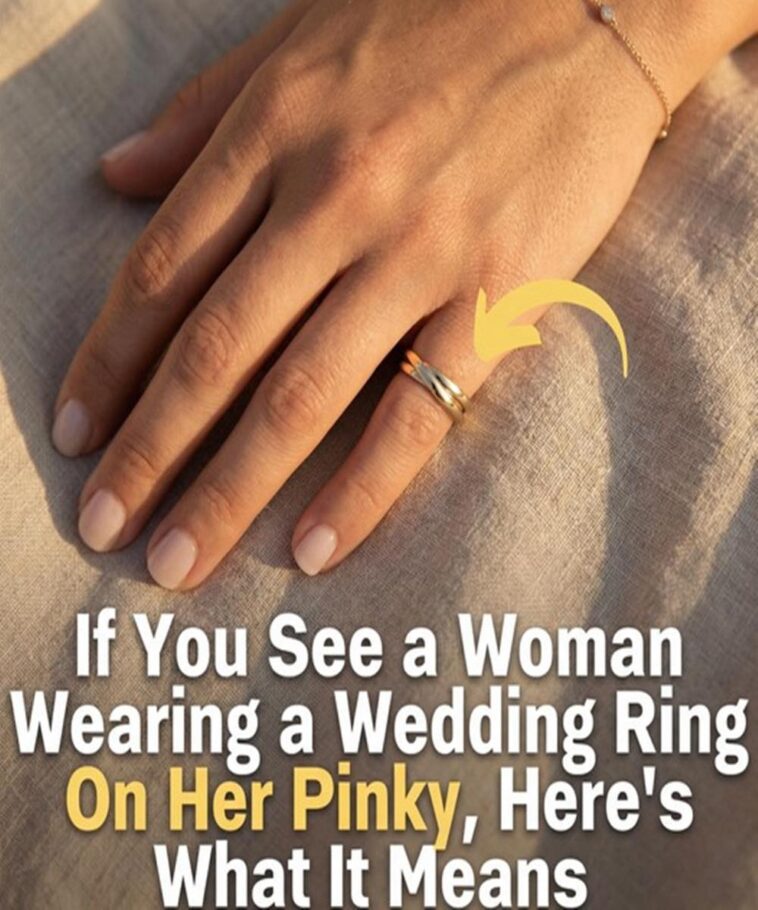
For generations, rings have carried deep emotional, cultural, and even legal meaning. They have symbolized love, unity, commitment, financial security, and lifelong partnership—most famously when worn on the fourth finger of the left hand. That tradition dates back to ancient beliefs about a special vein, the vena amoris, believed to connect that finger directly to the heart.
But culture evolves. So do relationships. And so does the meaning of jewelry.
Today, when you notice a woman wearing a ring—sometimes even a wedding-style band—on her pinky finger, it is rarely accidental. In most cases, it carries a deliberate and deeply personal message, one that reflects modern values, shifting social norms, and a redefinition of what commitment truly means.
This small styling choice often speaks volumes.
The Traditional Meaning of Rings—and Why It’s Changing
Historically, rings have functioned as public declarations. Engagement rings signaled intent. Wedding rings signaled marital status. In many cultures, they also carried legal and financial implications, especially for women whose economic security was once tied directly to marriage.
For centuries, a ring on the ring finger meant:
-
A formal union
-
Emotional exclusivity
-
Social legitimacy
-
Shared finances and legal protection
But as women gained greater financial independence, legal rights, and social autonomy, the symbolism surrounding rings began to shift.
Today, marriage is no longer the sole marker of stability, success, or fulfillment. Women increasingly define those concepts on their own terms—through careers, personal achievements, wellness, and self-determination.
As a result, jewelry has followed suit.
Why the Pinky Finger Holds Special Significance
The pinky finger has never been associated with marital obligation. That alone makes it powerful.
Wearing a ring on the pinky creates an intentional separation from traditional romantic symbolism. It signals that the meaning of the ring is self-defined rather than socially assigned.
For many women, the pinky finger represents:
-
Personal authority
-
Individual identity
-
Boundaries
-
Self-respect
Because it is the smallest finger, the pinky does not dominate the hand visually—but it is always visible. This creates a subtle but consistent reminder of intention, whether that intention is confidence, independence, or personal growth.
Pinky Rings as a Symbol of Self-Commitment
One of the most common modern interpretations of a pinky ring is commitment to oneself.
Rather than symbolizing devotion to a partner, a pinky ring often represents:
-
Choosing oneself after loss or divorce
-
Prioritizing mental and emotional health
-
Celebrating independence after a major life transition
-
Honoring personal boundaries and values
In this sense, the ring functions much like a wedding band—but the commitment is internal.
For women who have spent years prioritizing others—partners, children, employers, or family expectations—a pinky ring can serve as a quiet declaration of self-worth.
It says: I choose myself.
Life Milestones That Inspire Pinky Ring Choices
Many women begin wearing pinky rings after pivotal moments, including:
-
Completing higher education or professional certifications
-
Achieving financial independence
-
Recovering from illness or emotional burnout
-
Leaving unhealthy relationships
-
Entering a new stage of adulthood or retirement
These rings often mark personal victories that may not be publicly celebrated but carry immense private meaning.
In contrast to engagement or wedding rings—often gifted or chosen jointly—pinky rings are typically self-purchased. That alone changes the dynamic. The decision is autonomous, intentional, and reflective.
The Role of Independence and Financial Autonomy
There is also a practical layer to this symbolism.
As women gain greater control over finances, insurance decisions, estate planning, and long-term investments, traditional markers of “security” have changed. Marriage is no longer the primary pathway to:
-
Health insurance coverage
-
Property ownership
-
Retirement planning
-
Legal protection
A pinky ring, in this context, can subtly reflect financial independence and self-sufficiency. It may signify that stability comes from careful planning, professional success, and informed financial decisions—not marital status alone.
In a world shaped by contracts, assets, and personal liability, the pinky ring becomes a visual shorthand for autonomy.
Cultural and Historical Meanings of Pinky Rings
Pinky rings are not a modern invention.
Historically, they have been worn by:
-
Aristocrats as status symbols
-
Professionals to signify authority
-
Artists and creatives as expressions of individuality
-
Families passing down signet rings through generations
In some cultures, pinky rings were associated with heritage, legacy, or lineage rather than romance.
What has changed today is the intent behind the choice. Modern wearers are less bound by tradition and more focused on personal meaning.
Fashion Meets Identity in Modern Jewelry Choices
From a style perspective, pinky rings have gained popularity due to their versatility.
They range from:
-
Minimalist gold or silver bands
-
Rings set with diamonds or gemstones
-
Engraved bands with dates or affirmations
-
Bold, sculptural statement pieces
But while fashion trends fluctuate, the underlying message often remains consistent: this ring is worn by choice, not expectation.
Many women intentionally choose designs similar to wedding bands to reclaim the symbolism—suggesting that commitment doesn’t require a partner to be valid.
What a Pinky Ring Is Not Meant to Signal
It’s important to clarify what pinky rings usually do not mean.
They are not:
-
A rejection of love or partnership
-
A statement against marriage
-
A sign of emotional unavailability
Instead, they represent agency.
A woman wearing a ring on her pinky is not signaling what she lacks—but what she has already claimed.
Why This Symbol Resonates in Today’s World
Modern life places immense pressure on women to meet competing expectations:
-
Career success
-
Emotional availability
-
Family responsibilities
-
Physical appearance
-
Relationship status
A pinky ring quietly pushes back against those pressures.
It offers a reminder that worth is not conditional—not on age, marital status, income level, or external approval.
In an era shaped by wellness culture, legal awareness, financial planning, and personal growth, the symbolism feels especially relevant.
The Deeper Message Behind the Smallest Finger
Ultimately, the power of a pinky ring lies in its subtlety.
It doesn’t demand explanation.
It doesn’t seek validation.
It doesn’t follow rigid rules.
It simply exists—visible, intentional, and personal.
For many women, that makes it one of the most meaningful pieces of jewelry they own.
And sometimes, the strongest commitments are the ones made quietly—to oneself, to one’s future, and to living authentically.
There it is.