AnnaMaria
A Quiet Sentence That Changed Everything
It began with a sentence so soft I almost missed it.
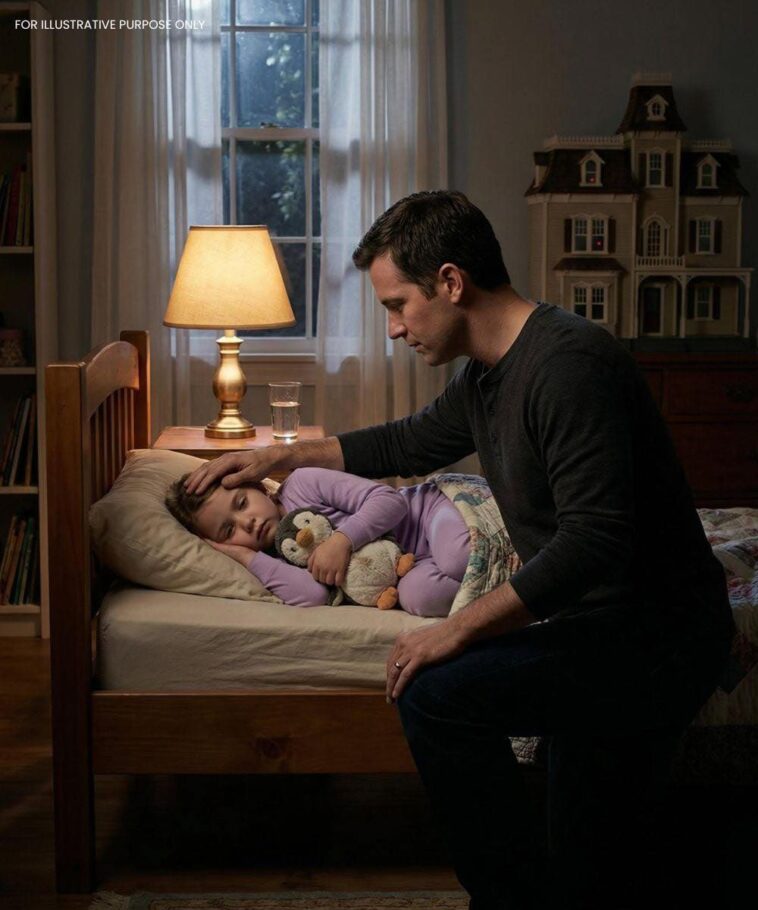
“Daddy… there’s a red light behind my dollhouse.”
Parents hear strange observations from young children all the time. Imaginary noises. Shadows that feel alive. Ordinary objects transformed by an overtired imagination. After a long day of work, stress from deadlines, financial responsibilities, and the constant mental load that comes with providing stability and security for a family, it would have been easy to dismiss it.
But something about the way she said it stopped me.
There was no panic in her voice. No drama. Just a controlled, careful whisper, as if she believed the thing she’d noticed might hear her talking about it.
That moment—small, ordinary, almost forgettable—became the dividing line between the life I thought we were living and the one we were actually in.
The Subtle Warning Most Adults Would Ignore
My daughter Emma was six years old. She was curled up in bed, clutching her stuffed penguin, fingers wrapped tightly around my sleeve the way they used to be during thunderstorms.
“It blinks when it’s dark,” she added quietly.
That detail mattered.
Children invent monsters, but they don’t usually invent patterns. Blinking. Timing. Consistency. Those are the details adults learn to pay attention to when something isn’t right—especially adults who work in professions where personal safety, legal liability, and risk assessment are daily concerns.
I followed her gaze to the corner of her room. The dollhouse sat beneath the window, angled toward the bed. It was an old Victorian-style piece, more heirloom than toy, with chipped paint and tiny shutters. It had been in Sarah’s family for decades.
At first glance, nothing looked unusual.
Then I saw it.
A faint red dot pulsing steadily in the narrow space between the dollhouse and the wall.
When Parental Instinct Overrides Logic
Your body reacts before your brain does.
My stomach tightened. My heartbeat shifted. That quiet internal alarm—the one tied to survival, protection, and responsibility—went off all at once.
I forced myself to stay calm.
“It’s probably nothing,” I said lightly, defaulting to the same reassurance every parent uses when they’re unsure. “Maybe a reflection. Or a toy light.”
Emma didn’t look convinced.
“Can you check?” she asked. “I don’t like it.”
Neither did I.
I turned it into a game—because sometimes the safest thing you can give a child is normalcy while you figure out how serious the threat actually is.
The Discovery That No Parent Is Prepared For
When I moved the dollhouse aside, the truth revealed itself immediately.
A small black device, roughly the size of my thumb, was screwed directly into the baseboard. A lens. A red LED. Cleanly installed. Carefully hidden.
And pointed straight at my daughter’s bed.
This wasn’t a cheap gadget. This wasn’t a novelty device. In my professional life, I’d seen hidden surveillance equipment before—cheap nanny cams disguised as clocks or baby monitors, often used in domestic disputes or insurance-related legal cases.
This was different.
This was deliberate. High-end. Installed by someone who knew exactly what they were doing.
The Moment You Choose What Truth a Child Can Carry
Emma shifted behind me.
“What is it, Daddy?”
In that moment, honesty would have done more harm than good. Children don’t need the full weight of adult fear, legal complexity, or criminal intent. They need safety—and reassurance that the adults in their lives are capable of handling what they can’t.
“Old wiring,” I said calmly. “Leftover from renovations. Nothing to worry about.”
She didn’t fully believe me, but she trusted me.
And that trust mattered more than anything else.
I moved her to the guest room “temporarily,” framing it as extra safety while I checked things properly. She accepted it, joking about ghosts and monsters. I played along, because fear grows in silence.
The moment I was alone, the room felt different.
Understanding the Severity of the Threat
In the dark, the red light felt brighter. More alive.
Up close, the device confirmed my worst suspicions. No visible antenna. No active wireless signal. This camera wasn’t transmitting footage live.
It was recording locally.
Which meant someone planned to return.
At that point, the situation crossed from unsettling to dangerous. This was no longer about privacy—it was about criminal intent, child safety, and potential felony charges.
I documented everything. Photos. Placement. Angles. Timestamps. Evidence preservation matters, especially when legal proceedings and criminal investigations may follow.
Then I called my wife.
When the People You Trust Become Suspects
Sarah was calm until I asked the question.
“Did you put a camera in Emma’s room?”
The silence on the line told me everything.
She came home immediately. When she saw the device, the color drained from her face.
“This isn’t cheap,” she said. “This is professional.”
Her first instinct was the right one.
“We call the police.”
But timing matters.
If someone installed this camera, and it was recording locally, they would return for the footage. And if we alerted authorities too soon, we risked losing the person responsible—and possibly never understanding the full scope of what had been happening inside our home.
We made the harder decision: wait, observe, document.
Security Systems Don’t Lie
We reviewed our home security logs. Entry codes. Time stamps. Video footage.
Most of it was normal—until it wasn’t.
Every Friday. Between 2:00 and 3:00 p.m. A door code ending in 7-3.
Sarah’s face went pale.
“That’s Victoria’s old code.”
Victoria was family. Trusted. Familiar. Someone who had been inside our home countless times without question. The kind of person no one ever suspects—until they have to.
The front door camera confirmed it.
There she was. Calm. Confident. Letting herself in like she belonged there.
She went straight upstairs.
Straight to Emma’s room.
When the Truth Rewrites Your Memory
We watched weeks of footage.
Fifteen minutes at a time. Every Friday. Always focused. Always searching.
Then Sarah said something that made everything click.
“The dollhouse,” she whispered. “Victoria gave it to Emma.”
Suddenly, the way it had been positioned mattered. The angle. The placement. The insistence that it face the bed.
The dollhouse wasn’t a gift.
It was camouflage.
The Evidence No One Expected
The next morning, Emma went to stay with my brother—framed as a fun sleepover to maintain routine and emotional safety.
Then I opened the camera casing.
Inside was a microSD card.
Weeks of footage.
Victoria wasn’t watching Emma the way a caregiver watches a child. She was searching. Rushing. Methodical.
In one clip, her voice carried clearly.
“I still haven’t found it… it has to be here… the girl must have it.”
The girl.
That’s when memory surfaced—the kind that feels harmless until it isn’t.
The Object Worth Risking Everything For
The locket.
Sarah’s father, Edward, had given Emma a small silver heart necklace before he passed away. When the chain broke, it went into Sarah’s jewelry box to be repaired.
We never questioned it again.
Until now.
Inside the locket was another microSD card.
Suddenly, the stakes weren’t just emotional. They were legal, financial, and potentially tied to corporate liability, sensitive data, or criminal evidence.
That’s when the front door opened.
The Confrontation and the Consequences
Victoria didn’t deny it.
She didn’t panic.
She laughed.
The truth spilled out quickly—about what she was trying to recover, what she believed Edward had hidden, and how far she was willing to go to get it.
Sirens arrived before things escalated further.
Law enforcement took custody of everything: the camera, the footage, the logs, the hidden data.
This wasn’t a misunderstanding.
This was a crime.
What We Told Our Daughter
Afterward, the house felt empty in a way it never had before.
Sarah sat at the kitchen table, shaking.
“How do we tell her?” she asked.
You don’t give children the full horror of adult betrayal. You give them the truth they can carry.
We told Emma she did the right thing. That noticing something strange and speaking up protected her. That trusting her instincts mattered.
When she came home, she asked one final question.
“Where’s the dollhouse?”
“We moved it,” Sarah said gently.
Emma nodded. “It always felt like it was watching me.”
That night, there were no blinking lights. No hidden lenses. No quiet threats disguised as normalcy.
Just a child sleeping safely in her bed.
All because she noticed one small red light—and trusted us enough to whisper about it.
There it is.