AnnaMaria
A Mother Who Believed Sacrifice Was Silent
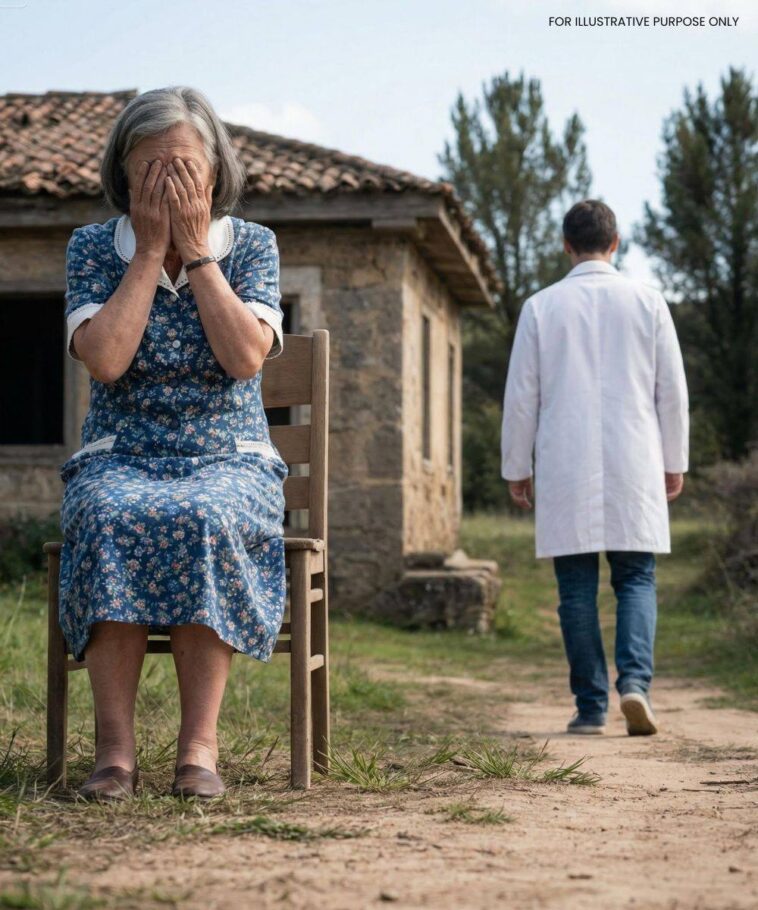
Doña Consuelo Reyes was seventy years old, blind, and shaped by a lifetime where motherhood meant giving without ever expecting to be repaid. She had lost her sight gradually, quietly, the way she lost most things—by putting someone else first.
For decades, she washed clothes by hand in cold water, leaning over a concrete basin, her fingers raw and cracked. Each bundle earned her a few pesos. Each coin went toward one purpose: her son’s future. Tuition. Books. Transportation. The dream that education would lift him beyond the limits that had confined her.
She never learned to read. She never owned a bank account. She trusted her son.
So when the phone trembled in her hand that afternoon, she assumed it was a routine call. Maybe Mauricio needed a document. Maybe he was checking in.
Instead, his voice arrived clear, controlled, and absolute.
“I already sold the land, Mom. You have three days to leave.”
The land. The house. The only place she had ever known as home.
Her throat tightened, breath shallow.
“What are you saying, my son? That land is our home. I raised you there. I washed clothes there to pay for your school.”
“It’s not yours anymore,” Mauricio replied, irritation edging his words. “You signed a power of attorney years ago. It’s done.”
That document—signed blindly, trusted fully—had become a weapon.
“But this is where I live,” she whispered. “Where am I supposed to go?”
“I don’t know,” he said. “But it’s not my problem anymore. The new owners arrive Friday.”
The line went dead.
In that moment, poverty, age, disability, and betrayal collided—a combination that social services, insurance systems, and legal protections too often fail to catch in time.
Three Days to Erase a Lifetime
Doña Consuelo called again. Once. Twice. Five times.
“The number you have dialed does not exist.”
She didn’t cry. Not because she felt nothing, but because years of quiet endurance had already emptied her of tears.
On Friday morning, a car pulled up in front of the house. Two men stepped out with measuring tapes. A woman followed, clipboard in hand—efficient, detached, professional.
“Ma’am, you need to vacate the property,” she said. “Everything is signed.”
“My son told me I had three days,” Consuelo said softly.
“Today is the third day.”
She rose slowly from the wooden bench where she had waited decades for laundry to dry in the sun.
“I can take what fits in one bag,” she said. “The rest stays.”
The woman didn’t look up. “Please hurry. We need to measure before dark.”
This was displacement without relocation assistance, eviction without counseling, the kind of situation elder advocacy groups warn about—but rarely stop in time.
A neighbor, Doña Amparo, rushed over, breathless.
“Consuelo, what’s happening?”
“They sold it,” Consuelo replied. “My son did.”
“Where is Mauricio?”
“I don’t know. He doesn’t have a number anymore.”
She left her home carrying a single plastic bag: three blouses, one skirt, a rosary—and a shoebox filled with papers she had never been able to read.
Survival at the Edge of Old Age
Amparo guided her to a tiny room at the end of a shared courtyard—barely 8 feet by 10 feet (2.4 meters by 3 meters). A cot. A chair. A roof.
“You can stay here,” Amparo said. “It’s small, but it’s safe.”
Consuelo sat down slowly, clutching the shoebox to her chest.
“He’ll call,” she whispered. “When he remembers.”
Amparo said nothing.
That night, Amparo asked gently, “How much money do you have?”
Consuelo opened her purse.
Forty-seven pesos.
No savings account. No pension plan. No health insurance. No disability benefits. Just the fragile safety net of a neighbor’s kindness.
“I can wash clothes,” Consuelo said. “I don’t want to be a burden.”
So she began again.
Before dawn, she filled a bucket. Bent over fabric. Scrubbed until her hands ached. Neighbors tossed coins. Some complained about the noise. Others mocked her blindness. Many looked away.
This is how elder poverty often looks—not dramatic, not viral, just quiet erosion.
The Shoebox That Held the Truth
One evening, while Consuelo slept, Amparo opened the shoebox.
Inside were receipts—years of them. Tuition payments. School fees. Transportation costs. Handwritten notes with amounts carefully recorded.
“All this,” Amparo whispered. “You paid for everything.”
At the bottom was a yellow envelope—official, heavy with importance.
Amparo couldn’t read legal language well, but she knew enough to seek help.
She took the document to Don Sebastián, a retired notary assistant.
He adjusted his glasses and read slowly.
“This property was never legally transferred to the son.”
Amparo froze. “What does that mean?”
“It means the land still belongs to Doña Consuelo. The power of attorney did not authorize a sale. The transaction may be invalid.”
This wasn’t just a family dispute. It was a case of potential financial fraud, elder abuse, and illegal property transfer—issues increasingly common in aging populations worldwide.
When Paper Beats Power
In Mexico City, the buyers attempted to register the property.
“There’s a problem,” the clerk said. “The title doesn’t match.”
The broker called Mauricio.
He deleted the message.
At a legal aid office—one of the few accessible resources for low-income seniors—a lawyer named Ms. Moreno reviewed the case.
“The power of attorney did not authorize property sales,” she said. “What your son did was illegal.”
For the first time in weeks, Consuelo learned the truth.
“The land is still yours,” Amparo said, holding her hands.
Consuelo didn’t cry.
She just breathed.
The Court Steps In
Mauricio received a court summons.
For the first time, fear replaced arrogance.
At the hearing, the judge reviewed the documents carefully.
“This power of attorney does not allow the sale of real estate,” he said.
Ms. Moreno presented the original deed.
“The land belongs to the widow.”
Mauricio said nothing.
The ruling was immediate.
“The sale is null and void. Ownership returns to Doña Consuelo Reyes. The defendant must repay the buyers within thirty days.”
Mauricio had already spent the money—on renovations, status symbols, professional image.
Everything collapsed.
His wife left.
His medical clinic suspended him pending investigation.
His reputation—carefully curated—shattered under legal accountability and ethical scrutiny.
Coming Home Without Applause
Consuelo returned home.
Not to celebration, but to something better: quiet solidarity.
Neighbors arrived with food. Brooms. Willing hands.
The house was old. Cracked walls. Uneven floors. But it was hers—legally, morally, permanently.
Three weeks later, Mauricio came.
No suit. No confidence. Just a man stripped of pretense.
“Mom,” he said. “I came to explain.”
“You deleted my number,” she replied calmly.
“I washed clothes for twenty years to pay for your education,” she continued.
“I went blind because I paid your tuition instead of my medicine.”
He cried.
“Forgive me.”
Consuelo shook her head gently.
“I don’t hate you,” she said. “But I have nothing left to give.”
She paused.
“Go. And don’t come back.”
He left without a goodbye.
What Dignity Looks Like at Seventy
That night, Consuelo sat beneath the stars outside her home.
“I don’t wait for calls anymore,” she said. “And that’s freedom.”
She had lost her sight.
She had lost her son.
But she had regained legal ownership, personal dignity, and the quiet power of self-respect—things no document could take away.
In a world where aging, health costs, legal literacy, and financial protection intersect more dangerously every year, her story stands as a reminder:
Sometimes justice arrives late.
Sometimes it comes on paper.
And sometimes, it simply returns what was always yours.
As you were.