AnnaMaria
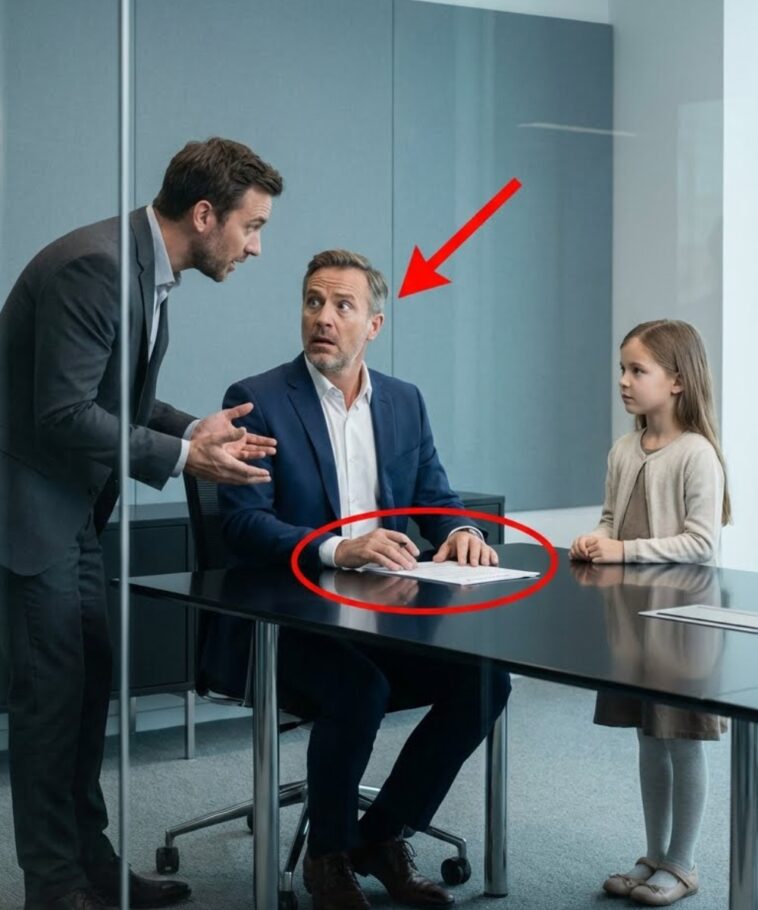
Hans Müller had faced lawsuits, hostile negotiations, and million-euro risks without blinking.
Yet that morning, nothing terrified him more than a stack of paper.
The boardroom in Vienna was immaculate—dark polished wood, minimalist white walls, abstract art chosen to impress without provoking thought. Coffee steamed quietly in the corner. Outside the wide windows, the city woke with orderly precision, as controlled as the men seated across from him.
At forty-two, Hans looked every bit the European executive: tailored suit, steady posture, measured calm. But beneath the surface lived the son of a Colombian farmer—someone who had crossed an ocean with little more than faith and relentless determination.
The contract lay open before him.
Dozens of pages. Dense paragraphs. Clauses folded inside other clauses like traps disguised as structure. Every word in German. Precise. Clinical. Unforgiving.
One of the executives slid the document closer.
“This is it, Hans,” he said smoothly. “One signature, and your project becomes a cornerstone of the European market.”
Hans picked up the pen.
He didn’t sign.
Inside his chest, pride wrestled with exhaustion. Years of sacrifice pressed in at once—late nights, quiet doubts, the subtle distrust he’d faced when his accent marked him as an outsider. This deal was supposed to be the reward. Expansion. Recognition. Proof that he belonged.
There was only one problem.
He didn’t truly understand legal German.
He could converse. Negotiate. Get by.
But contracts were another language entirely.
He had trusted the summaries. The assurances. The repeated phrase: standard clauses—just formalities.
A memory surfaced, unwelcome and sharp.
Never sign what you don’t understand.
His father’s voice.
Hans tightened his grip on the pen.
The door opened quietly.
The cleaning woman entered with her cart, practiced and invisible. Her name was Rosa. Romanian. She nodded politely, already fading into the background.
Behind her walked a girl.
Thin. Dark braids. Serious eyes that didn’t match her age. She clutched a notebook to her chest and took a seat in the corner. Lina. Rosa’s daughter. She often waited there, doing homework, silent and unobtrusive—as if the room hadn’t been built for someone like her.
“One last thing, Hans,” the younger partner said, leaning forward. “Just your signature. No need to worry about the technical wording.”
Hans inhaled.
The pen hovered.
Then—
A voice.
Quiet. Clear. Unafraid.
“That paper doesn’t say what you think.”
The room froze.
Hans looked up.
Lina was staring at the contract.
And in that instant, he understood something chilling: the most dangerous words in the room weren’t written in German at all.
Rosa turned pale. “Lina, please—”
But the girl didn’t look away.
“Clause fourteen point three,” she said calmly. “It says he gives up all rights. The properties in Colombia. And he can’t challenge it later.”
The younger executive laughed nervously. “Are we really listening to a child?”
The older one didn’t laugh. His fingers tightened on the table.
Hans felt a cold wave move through him.
“Show me,” he said.
Lina leaned forward. Hans turned the document toward her.
She read aloud in flawless German—then translated, word for word, into Spanish.
“The signatory irrevocably transfers all present and future rights to assets located in Colombian territory… waives all legal claims… and accepts penalties in the event of termination.”
The pen slipped from Hans’s fingers.
This wasn’t a detail.
It was a trap.
“You knew I couldn’t read legal German,” Hans said quietly. “Why didn’t you explain this?”
“A technicality,” the bearded man replied quickly. “It doesn’t change the essence.”
Hans laughed once, bitterly.
“My father lost his land over a ‘technicality.’ He signed because he trusted. He died regretting it.”
The boardroom vanished.
He was back at a kitchen table in Colombia, watching a man sign away his future.
Hans looked at Rosa.
“Your daughter didn’t interrupt,” he said. “She saved me.”
The younger partner slammed his fist down. “You’re throwing everything away!”
Hans picked up his phone.
“I need a certified legal translator here immediately,” he said. “And notify the Bar Association.”
“If this is clean,” he added, meeting their eyes, “you won’t mind waiting.”
They minded.
When the translator arrived, her face hardened as she read.
“This isn’t a partnership,” she said flatly. “It’s a full asset transfer. If you sign, you lose everything—and any right to fight it.”
That was the moment Hans knew.
The deal was over.
So was his silence.
He rejected the contract. He reported it. And when threatened with closed doors, he answered calmly:
“I prefer closed doors to selling my dignity.”
Days later, a call came—from an ethical investment fund.
They wanted transparency. Fair terms. No traps.
The project moved forward. Slower. Cleaner. Honest.
And history did not repeat itself.
Hans offered Rosa a stable job. Insurance. Respect.
For Lina, he secured a full scholarship.
Years passed.
Lina studied law. Languages. Contracts.
Hans became known for something else entirely: integrity.
And in every speech, he told the same story.
Not about power.
But about a girl in the corner who dared to speak.
Because sometimes, the voice that saves you doesn’t come from the head of the table.
It comes from the place everyone else has learned to ignore.
And the moment you listen—
everything changes.
As it should.