AnnaMaria
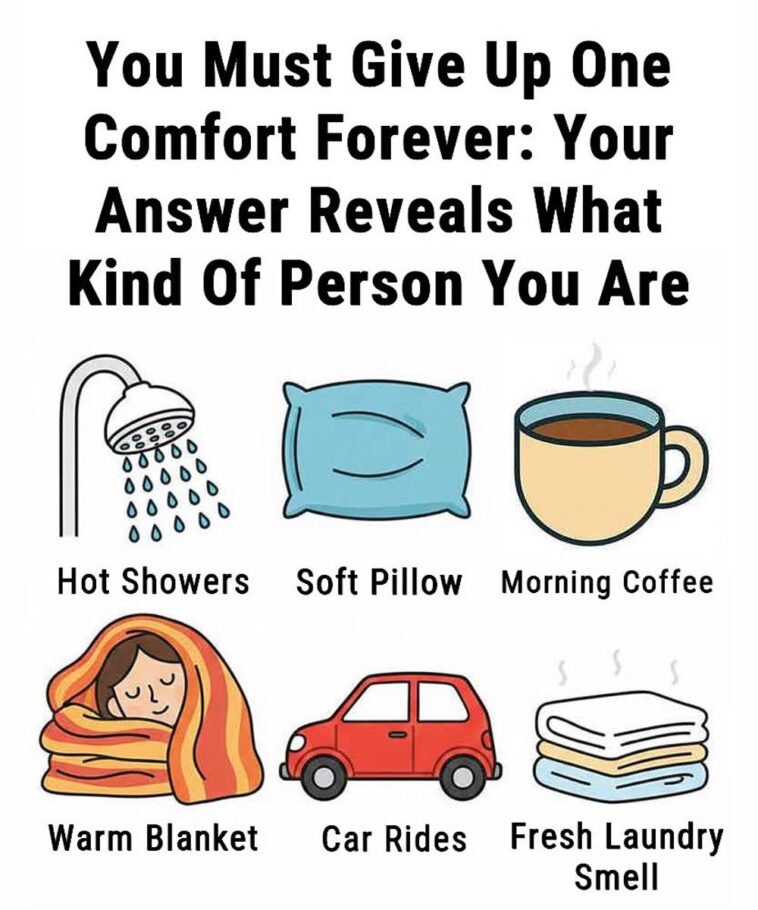
Giving something up “for now” is easy. Giving it up forever is something else entirely. This isn’t a casual preference test or a lighthearted personality quiz you forget five minutes later. It’s a psychological mirror disguised as a cozy dilemma. And once you look into it, it looks back.
The rule is simple and merciless: you must permanently give up one everyday comfort. No exceptions. No cheat days. No “special occasions.” Forever means forever.
What you choose—and how you justify it—reveals more about your values, coping mechanisms, emotional resilience, and even how you handle long-term sacrifice than most formal personality tests ever could. Behavioral psychology, decision-making research, and even studies used in mental health assessment and risk analysis suggest that the comforts we refuse to lose often correlate with how we manage stress, autonomy, and control.
So take a breath. Read carefully. And don’t answer too quickly.
### Giving Up Hot Showers
Choosing to give up hot showers is not a small thing. For most people, this is the ultimate daily reset. Warm water isn’t just about hygiene—it’s therapy, stress relief, and emotional regulation wrapped into one routine.
If this is the comfort you sacrifice, it usually points to a person who values discipline over pleasure. You may believe—consciously or unconsciously—that discomfort builds character, a mindset often associated with endurance training, minimalist living, or high-pressure professional environments like finance, law, or entrepreneurship.
You might be someone who:
-
Actively seeks challenges
-
Romanticizes resilience
-
Views comfort as optional, even suspicious
People who choose this option often say things like:
-
“Cold showers wake me up.”
-
“I don’t need luxury to function.”
-
“Mental strength matters more than physical ease.”
Psychologically, this choice suggests high tolerance for discomfort and a strong internal locus of control. You believe you can override bodily preferences with willpower. That can be a powerful trait—but also a risky one. Research in stress management and long-term health shows that chronic self-denial, when not balanced, can lead to burnout.
You are strong.
You are disciplined.
And yes—you should absolutely not be trusted with the thermostat.
### Giving Up a Soft Pillow
On paper, this seems manageable. In reality, it’s quietly brutal.
If you’re willing to sleep without a soft pillow forever, it often means you see comfort as negotiable—but function as essential. Sleep, for you, is a utility. A task. A reset button, not an experience.
People who choose this option tend to be:
-
Emotionally adaptable
-
Highly independent
-
Used to unstable or changing environments
You’re the kind of person who can fall asleep:
-
On airplanes
-
On couches
-
In unfamiliar places
-
During emotionally complicated periods of life
You’ve likely said something like, “I can sleep anywhere,” and meant it.
From a psychological standpoint, this choice suggests emotional resilience and adaptability, traits often seen in people who’ve navigated uncertainty—career instability, frequent moves, or long-term responsibility. In insurance and health-risk profiling, this adaptability is often associated with lower anxiety responses—but sometimes at the cost of ignoring physical needs.
Your neck, however, will never forget this decision.### Giving Up Morning Coffee
If you give up morning coffee, the first question is simple: are you okay?
Coffee isn’t just caffeine. It’s ritual. Identity. For millions of people, it’s the thin line between chaos and civilization. Choosing to eliminate it permanently says something very specific about you.
You are likely someone who:
-
Wakes up with natural energy
-
Maintains stable circadian rhythms
-
Doesn’t rely on stimulants to function
You might be the person who cheerfully says “Good morning” before 9 a.m. and actually means it. That alone sets you apart.
From a behavioral science perspective, this choice suggests biological consistency and emotional regulation. You may not experience extreme highs and lows in energy, which is often associated with lower dependence behaviors—something frequently analyzed in health and wellness research.
To others, though, you are unsettling.
You don’t need coffee.
You don’t crave it.
You don’t miss it.
Society needs people like you.
But caffeine-dependent humans do not understand you—and never will.
### Giving Up a Warm Blanket
At first glance, this seems seasonal. “I’ll just wear layers,” you might think. But a warm blanket is more than temperature control. It’s security, containment, and emotional safety.
If you’re willing to give this up forever, you may be someone who dislikes feeling restricted—physically or emotionally. You value movement, freedom, and autonomy more than coziness.
People who choose this option often:
-
Hate feeling trapped
-
Sleep lightly
-
Prefer control over their environment
You may have said, “I don’t like being too comfortable,” which—ironically—is usually said by people who already are.
Psychologically, this choice reflects a preference for independence over emotional nesting. In personality research tied to stress response and long-term lifestyle satisfaction, this can signal high self-sufficiency—but also a reluctance to fully relax.
You don’t reject comfort entirely.
You just don’t trust it.
### Giving Up Car Rides
This one is misunderstood. Giving up car rides isn’t about transportation—it’s about losing a private emotional space.
For many people, car rides are:
-
Therapy sessions without a co-pay
-
Controlled solitude
-
Emotional processing chambers
If you choose to give this up, it often means you deeply value internal reflection and quiet autonomy.
You may be:
-
Introverted
-
Highly introspective
-
Emotionally observant
Car rides, for you, aren’t about getting somewhere. They’re about:
-
Music that hits at the right moment
-
Staring out windows and thinking deeply
-
Imagining conversations you’ll never have
From a psychological angle, this choice suggests strong internal dialogue and self-awareness, traits often linked to creative thinking and long-term planning—qualities highly valued in fields like strategy, legal analysis, and financial forecasting.
Losing this comfort would hurt.
But you’d still walk.
Slowly. Thoughtfully. Probably replaying a soundtrack in your head.
### Giving Up the Smell of Fresh Laundry
This is the most revealing option—and the most chaotic.
If you can live without the smell of fresh laundry, you are someone who values function over sensory pleasure. Clean is clean. The rest is optional.
You likely:
-
Don’t attach emotion to objects
-
Prioritize efficiency
-
View sensory comforts as bonuses, not needs
You may have pulled clothes straight from the dryer and thought, “Nice—but unnecessary.”
From a behavioral standpoint, this choice aligns with pragmatic decision-making, often associated with analytical thinkers, engineers, and people who score high in task-oriented assessments used in corporate performance and risk evaluation.
You are practical.
You are efficient.
You might be a robot (this is not an insult).
### What Your Choice Really Says
There is no correct answer here. Every option represents a loss—and every justification reveals something deeper.
Psychologists note that when people are forced to choose between comforts, they’re not choosing the item. They’re choosing:
-
What helps them regulate stress
-
What makes them feel safe
-
What they associate with identity
In that sense, this question isn’t about showers or coffee or blankets. It’s about how you survive discomfort, how you define stability, and what you refuse to let go—even when logic says you could.
And there’s one truth that applies to everyone, no matter what you choose:
You are not ready to live without comfort.
But you are absolutely ready to defend your choice.
There it is.