AnnaMaria
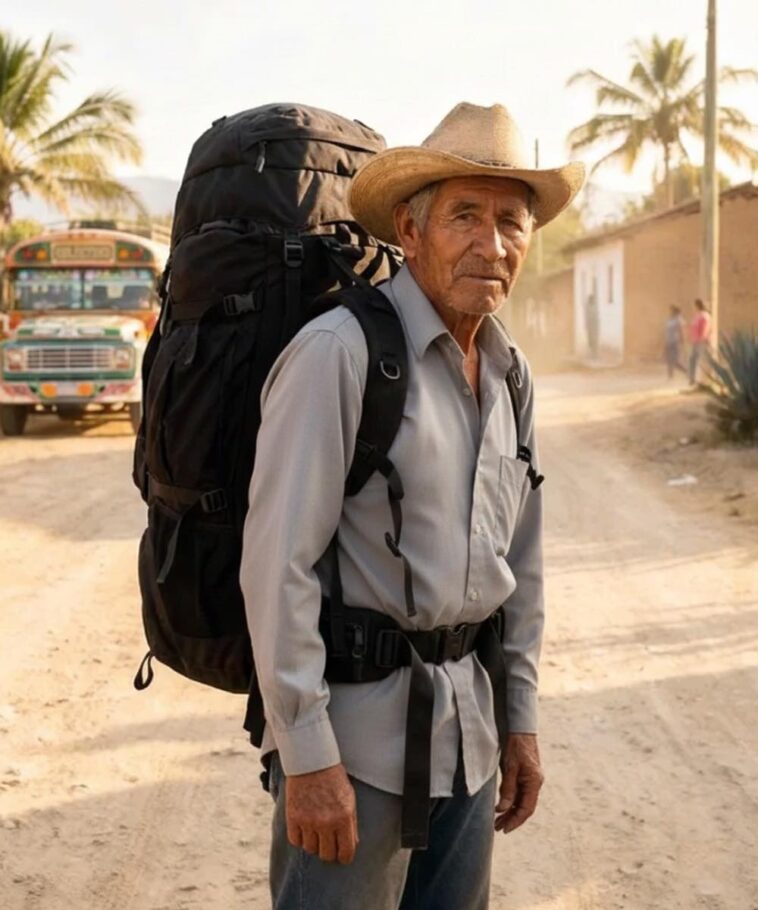
The dust hit my throat before the memories did.
San Miguel del Llano, Oaxaca, still smelled the same—dry earth, sun-baked concrete, and quiet judgment. I stepped down from a second-class bus wearing worn jeans, cracked work boots, and a backpack that looked like it belonged to a struggling teenager, not a man pushing fifty.
To anyone watching, I was obvious: another failed migrant, chewed up by the United States and spit back across the border.
They didn’t see success.
They didn’t see sacrifice.
They didn’t see twenty years of labor, risk, and discipline.
They saw a man who came back with nothing.
And that’s exactly what I wanted them to believe.
### The Perfect Disguise of Failure
My boots hit the pavement with a dull echo, the sound of someone who had lost. The kind of sound people step away from. The kind they pity quietly.
I let them.
Because poverty is the best invisibility cloak.
Inside the inner pocket of my jacket—hidden behind a stitched zipper near my chest—I carried a folded manila envelope. It didn’t contain letters or memories.
It contained a cashier’s check from a Texas bank, issued after the sale of my landscaping and nursery company, Cruz Green Landscaping.
The amount was $2.5 million (approximately €2.3 million).
Enough to change generations.
Enough to buy loyalty.
Enough to expose truth.
I hadn’t come back to show success. I came back to test love.
### The Boy Who Left With Empty Hands
I left San Miguel at 22 years old with nothing but fear and hope. No savings. No connections. Just hunger and stubbornness.
I crossed the Sonoran Desert over three days—nearly 200 miles (320 km)—guided by a coyote I owed money to before I ever earned a dollar. Thirst burned my tongue. Fear followed me like a shadow.
When I reached Houston, Texas, I slept on floors. I worked fourteen-hour days cutting grass under a sun that turned asphalt into a skillet. I ate ham-and-cheese sandwiches and drank tap water.
I didn’t party.
I didn’t drink.
I didn’t waste.
I built.
### Becoming the Family’s Financial Backbone
For twenty years, I was my family’s silent provider.
I paid:
-
For the two-story house my parents lived in
-
For my mother’s knee surgery, covered in cash when insurance fell short
-
For my brother Raúl’s car and maintenance
-
For my nephew’s technical education
I wired money every month. Sometimes $1,200 (about €1,100). Sometimes more.
I was never thanked loudly. But I didn’t need praise.
I thought I was a son.
A brother.
Family.
Six months before I returned, I stopped sending money.
It was a test.
### The Silence That Answered Everything
I told them things were bad. I said immigration enforcement was tightening. I said work was unstable.
And then… silence.
No good mornings.
No photos of my nephew.
No concern for my health.
Only short replies when I called:
-
“I’m busy right now.”
-
“Do you think you could send something for the electric bill?”
That’s when I understood.
I wasn’t family. I was an ATM with legs.
When the money stopped, so did the love.
So I sold everything.
And I came home looking broke.
### Knocking on the Door I Paid For
The house I financed stood proudly—painted walls, iron bars, electric gate. Beautiful. Foreign.
I rang the bell.
Raúl opened the gate halfway. Beer in hand. Polo shirt I bought him.
His eyes dropped to my boots. My backpack. My posture.
“Miguel… what are you doing here?”
“I got deported,” I said. “I came back with nothing.”
I waited for the hug.
It never came.
Instead, excuses.
Visitors.
No space.
Tight budgets.
My mother appeared with her cane. I expected tears.
Instead, I saw calculation.
“Sit in the patio,” she said.
Not the dining room.
Not the living room.
The patio.
### Eating Humiliation With Beans
From a plastic chair under a tin roof, I watched them eat meat, guacamole, soda.
They brought me two tortillas with beans and tap water.
“That’s all we have,” Raúl lied.
I could see the platter from where I sat.
I swallowed my pride with every bite.
When I asked about the room built for me upstairs, he said his son needed it for video games.
I was sent to sleep in the tool shed.
A concrete box. Used blankets. Old mattress.
That night, I heard laughter inside the house I paid for.
My sister-in-law whispered:
“What will the neighbors say? A beggar living here?”
And Raúl replied:
“Tomorrow he either works or leaves.”
### When Gratitude Turns to Fear
The next morning, there was no breakfast.
My mother poured coffee without meeting my eyes.
“You can’t stay for free,” she said.
I reminded her I paid for the floor she stood on.
She cried.
Not from guilt.
From fear.
I left.
### Kindness From the Ones Who Had Nothing
The town whispered.
Then Don Ernesto, an old shopkeeper, offered me a soda.
“No charge,” he said.
My aunt Toña—poor, dirt floor, chickens outside—hugged me like a son.
She fed me eggs in salsa.
The ones with nothing gave me everything.
The ones with everything—because of me—gave me nothing.
### Ending the Act
Raúl gave me one week to leave.
Humiliation became routine.
So I prepared.
I called my lawyer.
I contacted the bank.
I finalized asset transfers, estate planning, and tax compliance—the unglamorous side of wealth people never talk about.
Friday was my mother’s birthday.
Big party. Music. Carnitas.
Their instruction to me:
“Stay in the shed.”
That was the day I ended the lie.
### The Envelope
I cleaned my boots. Shaved. Changed clothes.
When I stepped into the patio, silence fell.
Raúl grabbed my arm.
“Go back.”
I didn’t.
I stood in front of my mother.
“Happy birthday,” I said. “I also arrived with nothing.”
Then I pulled out the envelope.
The bank statement.
The truth.
$2,500,000 (approximately €2,300,000).
No yelling.
No revenge.
Just reality.
### What I Teach Now
Today I speak at schools, migrant communities, and financial literacy events.
I tell people:
Migration isn’t just leaving.
It’s returning.
It’s understanding money management, legal protection, insurance planning, and dignity.
My old boots are framed in my office.
I wear them sometimes to meetings with wealthy people.
They show me who respects me… and who despises me.
They are my filter.
Humility is a virtue. Accepting humiliation is a mistake.
Money passes through your hands.
Dignity stays.
As you were.