AnnaMaria
Buying a home is supposed to feel like security.
Stability.
A financial milestone that signals you’re finally building something lasting.
For me, it felt like freedom.
I paid for that house with my own income, my own savings, and years of grinding in a high-pressure corporate career. It wasn’t flashy, but it was solid—good foundation, quiet neighborhood, a long-term investment that made sense both emotionally and financially.
Or so I thought.
Because on the very first day, my husband smiled casually and said the sentence that changed everything:
“My mom, my sister, and the kids are moving in. You don’t get a say.”
Then he took the car and drove off to pick them up.
That evening, they arrived.
And they froze when they saw what was waiting inside.
The House Was Mine—But the Power Wasn’t
On paper, everything looked normal.
Married couple. Shared address. Respectable jobs. No visible red flags.
But behind closed doors, the dynamics were already rotten.
My husband had always presented himself as neutral—the good guy stuck between difficult women. His mother framed control as tradition. His sister framed entitlement as hardship. And somehow, I was expected to absorb all of it quietly.
That house was supposed to end that cycle.
Instead, it exposed it.
Within minutes of announcing the move-in, the tone shifted from partnership to threat.
“If you don’t like it,” he said, lowering his voice, “we’ll just get divorced. And you’ll lose the house.”
That was the moment I understood something crucial:
They didn’t want me. They wanted what I owned.
When Financial Independence Becomes a Threat
I work in advertising—long hours, measurable results, constant pressure. It’s the kind of career where reputation, contracts, and financial planning aren’t optional. You either manage risk, or you get burned.
Ironically, the same skills that built my career also saved my life.
Because I knew something they didn’t.
The house was legally mine.
Purchased with my funds.
Titled solely in my name.
Protected by a prenup they’d never bothered to read.
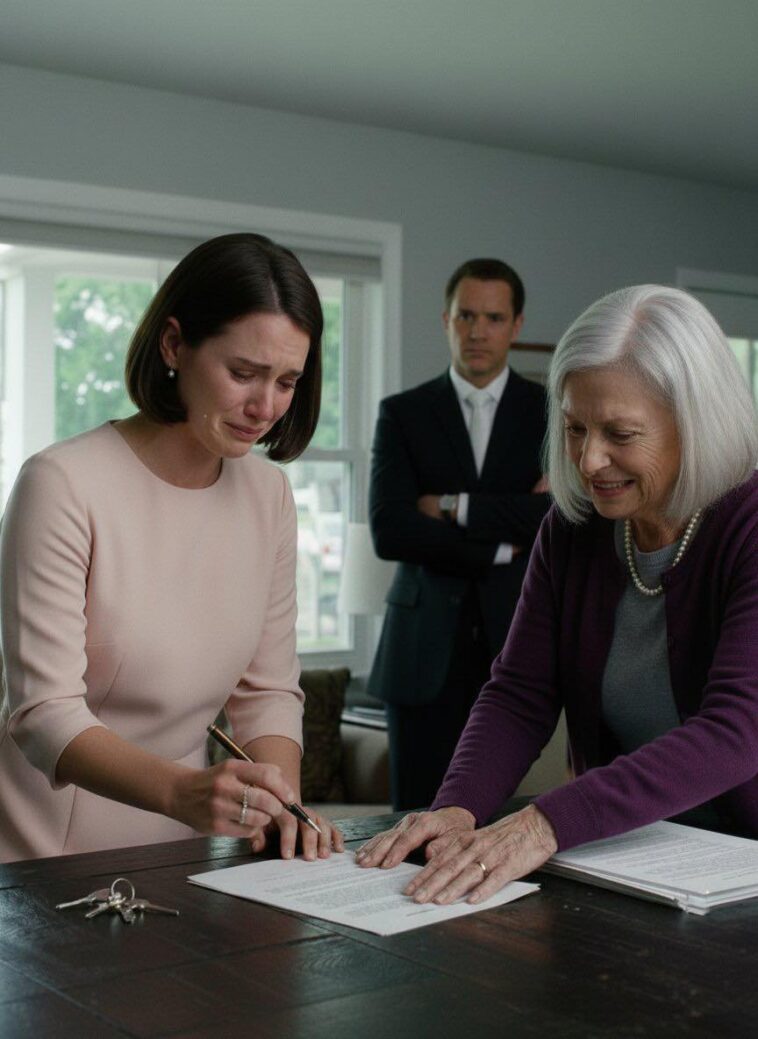
So when divorce papers appeared—already signed by my husband, slid across my brand-new counter like a power move—I didn’t panic.
I smiled.
And I signed.
Why I Let Them Move In Anyway
People often ask why I didn’t fight immediately.
Why I didn’t scream.
Why I didn’t call a lawyer on the spot.
The answer is simple: strategy.
You don’t argue with people who believe they’ve already won.
You let them expose themselves.
I packed my essentials—documents, personal items, financial records—and walked out without drama.
I left them the house.
What they didn’t know was that the property had a flaw no cosmetic renovation could fix.
The Hidden Problem Beneath the Foundation
The home sat on land affected by old mining tunnels—something disclosed in the inspection, buried in technical language, ignored by anyone too busy celebrating a “dream purchase.”
Over time, the ground shifts.
Doors stop closing.
Floors slope.
Walls crack.
Foundations weaken.
It’s not dramatic.
It’s slow.
And it’s devastating for property value, insurance coverage, and resale eligibility.
By the time they realized what was happening, it was too late.
The Phone Call That Confirmed Everything
On their moving day, my phone exploded with missed calls.
When I finally answered, my former mother-in-law was screaming:
“The floors are tilting! The cabinets won’t open! The walls look like they’re breathing!”
I listened calmly.
Then said, “That sounds inconvenient.”
She demanded I come back.
I said no.
And for the first time, she had no leverage.
When Abuse Meets Documentation
They tried everything after that—guilt, threats, manipulation.
So I ended it properly.
In public.
With witnesses.
And with evidence.
I presented:
-
Medical documentation showing stress-related illness linked to prolonged emotional abuse
-
Audio recordings of verbal harassment
-
Video proof of stolen personal property
-
Photographic evidence of my husband’s infidelity
Not for revenge.
For protection.
Because when people realize you understand legal boundaries, liability, and documentation, their courage evaporates.
Consequences Are Quiet—but Permanent
The house became unsellable.
The mortgage became unmanageable.
The family turned on each other.
Eventually, foreclosure followed.
My ex-husband lost his job—corporate environments are unforgiving when reputations collapse. His mother and sister, once dependent, were forced into work they despised.
And me?
I moved into a smaller apartment I could afford comfortably.
I slept through the night.
My health improved.
My finances stabilized.
Later, I met someone who didn’t see partnership as ownership.
What This Story Is Really About
This isn’t about revenge.
Or clever tricks.
Or watching someone else fail.
It’s about this truth:
When you stop being agreeable, people who benefited from your silence get very uncomfortable.
It’s about knowing your legal rights, protecting your financial assets, and understanding that marriage does not mean surrender.
It’s about recognizing emotional abuse before it becomes normalized.
And it’s about remembering that sometimes, the safest exit isn’t loud—it’s strategic.
As you were.