AnnaMaria
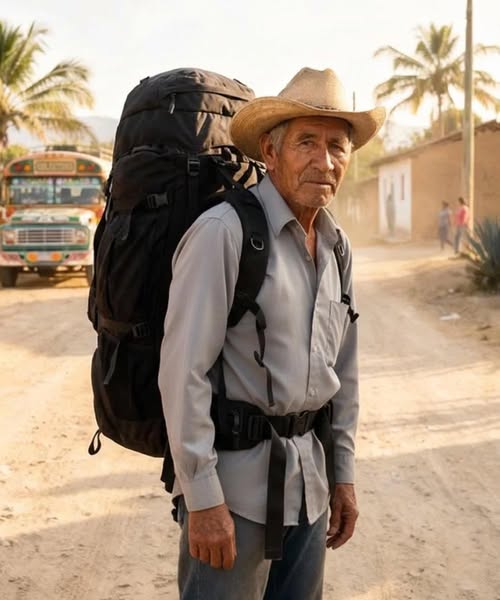
The dust from the road crept into my nose the moment I stepped off the bus, dry and familiar—the taste of San Miguel del Llano, Oaxaca. I slung an old backpack over my shoulder, the kind students carry, and adjusted my jeans, worn thin at the knees and frayed at the seams.
My work boots—scarred by years of cement, grease, and sun—hit the pavement with a dull echo. To anyone watching, I was the perfect picture of failure.
Miguel Ángel Cruz.
The boy who left twenty years ago to “make it big” in the United States—and came back looking like life had beaten him and sent him home empty-handed.
People stared with that familiar mix of pity and contempt.
Poor guy, their eyes said.
Didn’t make it. Probably lost everything.
They weren’t wrong about my appearance.
But they were wrong about everything else.
What no one knew—not even my family—was that the look was intentional. A disguise.
My hands were calloused.
My clothes smelled like cheap buses and long roads.
My pockets looked empty.
But inside the hidden zipper of my jacket, close to my chest, I carried a manila envelope folded into quarters.
Inside wasn’t nostalgia or letters.
Inside was a cashier’s check from a Texas bank.
$2,500,000.
The sale of my landscaping and nursery company—Cruz Green Landscaping.
I came back a millionaire.
But before I revealed anything, I needed to know the truth.
Did my family love me…
or did they only love the money I sent every month for twenty years?
I walked slowly toward the house I had paid for.
I wanted to feel every step.
I had left at twenty-two with nothing but fear and stubborn hope. I crossed the desert. Slept hungry. Worked fourteen-hour days cutting grass under a sun that burned the asphalt. I ate sandwiches so I could save dollars.
And for twenty years, I sent money home.
I built that two-story house.
Bought my brother Raúl his car.
Paid for my mother’s surgery.
Covered my nephew’s education.
I wasn’t just family.
I was the economy.
Six months ago, I stopped sending money.
I told them things were bad. That work dried up. That immigration raids were everywhere.
It was a test.
The calls stopped.
No “How are you, son?”
No “Are you okay?”
Just silence.
When I called, the questions were short and transactional.
“Can you send something for electricity?”
“Just this once?”
That hurt more than any blister ever had.
I understood then: I wasn’t a son.
I was an ATM.
And when the ATM is out of service, nobody asks how it feels.
I rang the doorbell.
Laughter spilled from inside. Music. Plates clinking.
Raúl opened the gate just enough to look me over. His smile vanished when he saw my boots.
“Miguel… what are you doing here?”
“I got deported,” I said quietly. “I came back with nothing.”
I waited for the hug.
It never came.
He blocked the door. “It’s complicated. We’ve got guests.”
“I’m your brother,” I said. “I’m hungry.”
He sighed. “Things are tight since you stopped sending money.”
My mother came out, leaning on her cane. For a second, I thought she’d embrace me.
Instead, she hesitated.
“Sit in the patio,” she said. “We’ll see what we can give you.”
Not the table.
The patio.
They brought me two tortillas with beans while they ate meat and laughed inside.
When I asked about my room—the one built for my return—Raúl said his son needed it for video games.
I slept in the tool shed.
That night, I heard my sister-in-law whisper,
“What will people say? A beggar in the house.”
The man whose life I had financed for decades.
The next morning, there was no breakfast.
My mother poured coffee without looking at me.
“You can’t stay for free,” she said. “You’ll need to leave.”
I left without arguing.
In town, people whispered.
But one woman didn’t.
My aunt Toña—poor, humble, with chickens in the yard—hugged me like I’d never left.
She fed me eggs in salsa and gave me a place to sleep.
I cried over that plate.
The ones who had nothing gave me everything.
The ones who had everything because of me gave me nothing.
Friday was my mother’s birthday.
Big party. Band. Food. Guests.
I was told to stay hidden.
That’s when I ended the act.
I shaved. Changed clothes. Cleaned my boots.
I walked out holding the envelope.
Raúl tried to stop me. “Miguel—don’t.”
“Let go,” I said. And he did.
I stood in front of everyone.
“Happy birthday, Mom. I didn’t bring a gift. Just like Raúl says—I came back with nothing.”
Then I opened the envelope.
Silence fell.
From that day on, everything changed.
Today, I tell young people this:
Migration isn’t just leaving.
It’s returning.
It’s dignity.
It’s discovering who truly loves you.
My old boots are framed in my office.
They remind me that humility is strength—but accepting humiliation is not.
Money passes through your hands.
Dignity stays.
And when you come back with nothing,
you finally see who was never there for you at all.