AnnaMaria
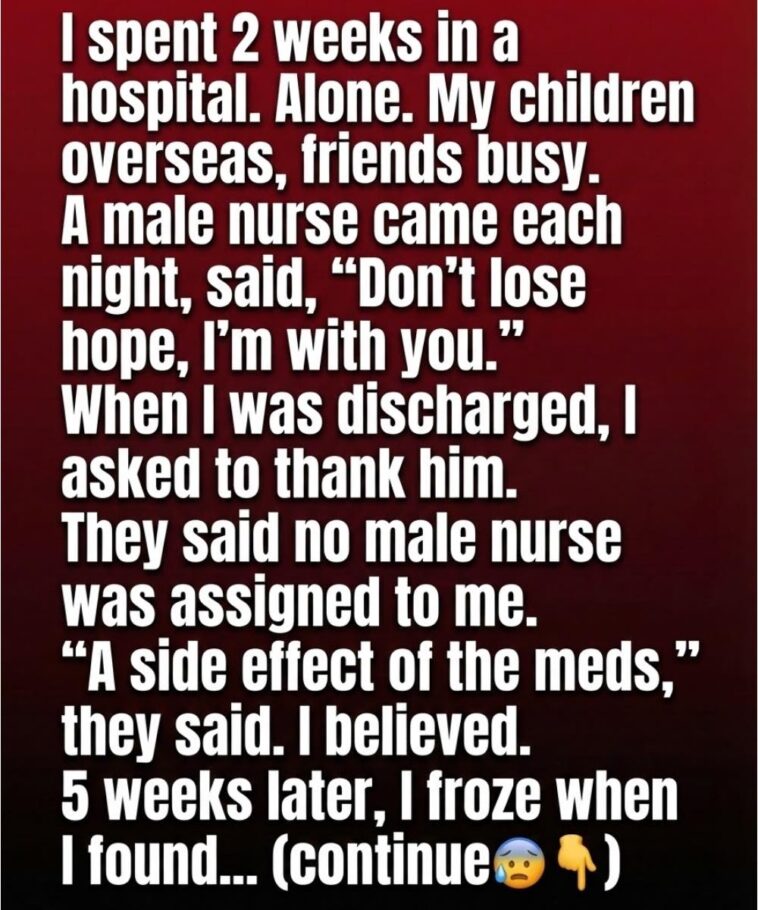
During the fourteen days I spent in the hospital, time stopped behaving the way it normally does. Hours stretched, days blurred, and nights felt endless. The clock on the wall seemed ornamental rather than functional, its hands moving without meaning. Morning light crept in through narrow blinds, only to dissolve into long afternoons and restless evenings that felt heavier than the illness itself.
The room was never truly quiet. Machines beeped in steady rhythms. Oxygen hissed softly. Wheels from medical carts rolled past the door on polished floors. Yet despite all the sound, there was a profound emptiness. No familiar voices entered the room. No laughter. No casual conversation that reminds you life is still happening somewhere else.
My children lived in different cities, balancing demanding careers, families, and financial responsibilities of their own. Friends checked in through polite text messages—well-meaning but distant. Visiting hours came and went like a tide that never quite reached shore.
I told myself this was normal. People are busy. Life doesn’t pause just because someone gets sick.
Still, loneliness has a way of settling in quietly, without drama or warning. It doesn’t announce itself. It simply sits beside you when the lights dim and the hallway outside falls silent. At night, when the world narrowed to the ceiling above my bed, doubts crept in.
I wondered how easily someone could fade from daily life when illness slowed them down. How quickly usefulness gets confused with worth. How fragile independence really is when your health—and your insurance coverage—suddenly dictate your routine.
The Emotional Weight of Healing Alone
Hospitals are designed for recovery, not reflection. Yet when you’re confined to a bed, reflection becomes unavoidable. Every sensation feels amplified. Every thought echoes longer than it should.
I reminded myself that I was healing. That this stay was temporary. That my health was improving, even if my spirit felt stalled. Doctors came and went, efficient and professional. Nurses rotated through shifts, kind but hurried. Everything worked the way it was supposed to.
And yet, something essential felt missing.
Then, without warning, something changed.
The Nurse Who Appeared Each Night
Every evening, just before the ward settled into sleep, a nurse would stop by my room.
He never rushed.
He spoke in a calm, measured voice, asking how my pain was, whether I needed water, whether I was comfortable enough to rest. Sometimes he adjusted my blanket or fixed the pillow behind my back. Other times, he simply stood there a moment longer than necessary, as if making sure I was truly okay—not just medically stable.
“Take it one day at a time,” he would say.
“You’re stronger than this moment.”
“Recovery isn’t a race. You’re doing well.”
They weren’t dramatic speeches. They weren’t medical advice or legal disclaimers or instructions tied to insurance protocols.
They were human words.
And in a place where everything felt clinical and transactional, his presence felt personal.
I began to look forward to those visits—not because they were extraordinary, but because they were consistent. Predictable. Gentle. They reminded me that someone noticed I was there. That I wasn’t just a chart, a diagnosis code, or a bed number tied to billing paperwork.
In a system governed by schedules, liability, and efficiency, that mattered more than I realized.
Why Small Acts of Care Matter More Than We Think
There’s a difference between receiving medical treatment and feeling cared for.
Hospitals are excellent at the first. The second depends entirely on people.
Studies often focus on recovery times, treatment outcomes, and cost efficiency. But emotional well-being is rarely itemized on a hospital bill, even though it plays a measurable role in healing. Feeling seen, heard, and supported can lower stress, improve sleep, and even affect immune response.
At the time, I didn’t think about research or data. I just knew that those quiet moments at night anchored me. They reminded me that my presence mattered, even when I felt reduced to symptoms and vitals.
Preparing to Leave—and to Say Thank You
When I was finally cleared to go home, relief washed over me. So did gratitude.
Before leaving, I stopped at the front desk, determined to express my thanks. In a world where healthcare workers are often overworked and underappreciated, acknowledging kindness felt important.
“I’d like to leave a note for the nurse who checked on me every night,” I said. “The male nurse assigned to my room.”
The receptionist frowned slightly and pulled up the schedule. Another staff member joined her, flipping through records, checking names and shifts. Their expressions grew increasingly puzzled.
“There wasn’t a male nurse assigned to your room,” one of them said gently. “Your care team was all female.”
I laughed awkwardly, assuming there had been a simple oversight. Hospitals are busy places. Mistakes happen.
But they were certain.
They suggested stress, medication side effects, or exhaustion might have blurred my memory. I nodded, accepted the explanation, and left carrying something heavier than confusion.
An uneasiness I couldn’t quite name.
When Healing Leaves Questions Behind
Recovery doesn’t always bring closure. Sometimes it leaves questions that don’t fit neatly into discharge summaries or follow-up appointments.
I told myself not to dwell on it. The mind can fill in gaps when it’s under strain. Memory isn’t perfect, especially when illness, pain management, and disrupted sleep are involved.
Still, the feeling lingered.
Weeks later, while unpacking my hospital bag, I felt something folded into a small pocket I hadn’t checked. A piece of paper, creased and worn. I unfolded it slowly.
“Don’t lose hope. You’re stronger than you think.”
No name. No date. No hospital logo. Just those words.
The Power of an Unexplained Message
I sat there for a long time, holding the note.
I replayed those quiet nights in my mind—the calm voice, the steady presence, the simple encouragement. I couldn’t say for certain where the note came from.
Maybe a staff member I never officially met.
Maybe someone who noticed more than charts and vitals.
Or maybe—just maybe—it was something I needed so deeply that my mind gave it form.
And strangely, the explanation mattered less than the effect.
That message arrived when I needed it most. It reminded me that strength doesn’t always roar back into your life. Sometimes it returns quietly, through reassurance, consistency, and small kindnesses that don’t ask for credit.
What This Experience Taught Me About Strength
We often think of strength as endurance, productivity, or independence. But illness has a way of redefining those terms.
Strength can be allowing yourself to rest.
Strength can be accepting help.
Strength can be surviving a season where you feel unseen—and choosing not to disappear anyway.
That note now sits in my drawer. Not framed. Not displayed. Just there. A private reminder that encouragement doesn’t always come with explanations, credentials, or invoices.
In a world increasingly driven by efficiency, cost control, insurance policies, and measurable outcomes, it’s easy to forget the value of simple humanity.
But sometimes, the smallest gestures leave the deepest impact.
And sometimes, hope arrives quietly—without knocking, without credentials, without answers—exactly when you need it.
As you were.