AnnaMaria
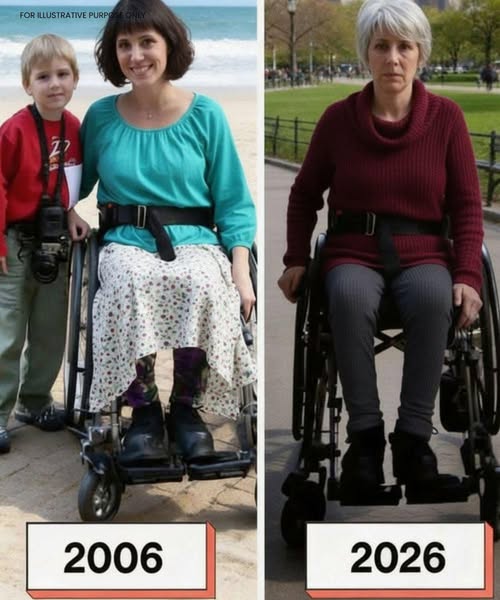
My son told me my wheelchair would distract from his wedding, so I was quietly uninvited. I didn’t argue. I didn’t beg. I sent him one package instead. What happened next unraveled years of silence, guilt, and truth neither of us had ever faced.
Living Half a Life, Seated
I am 54 years old. For nearly two decades, I have lived my life seated in a wheelchair. Not temporarily. Not part-time. Permanently. It is not something I introduce casually, but it defines how the world sees me long before I speak. Ramps instead of stairs. Doorways measured in inches. Bathrooms that may or may not work. The logistics of disability shape everything from travel insurance to healthcare planning to something as personal as attending your own child’s wedding.
The accident happened when my son, Liam, was almost five years old. One moment I was upright, independent, rushing through a parking lot with a small hand wrapped in mine. The next moment, I was on the pavement, unable to feel my legs. Doctors later explained spinal trauma, irreversible damage, and permanent paralysis. Words that echo even now.
Liam’s father had already left long before that day. When Liam was six months old, his father decided parenthood was too heavy a responsibility. There was no dramatic legal battle, no insurance settlement, no shared custody arrangement. Just absence. From that point on, it was only the two of us navigating life, finances, health decisions, and survival together.
Raising a Child After Everything Changed
After the accident, my world became smaller in ways that go far beyond square footage. I learned how to move through life seated. I memorized curb cuts, learned which public buildings complied with accessibility laws and which quietly ignored them, and developed a sixth sense for which spaces were welcoming and which were politely hostile.
Liam adapted faster than anyone should have to. As a child, he brought me blankets when he noticed I was cold. He learned how to make simple sandwiches before most kids learned multiplication. He understood patience without being taught. When I struggled with depression or frustration, he would sit beside my chair and tell me everything would be okay, even when he was too young to understand what “okay” actually meant.
We were not wealthy. I worked from home as a freelance writer. The income was modest but steady enough to cover rent, food, health insurance premiums, and basic legal expenses. I structured my work around school pickups, bedtime stories, and homework sessions. I was present. Always present. Every parent-teacher conference, every scraped knee, every moment that mattered.
I watched him grow into a thoughtful, ambitious man. He went to college. He built a career. He learned how to stand tall in rooms I could no longer physically enter. I was proud of him in a way that is difficult to put into words.
When Love Enters the Picture
Then Liam met Jessica.
She was everything I was not. Polished. Wealthy. Raised in a family where image mattered, where presentation equaled value, where appearances influenced social standing and financial opportunities. She was kind enough to me, but always from a distance. Conversations stayed polite. Visits were brief.
When Liam told me they were engaged, I cried with genuine joy. I believed he had found someone who made him happy, and that was all that mattered. I immediately started preparing for the wedding, not emotionally, but practically. I bought a mother-of-the-groom dress that worked with my seated posture. I practiced maneuvering quickly so I wouldn’t slow anyone down during the ceremony or reception. I even chose a song for a mother–son dance, imagining that moment again and again.
I never once assumed I would be excluded.
The Conversation That Changed Everything
One week before the wedding, Liam came to my apartment alone. That alone told me something was wrong. He didn’t sit. He paced. He avoided eye contact.
The ceremony, he explained, was planned at a historic chapel perched on a cliff. Beautiful. Old. Completely inaccessible. Narrow doorways. Steps. No ramps. No elevators. No accommodations. Adding a ramp, he said, would “ruin the aesthetic.” That phrase would echo in my head long after he left.
Then he told me the truth. Not softened. Not disguised.
My wheelchair would be distracting in the wedding photos.
They didn’t want it visible.
They didn’t want me there.
He also told me that the mother–son dance had been removed from the program. Jessica’s mother would take that place instead because it would “look better.”
In that moment, I felt something break that had nothing to do with my spine.
Grief Without a Scene
I didn’t argue. I didn’t remind him of the years I raised him alone or the sacrifices that never made it into family photo albums. I didn’t mention accessibility laws, disability rights, or the legal obligation venues have to accommodate guests. None of that mattered. What mattered was that my presence was now considered a visual problem.
That night, I folded the dress I had bought with so much hope. I deleted the song from my playlist. I sat in silence, the kind that feels heavier than noise.
The next morning, I made a decision that would change everything.
The Package
I prepared a package. No confrontation. No lecture. Just truth.
Inside, I placed a photo album. Pictures of Liam as a toddler on my lap. School photos taped crookedly to pages. Birthday candles. Beach trips. Hospital visits. Ordinary moments that quietly tell a lifetime story.
At the back of the album, I included one thing I had never shown him before. A yellowed newspaper article with a simple headline:
Mother Saves Son, Loses Ability to Walk
I had kept it hidden for nearly twenty years.
I asked my brother to deliver the package to Liam just before the ceremony. I did not attend the wedding. I stayed home.
Fifteen Minutes That Changed a Life
That afternoon, my phone rang. Liam was crying so hard he could barely speak. He told me he had opened the package minutes before the ceremony began. He said the room went silent as he read.
The article explained what I had never told him. The accident had not been random. A car had jumped the curb. I had pushed him out of the way. The impact took my legs instead of his life. I had chosen silence because I never wanted him to carry that weight.
Fifteen minutes later, he was at my door, still wearing his tuxedo, clutching the album like something fragile. He collapsed to his knees and begged me to forgive him.
Truth Without Manipulation
I told him I hadn’t sent the album to make him feel guilty. I sent it because the truth matters. Because disability is not shameful, and sacrifice does not require invisibility. I told him my wheelchair was never a burden, and I would not erase myself to make someone else comfortable.
Liam ended the engagement that day. Not out of anger, but clarity. He realized he could not marry someone who asked him to erase his mother from his life, his history, or his future.
Some people later suggested I manipulated him. I disagree.
He deserved the truth.
When Image Collides With Reality
This story is not about weddings. It is about what society chooses to value. Image over integrity. Aesthetics over accessibility. The quiet ways people with disabilities are asked to disappear for the comfort of others.
From healthcare systems that debate coverage to insurance policies that limit mobility aids, to public spaces that prioritize appearance over inclusion, the message is often the same. Be quiet. Be grateful. Be invisible.
I refuse.
What I Learned
I learned that love that requires erasure is not love. I learned that silence can protect others, but it can also enable harm. I learned that telling the truth, even late, can restore something that was nearly lost.
And I learned that I will never disappear to fit someone else’s idea of beauty, success, or perfection.