AnnaMaria
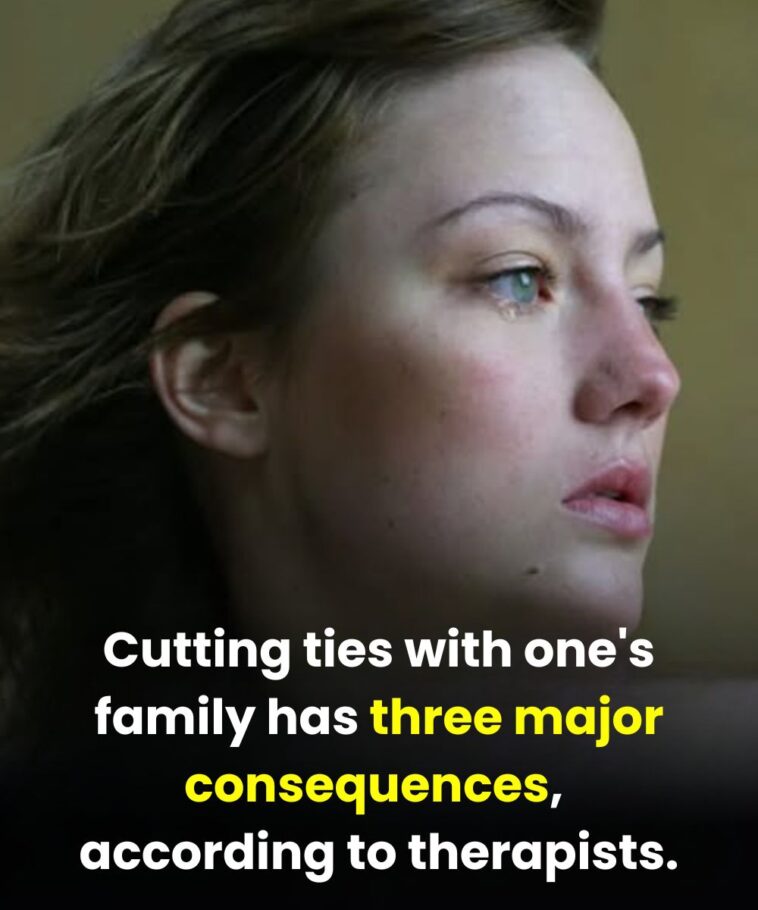
Cutting ties with one’s family is almost never a sudden or careless decision. It is usually the end point of a long emotional journey marked by confusion, exhaustion, and an increasing sense that staying connected comes at the cost of one’s mental health. People who reach this point often describe years of trying to make things work, adjusting themselves, staying silent, or hoping that time alone would fix what felt broken. When distance is finally created, the effects are deeper and more complex than many anticipate. According to therapists, this decision reshapes emotional health, social dynamics, and personal identity in ways that deserve careful attention if healing is truly the goal.
Creating Distance as an Act of Self-Preservation
Contrary to popular belief, walking away from family is rarely an impulsive act fueled by anger or resentment. Therapists consistently describe it as a deliberate act of emotional self-preservation, one that comes after repeated attempts to repair, negotiate, or endure harmful dynamics. Alice Zic, a therapist who works with adults navigating family estrangement, explains that distance often becomes necessary when interactions repeatedly trigger stress responses, anxiety, or feelings of worthlessness. In these situations, the nervous system stays in a constant state of alert, which can quietly damage both mental and physical health over time.
For many people, maintaining family contact feels like running a marathon without rest. At first, the strain is manageable. Eventually, the body and mind signal that something is wrong. Chronic stress has been linked to health risks such as high blood pressure, weakened immune response, and increased risk of anxiety disorders, which is why mental health professionals often frame estrangement not as abandonment, but as a protective boundary. Creating space can feel similar to finally stopping after pushing far beyond personal limits, allowing the body to breathe again and the mind to recalibrate.
This step is often taken only after other solutions fail. People try conversations, mediation, family therapy, or emotional compromise. When these efforts are met with denial, manipulation, or continued harm, distance becomes the last viable option. In that sense, leaving is not about rejection, but about survival.
The Immediate Calm and the Unexpected Emotional Shift
One of the first consequences people notice after distancing themselves from family is a surprising sense of relief. Daily life may suddenly feel quieter. There are fewer arguments, fewer anxious thoughts before phone calls, and fewer emotional crashes after family gatherings. Many report sleeping better, experiencing less tension in their bodies, and feeling safer in their own minds. This initial calm can be profound, especially for those who lived in emotionally unpredictable environments.
However, therapists caution that relief is rarely the only emotion present. Almost immediately, another feeling begins to surface, often quietly at first. Alongside the calm comes grief. This grief is not always about missing specific family members. Instead, it is often about mourning the family relationship that never existed, the support that was hoped for but never reliably offered. It is grief for an ideal rather than a reality, which can make it harder to name and process.
This emotional contradiction can feel confusing. People may ask themselves why they feel sad when life is objectively more peaceful. According to mental health professionals, this response is completely normal. The human brain is wired for attachment, and even unhealthy bonds carry emotional weight. Letting go can feel like losing a part of one’s history, identity, or imagined future. Over time, this grief tends to soften, but it rarely disappears entirely. Instead, it becomes something people learn to carry with greater ease and understanding.
Living With Grief That Has No Ceremony
Unlike other losses, family estrangement often comes without rituals or social acknowledgment. There is no funeral, no official moment of closure, and no shared language for the experience. Therapists describe this as ambiguous loss, a type of grief that lacks resolution because the people involved are still alive but no longer emotionally accessible. This can make healing slower and more complicated.
People may find themselves grieving in small, unexpected moments. A holiday passes. A major life event occurs. A medical decision, financial milestone, or legal matter arises where family support is traditionally expected. Each of these moments can quietly reopen the sense of loss. Without validation from others, individuals may question whether their grief is justified, even when the decision to leave was clearly necessary for their mental health.
Acknowledging this grief is essential. Suppressing it can lead to emotional numbness or delayed distress, which may later show up as depression or chronic anxiety. Therapists often encourage journaling, counseling, or support groups as ways to give this loss a voice and structure, helping individuals process emotions that society often ignores.
Social Pressure and the Weight of Cultural Expectations
One of the most difficult aspects of family estrangement is not always the emotional impact itself, but the reaction of the outside world. In many cultures, family loyalty is treated as sacred and unquestionable. Choosing distance can be seen as selfish, ungrateful, or even morally wrong. Patricia Dixon, a therapist specializing in family systems, notes that social judgment often intensifies internal conflict, making people second-guess decisions that were made for legitimate mental health reasons.
This pressure often shows up in subtle ways. Questions like “Have you tried forgiving them?” or “But they’re still your family” can feel dismissive, even when well-intentioned. Over time, individuals may feel compelled to justify or explain their choice repeatedly, which can reopen emotional wounds. In professional settings, legal matters, or financial discussions, assumptions about family involvement can create additional stress.
In cultures where multigenerational loyalty is deeply valued, guilt can become especially heavy. People may fear being seen as failures, disloyal children, or sources of shame. Therapists emphasize that this guilt is often socially conditioned rather than internally true. Learning to separate external expectations from internal needs is a critical step in healing.
Redefining Identity Without Family Anchors
Family plays a central role in shaping identity. When those ties are loosened or cut, people are often forced to ask fundamental questions about who they are without those roles. Am I still a daughter, a son, a sibling, if I am no longer in contact? What does my past mean now? These questions can feel destabilizing at first.
Yet therapists also point to this period as an opportunity. Without constant emotional pressure, individuals can explore their values, preferences, and boundaries more clearly. Decisions about career, relationships, finances, and even health insurance or legal planning may start to feel more autonomous. People begin to recognize patterns they once accepted as normal and replace them with healthier alternatives.
This process takes time. Identity rebuilding is not linear, and moments of doubt are common. However, many individuals eventually report a stronger sense of self, one that is less reactive and more intentional. The absence of family conflict creates space for self-reflection, growth, and long-term emotional stability.
Building a Chosen Family and New Support Systems
One of the most transformative outcomes of family estrangement is the redefinition of what “family” means. Without traditional anchors, people often begin forming a chosen family, a network of relationships based on mutual respect, trust, and emotional safety. This may include close friends, partners, mentors, colleagues, or even supportive professionals such as therapists or coaches.
These relationships tend to be more reciprocal. Boundaries are clearer. Emotional support is offered without obligation or fear. Over time, this new network can provide the stability once sought from biological family. Therapists emphasize that chosen families are not replacements in a literal sense, but they can fulfill many of the same emotional needs in healthier ways.
During this transition, professional support can be especially valuable. Therapy provides a structured space to process emotions, clarify boundaries, and rebuild confidence. Joshua Coleman, a psychologist known for his work on family estrangement, highlights the importance of understanding one’s limits, particularly for those who may consider reconnecting in the future. Clear boundaries, emotional readiness, and realistic expectations are essential to avoid repeating harmful patterns.
Navigating the Possibility of Reconnection
Not everyone who distances themselves from family intends for the separation to be permanent. For some, it is a pause rather than a final decision. Therapists caution that reconnection should never be rushed or driven by guilt alone. True reconciliation requires accountability, behavioral change, and respect for boundaries from all parties involved.
Before considering contact, individuals are encouraged to assess their emotional readiness. Are they prepared to handle potential disappointment? Have they developed coping strategies and support systems? Are expectations grounded in reality rather than hope alone? Legal, financial, and emotional considerations may also come into play, particularly in situations involving inheritance, caregiving responsibilities, or shared assets.
In some cases, limited contact with firm boundaries may be possible. In others, continued distance remains the healthiest option. Therapists emphasize that there is no universal right answer. The goal is not reconciliation at all costs, but emotional safety and long-term well-being.
Long-Term Effects on Mental and Physical Health
Over time, many individuals notice measurable improvements in their mental health after leaving harmful family environments. Reduced anxiety, fewer depressive episodes, and improved emotional regulation are common outcomes. The body, no longer under constant stress, often responds positively as well. Better sleep, lower blood pressure, and improved immune function are frequently reported, aligning with broader research on the health benefits of reduced chronic stress.
However, therapists also acknowledge that estrangement can bring practical challenges. Navigating life events without family support may require additional planning, whether related to finances, insurance decisions, legal documentation, or healthcare advocacy. Building reliable systems outside the family becomes essential, especially as people age.
Despite these challenges, many describe the overall impact as liberating rather than isolating. The absence of emotional harm creates room for healthier relationships, clearer decision-making, and a more grounded sense of self. Healing does not mean the past disappears, but it does mean the past no longer controls the present.
Learning to Trust Yourself Again
Perhaps the most profound consequence of cutting ties with family is the gradual rebuilding of self-trust. In dysfunctional family systems, individuals often learn to doubt their perceptions, minimize their needs, or prioritize others at their own expense. Distance allows these patterns to be recognized and undone.
Through reflection and support, people begin to validate their own experiences. They learn that discomfort was a signal, not a flaw. Over time, confidence grows. Decisions feel less reactive and more aligned with personal values. This renewed self-trust becomes the foundation for healthier relationships, smarter financial choices, and more sustainable emotional health.
Healing happens at different speeds for everyone. There is no timeline, no checklist, and no requirement to explain oneself to anyone who does not understand. What matters is moving forward with clarity, compassion, and support that truly feels safe.