AnnaMaria
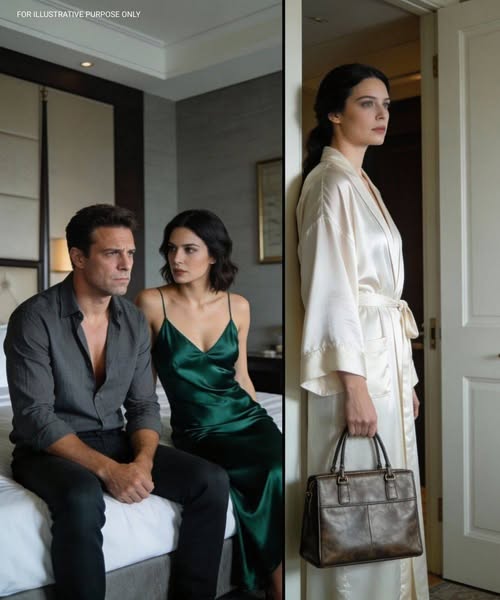
The sound that finally ended Isabel Valdivia’s marriage was not a shout, an argument, or a slammed door. It was the quiet zip of a heavy wool coat.
It was 10:00 p.m. on Christmas Eve in Madrid, and the cold outside felt sharper than usual. Snow fell in soft, deceptive silence as her husband, Alejandro, stood in the hallway adjusting his gloves. He claimed he was leaving for an urgent compliance emergency in Zurich. A crisis so severe it could not wait until after Christmas. A situation only he, apparently, could fix.
He leaned down, kissed Isabel on the cheek, smelling of expensive cologne and carefully rehearsed lies, told the children he loved them, and stepped out into the storm.
Isabel did not cry. She already knew Zurich was fiction. He was not flying to prevent a financial disaster. He was going to her.
And the moment the door closed, Isabel poured herself a glass of brandy, walked into her study, and picked up her phone. This was not the end of anything. It was simply her turn.
The Perfect House That Hid a Failing Marriage
Their home in La Moraleja looked flawless that night, especially dressed for Christmas. Isabel, an accomplished architect with a reputation for precision and restraint, had designed it herself. Floor-to-ceiling glass framed the winter garden. Cedar beams intersected with quarry stone in deliberate balance. Everything had a purpose. Everything had structure.
A towering fir tree shimmered with silver ornaments. The scent of mulled wine and gingerbread lingered in the air. On the sideboard, their children Mateo, ten, and Sofía, eight, had carefully arranged a miniature candy village, complete with icing-covered rooftops and sugar-glass windows.
From the outside, the house looked like a magazine spread. From the inside, it was a performance that everyone was tired of maintaining.
Earlier that evening, Alejandro had played his role flawlessly. He paced the living room with his phone pressed to his ear, speaking in clipped, urgent tones. He spoke of clients panicking. Of billions at risk. Of consequences too serious to explain to children.
If he didn’t leave that night, he claimed, everything would collapse.
Isabel nodded at the right moments. She helped him locate his passport. She asked about the children. Alejandro smiled like a man carrying the weight of the world and told her to explain that Dad had to “save it.” He promised he would return on the 26th. He promised to make it up to them.
Promises had become easy for him.
Now the children slept upstairs, stockings hanging from the fireplace, heavy with anticipation. Alejandro stepped into his black coat, checked his watch, and announced that the company car was waiting.
Isabel walked toward him and smoothed his lapel, her fingers lingering longer than necessary. She searched his eyes for the man she once loved. The student who debated architecture with her over cheap wine. The man who walked in the rain just to feel alive.
She found nothing.
“Be careful,” she whispered.
His kiss was brief and transactional, more obligation than affection. He picked up his bag and told her not to wait up.
Then he was gone.
Silence as Confirmation
The door clicked shut, and silence flooded the house.
Isabel stood motionless for a moment, then crossed the room and pulled back the curtain. She watched Alejandro’s taillights dissolve into swirling snow. Zurich was a convenient lie. Cold. Efficient. Believable.
The truth was Baqueira Beret. And he was not going alone.
Her eyes drifted to the gingerbread village. Mateo had built a tiny doghouse for their dog, Roco. Earlier that day, Alejandro had brushed past the table and crushed it without noticing.
That detail lingered longer than it should have.
Isabel did not call her sister. She did not call a friend. She called the only person who mattered.
The phone rang twice.
“Talk to me,” said a sharp voice on the other end. Elizabeth Croft, widely regarded as the most feared divorce attorney in Spain, someone who specialized in high-net-worth separations involving complex finance, asset protection, and legal exposure.
Isabel’s warmth evaporated. “He left,” she said calmly. “He thinks I believe Zurich. He’s heading to the Pyrenees with Beatriz Moreno.”
“A cliché,” Croft replied. “Good. That means we’re clear to proceed. Papers are finalized. Process servers are ready. What about the accounts?”
Isabel sat at her desk, opened her laptop, and stared at a spreadsheet Alejandro had never known existed.
“They’re ready,” she said. “New routing numbers. Trust transfers scheduled for 9:01 a.m.”
“The moment banks open,” Croft confirmed. “He’ll be served at his hotel at 9:30. Merry Christmas, Alejandro.”
Isabel glanced at a framed family photograph on her desk. It had become decorative rather than sentimental. Then she began working.
How Suspicion Really Begins
Isabel’s doubts did not start with a rumor or a whisper. They started with a number.
Six months earlier, she had noticed a €75,000 transfer from her parents’ trust to an unfamiliar company: Moreno Group SL. Alejandro had been managing aspects of the trust for convenience. He explained the transfer away easily, laughing as he described it as a promising investment tied to sustainable technology.
He sounded convincing. He sounded affectionate.
He was lying.
Isabel approached suspicion the way she approached architecture: methodically, quietly, without emotion. She researched Moreno Group SL the same way she would inspect a load-bearing wall. The company was newly registered. Its address led to a rented office. Its directors linked back to Beatriz Moreno, twenty-eight years old, ambitious, and employed by a rival firm.
Then came the photograph.
Beatriz was laughing on a boat, sunlight glinting off the water. The man beside her wore Alejandro’s distinctive Breitling, a gift Isabel had given him for their tenth anniversary. The photo was timestamped on a weekend Alejandro had claimed he was attending a professional retreat.
That was the moment everything clarified.
When Betrayal Stops Being Emotional
The affair did not destroy Isabel. It focused her.
Because what mattered more than the romance was the money. This was not just infidelity. It was financial misconduct. The misuse of her family’s wealth to fund deception. The quiet erosion of trust through numbers, not words.
That distinction mattered legally.
So Isabel documented everything. She purchased new devices. She used a burner phone. She opened separate accounts. She met Elizabeth Croft in an office that felt more like a strategic command center than a law firm.
“I’m not here to save my marriage,” Isabel said during their first meeting. “I’m here to end it. And I am not losing the house I built or a single euro he took.”
Croft nodded. She had heard that tone before.
For months, Isabel lived two lives. During the day, she played the devoted wife. She hosted dinners. Volunteered at school events. Planned holidays. At night, Croft’s forensic accounting team followed the money.
The €75,000 was only the beginning.
Alejandro had constructed a network of shell companies. Funds had been diverted not only from Isabel’s trust but from clients. It wasn’t reckless behavior. It was controlled. Contained. A structure that resembled a Ponzi scheme without the chaos.
Zurich had never been about compliance. It was about escape.
The Christmas He Never Questioned
Two weeks before Christmas, Isabel received confirmation. Business-class tickets under Alejandro and Beatriz’s names to Lleida. A luxury hotel reservation in Baqueira Beret. A sleigh dinner scheduled for Christmas Day.
They were planning a celebration.
Isabel was designing an exit.
So she smiled. She baked gingerbread. She wrapped gifts. She kissed Alejandro goodbye and watched him leave into the storm exactly as planned.
Christmas morning in Baqueira Beret felt perfect to Alejandro. Champagne. Mimosas. Sunlight spilling across pristine snow. He joked about checking his email, convinced he would return home to a compliant wife and a preserved life.
Then his phone vibrated.
An email from Croft & Associates.
One PDF opened into a nightmare. Divorce filings. Emergency court orders. Custody requests. Financial evidence. Transaction trails. Emails between him and Beatriz discussing asset liquidation and relocation plans involving Dubai.
Before he could react, another message arrived. His firm had suspended him immediately. System access revoked. Regulators on-site. Court orders in motion.
There was a knock at the hotel suite door.
Not room service.
He was served on Christmas morning.
When Control Disappears Quietly
At 9:01 a.m., Isabel authorized the transfers. Funds moved into protected accounts. Trusts were frozen. Alejandro lost signing authority. Home systems were secured. His access codes stopped working. Everything went dark at once.
By midday, Isabel had packed the children and left for her sister’s house. By evening, a Sotheby’s sign appeared on the lawn of the home Alejandro once believed defined his success.
When he returned to Madrid days later, frantic and humiliated, he found himself locked out. His cards declined. His calls unanswered. The house that once symbolized prestige now advertised its availability.
The weeks that followed dismantled him.
In court, Croft revealed the final detail Alejandro had never questioned. The house was never his. Isabel had purchased the land through her architecture firm years before their marriage. He had lived in her home for a decade without realizing it.
The forensic audit detailed millions misappropriated. His motions were denied. His access to the children was restricted due to flight risk and ongoing investigations tied to financial misconduct and insurance liability exposure.
Beatriz did not escape unscathed. She was terminated from her firm, locked out of her apartment, and eventually agreed to cooperate to protect herself legally. Alejandro was left to face the consequences alone.
Structural Justice, Not Revenge
Isabel did what architects do best. She assessed the damage. She removed compromised elements. She restored integrity.
She cleared the title. Severed liens. Sold the house through an LLC she controlled, eliminating fraudulent debt associated with Alejandro’s schemes. Not for spectacle. For permanence.
She did not rage. She did not explain herself. She executed.
In the end, Isabel did not merely survive betrayal.
She dismantled it with documentation, legal precision, and financial clarity.
This was not revenge.
It was structural justice.
And it began the moment a coat zipper sounded like goodbye.