AnnaMaria
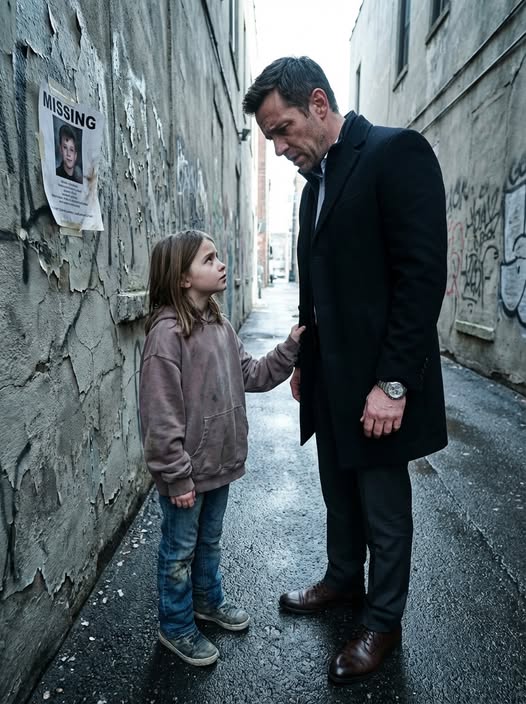
Jonathan Pierce walked the streets of Chicago for weeks with a stack of missing-person flyers so thick his fingers cramped. At first, the police sounded concerned. Then busy. Then distant. By the third week, their updates blended into the same tired sentence, delivered with the same hollow tone: Nothing new right now.
They stopped sounding like people.
They started sounding like a voicemail.
A month had passed since his son, Owen, vanished.
Jonathan came home every night to a house that felt wrong in its silence. Owen’s cereal bowl still sat on the counter from that last morning. His backpack leaned against the wall, faintly scented with crayons and school glue. Somewhere between day fourteen and day twenty-eight, Jonathan understood the truth no one wanted to say out loud: they were waiting for the story to fade.
He refused to fade with it.
One night, long after his office had emptied, Jonathan fed paper into the printer until dawn. Page after page slid out—Owen’s photo, his crooked grin, the navy hoodie he wore even when it wasn’t cold. One word sat beneath the image, tightening Jonathan’s chest every time he saw it: MISSING.
By morning, the flyers covered every surface of his office. He bundled them into thick stacks and went out alone—no driver, no security, just a father who had run out of patience for being careful.
He taped flyers to bus stops, street poles, shop windows. The tape bit into his skin. Paper sliced his fingers. He barely noticed. Most people glanced and walked on. Some looked away, as if the word missing could spread. A patrol car slowed once. An officer told him to go home.
“You had a month,” Jonathan replied calmly. “This part is mine.”
He crossed into neighborhoods his colleagues never drove through, where buildings leaned toward each other and life pressed close and loud. He asked the same question to anyone who met his eyes: Have you seen this boy? Please. Look closely.
Late that afternoon, the sky turned a tired gray. Wind tugged at his flyers. At the end of a block, a narrow alley slipped between two unfinished buildings. Jonathan turned into it without knowing why.
That’s where he found her.
She couldn’t have been more than eight. Small, bundled in an oversized hoodie, hair pulled back like she’d done it herself in a hurry. She watched him tape a flyer with the seriousness of someone who had seen too much.
Then she tugged his coat.
“Mister,” she said.
Jonathan turned, ready for another apology, another I hope you find him. Instead, she said six words that made his blood run cold.
“That boy lives in my house.”
The sentence didn’t make sense at first. Like a dream trying to become real. Jonathan crouched so he could see her face.
“What did you say?” he asked gently.
She pointed deeper into the alley. “He’s there. He’s quiet. But he’s there.”
Jonathan’s heart pounded so hard it hurt. “Show me,” he said.
She didn’t hesitate.
She led him past trash cans and broken pallets to a half-finished building that smelled of damp concrete and dust. Inside, the air was cold and still. A woman stood near a hot plate, wary but calm. And in the corner, on a stained mattress, sat a child tapping two fingers against his knee in a slow, rhythmic motion.
Owen.
Alive.
Jonathan dropped to the floor, not caring where he fell. “Owen,” he whispered.
The boy looked up. He looked right at his father—and still, something was wrong. His eyes were dull, as if the light inside him had been turned down.
“It’s me,” Jonathan said softly. “It’s Dad.”
Owen’s mouth moved, searching. Then, barely audible, he whispered, “Dad.”
Relief crashed through Jonathan so hard he had to close his eyes. But beneath it, something colder stirred. Owen hadn’t ended up here by accident. Someone had taken him.
The woman, Maya, explained quietly that she’d found Owen near the tracks days earlier—injured, terrified, ignored by passersby. She was afraid to call anyone, afraid whoever hurt him would come back.
Jonathan took his son home that night. The house in Lincoln Park felt colder than ever.
His wife, Serena, waited in the kitchen, perfect and composed. She asked where he’d been. Not worried—measured. Something in Jonathan shifted. Questions he wasn’t ready to name pressed forward.
Days later, during a violent storm, Owen woke screaming. As Jonathan calmed him, memory broke through the fog.
“A black car,” Owen whispered. “It smelled like expensive perfume. She said we were getting ice cream.”
Jonathan’s breath caught. “Who?” he asked.
Owen looked at him and said the name that shattered everything Jonathan believed about his life.
“Serena.”
The truth unfolded fast after that—messages on Serena’s phone, a helper who talked, records that exposed lies carefully hidden behind wealth and charm. Serena hadn’t just taken Owen. She had planned to erase him—and Jonathan—so she could inherit everything without obstruction.
Jonathan waited, played normal, and let the evidence collect. The night he finally confronted her, sirens arrived before she could run. Handcuffs clicked. The mask fell away.
In court, Owen pointed without shaking. Maya testified with quiet dignity. The verdict was firm. Guilty.
Healing came slowly. Owen didn’t want to leave Maya’s daughter, Rosie. They had survived together. Jonathan realized his big, perfect house had never been a home—just a place where people hid.
So he opened it.
A year later, two children chased birds by the lake while Jonathan stood beside the woman who had saved his son when the world walked past. They built something real—not perfect, not polished, but honest.
Jonathan learned what mattered most too late—and just in time.
Family isn’t a last name.
It’s who shows up when it counts.