AnnaMaria
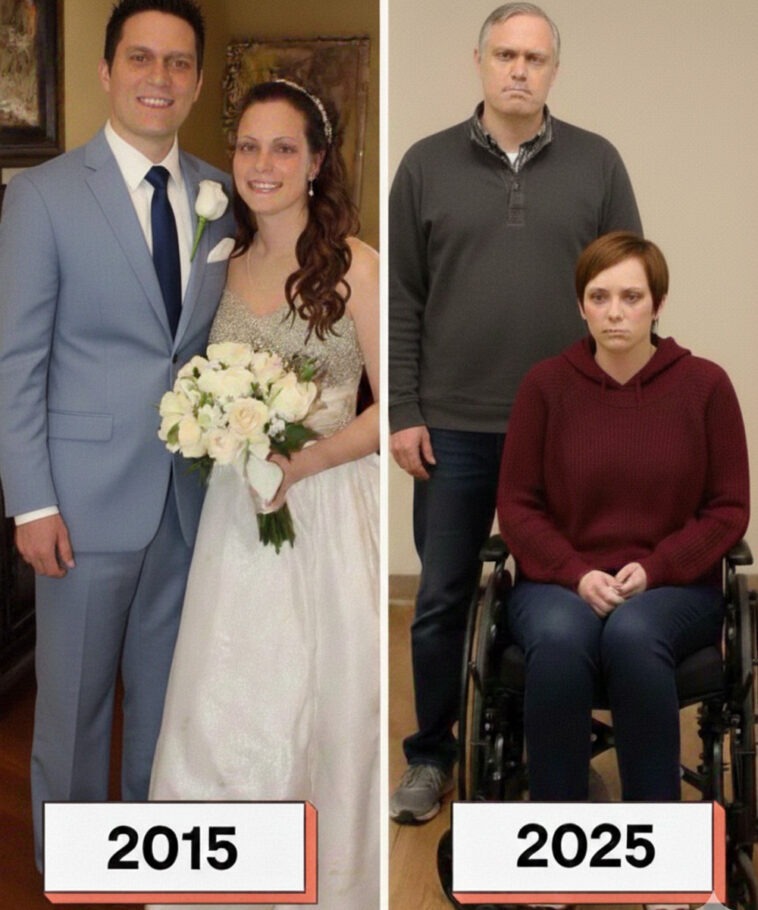
After the accident, everyone told me the hardest part would be learning how to walk again.
They were wrong.
The hardest part was discovering exactly what my husband believed my life—and my love—were worth.
I’m thirty-five years old, and before the crash, I was the one holding everything together.
I paid most of our bills.
I cooked. I cleaned.
I handled appointments, paperwork, planning—every invisible task that keeps a household running.
Whenever my husband wanted to quit a job, “reset,” or chase a new idea, I opened my laptop, ran the numbers, and made it work. I worked longer hours. I reassured him. I told myself this was marriage—give and take, sacrifice and trust.
We’d been together ten years. I truly believed we were solid.
Then came the car accident.
I don’t remember the impact. Just the green light—and then a hospital ceiling.
I survived. My legs did not bounce back the way the doctors hoped. I wasn’t permanently paralyzed, but I couldn’t stand. Couldn’t walk. Couldn’t transfer myself without help.
A wheelchair. Months of physical therapy. Complete dependence.
“Six to nine months,” the doctors said. “With help.”
I hated every word.
I had always been the capable one. The helper. But part of me hoped—quietly—that this might bring us closer. That love would show itself the way it had in my childhood, when my mother cared for my injured father without complaint or calculation.
When I came home in that wheelchair, I told myself, This is our hard chapter. We’ll survive it together.
The first week shattered that illusion.
My husband grew distant. Irritated. Silent. He helped me eat, shower, then vanished—into his office, out of the house, into anywhere that wasn’t with me.
A week later, he sat on the bed with that expression people wear when they’re about to say something cruel and want credit for being “honest.”
“We need to talk realistically,” he said.
My stomach dropped.
“You’re going to need help all the time,” he continued. “All day. Every day. And I didn’t sign up to be a nurse.”
“You signed up to be my husband,” I said quietly.
“This is different,” he replied. “This is a full-time job. I’d be putting my life on hold—my career, my freedom, everything.”
Tears burned my eyes.
“It’s temporary,” I said. “The doctors are hopeful—”
He cut me off.
“Temporary still means months. And I can’t do this for free.”
The word hit me like a slap.
“For… free?”
“If you want me to stay,” he said calmly, “I want to be paid. One thousand dollars a week.”
I laughed. I truly thought it had to be a joke.
It wasn’t.
“You earn more than I do,” he added. “You’ve carried us for years. Now it’s your turn to pay. I’m not your nurse.”
“I’m your wife,” I said, my voice breaking. “I got hit by a car.”
He shrugged.
“Think of it as hiring a caregiver. At least with me, you know who you’re paying.”
I wanted to scream. To throw him out.
But I couldn’t even get out of bed on my own.
My family lived far away. My sister helped when she could, but I was trapped—physically and emotionally.
So I swallowed my dignity.
“Fine,” I said.
He nodded like we’d closed a business deal.
“Every Friday,” he said.
And just like that, love became an invoice.
Every week, I paid him.
And every week, he gave me the bare minimum.
Rushed showers. Cold sighs. Meals dropped without help. Hours alone while I sat afraid to ask for water.
He was always on his phone. Always hiding the screen.
One night, thirsty and desperate, I pressed the call button.
Nothing.
I called his phone. It rang—from the living room.
He let it ring.
The next morning, his phone lit up while he showered.
A message.
Jenna: Last night was amazing. Can’t wait to see you again 😘
Jenna.
My friend.
I opened the thread.
There it was.
Him: Babysitting a cripple is exhausting.
Her: At least she’s paying for our dates.
Him: True. She finally paid for something fun 😂
Photos. Dinners. Smiles.
I paid him to care for me while he used that money to cheat on me—with my friend.
When he came out smiling, I said nothing.
That was the moment something inside me hardened.
That afternoon, I called my sister.
She listened. Then said, “I will destroy him.”
“Let’s do it legally,” I replied.
We gathered evidence. Found a lawyer.
And I kept paying him.
Kept smiling.
Until everything was ready.
On Friday, I handed him a box.
“A bonus,” I said.
Inside were divorce papers. Photos. Messages.
“I can explain,” he cried.
“You charged me to love me,” I said. “That was the explanation.”
He begged. Promised. Sobbed.
“I’ll take care of you for free.”
I pulled away.
“I survived a car crash,” I said. “I will survive losing you.”
“This,” I added, “is your final paycheck.”
My sister walked in.
“Time to pack.”
As he left, he asked, “You’re throwing away ten years?”
“No,” I replied. “You did—when you put a price on loving me.”
My sister stayed.
She cared for me with patience. With dignity.
And I learned something I will never forget:
Real love doesn’t charge by the hour.
If someone only stays when it’s profitable, convenient, or easy—
They never loved you.
They loved what you provided.