AnnaMaria
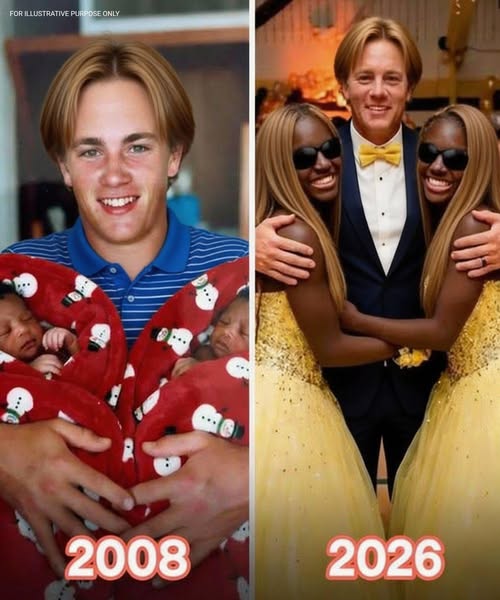
Eighteen years ago, my wife walked out on me and our newborn twin daughters. Both girls were blind from birth. She left behind a note, two cribs, and a silence that would stretch across nearly two decades. I stayed. I raised them. I built a life out of exhaustion, fear, and stubborn love. Last week, she came back wearing designer clothes, carrying cash, and making one demand that revealed she had learned nothing at all.
My name is Mark, and until recently, I believed I understood the limits of forgiveness. I was wrong.
The Day Everything Split in Two
Emma and Clara were born on a rainy Tuesday morning. The labor was long, the delivery complicated, but when I finally heard two cries instead of one, I felt something crack open in my chest. Twins. Two tiny lives. Two futures.
The joy didn’t last long.
The doctors asked us to sit down. They spoke slowly, carefully, using words like “congenital,” “irreversible,” and “lifelong.” Both girls were blind. Not partially. Not temporarily. Completely.
I remember nodding while my mind screamed. I remember squeezing Lauren’s hand and feeling her pull away.
She didn’t cry. She didn’t ask questions. She just stared at the wall as if something precious had been taken from her personally.
Three weeks later, she was gone.
I woke up one morning to an empty bed and a folded note on the kitchen counter. No goodbye. No plan. Just four sentences written in rushed handwriting.
I can’t do this.
I have dreams.
This isn’t the life I wanted.
I’m sorry.
That was it. No call. No explanation. No attempt to see the girls one last time.
In that moment, my life didn’t fall apart loudly. It collapsed quietly, piece by piece, into a reality I never imagined choosing.
Learning to Be Enough for Three People
The first year was survival. Bottles, diapers, doctor visits, and a kind of exhaustion that seeps into your bones. I learned how to soothe two babies at once. I learned how to sleep in fifteen-minute fragments. I learned how to cry silently so they wouldn’t hear it.
I also learned that blindness didn’t mean fragility.
The girls responded to sound, touch, rhythm. They recognized my footsteps before they could crawl. They learned the layout of our small apartment by memory. By the time they were toddlers, they navigated better than most adults I knew.
I rearranged everything. Sharp corners padded. Furniture anchored. Textures marked transitions. Our home became a map they could read with their hands and feet.
I learned Braille before they learned the alphabet. I labeled everything. I described the world out loud, constantly. Colors. Shapes. Faces. Emotions.
I didn’t want their world to be smaller just because they couldn’t see it.
Turning a Limitation into a Language
When the girls were five, a therapist suggested activities to strengthen fine motor skills. Sewing was mentioned casually, almost as an afterthought.
I bought a cheap sewing kit from a thrift store.
At first, it was clumsy. Needles dropped. Thread tangled. But something happened that surprised everyone, including me.
Emma could identify fabric instantly by touch. Cotton felt different from silk. Denim had weight. Wool had warmth. She could describe textures with astonishing precision.
Clara, on the other hand, had vision in her mind. She could imagine a garment completely and guide her hands without hesitation. Patterns made sense to her in a way that felt instinctive.
Our living room became a workshop. Fabric covered the couch. The sewing machine hummed late into the night. We laughed at mistakes. We celebrated small victories.
Slowly, sewing became more than therapy.
It became freedom.
Growing Up Without Asking Why
The girls never asked about their mother. Not once.
I made a conscious choice early on. I would never poison them with bitterness. I would never make them feel abandoned. I explained her absence simply and honestly.
“She chose a different life,” I told them. “That choice had nothing to do with your worth.”
They accepted it with a maturity that humbled me.
They went to school with canes and confidence. They corrected teachers who underestimated them. They made friends. They argued. They dreamed.
They were not defined by what they lacked.
They were defined by what they could do.
The Knock That Brought the Past Back
Last Thursday, the doorbell rang.
I wasn’t expecting anyone.
When I opened the door, I barely recognized her.
Lauren stood there polished and expensive, like a walking advertisement for success. Designer coat. Perfect hair. Heels that had never touched public transit. She stepped inside without waiting for an invitation.
She looked around and smirked.
“You still live here?” she asked. “I thought you’d have done better by now.”
I felt something tighten in my chest.
When Emma and Clara entered the room, she studied them like objects on display. Not daughters. Not people. Exhibits.
I told them the truth. Who she was. Why she was there.
The silence that followed was heavy but controlled.
Lauren smiled and placed two garment bags and a thick envelope on the couch.
“These are custom designer gowns,” she said. “And that’s enough money to change your lives.”
Then she explained the condition.
The Offer That Revealed Everything
The girls had to publicly denounce me. They had to claim I failed them. They had to sign a contract stating they chose her over me. In return, they would receive money, status, and access to her world.
I read the document aloud, my hands shaking.
The language was cold. Legal. Erasing eighteen years of bedtime stories, scraped knees, late-night sewing sessions, and unconditional presence.
Emma picked up the envelope and weighed it in her hands.
“Yes,” she said calmly. “This is a lot of money.”
My heart cracked open.
Then she continued.
“But we’ve never needed it. We already have everything that matters.”
Clara stepped forward.
“We had a father who stayed. Who didn’t leave when things were hard.”
Emma tore the envelope open and let the bills scatter across the floor.
“We’re not for sale.”
When the Mask Fell
Lauren screamed.
She talked about her sacrifices, her career, her fame. She accused me of turning them against her. She demanded gratitude for giving them life.
Clara’s voice was quiet but sharp.
“You didn’t leave to build a future for us,” she said. “You left because you were selfish.”
She opened the door.
“Please leave.”
Lauren gathered her money and stormed out, humiliation trailing behind her like smoke.
The Aftermath No One Expected
An hour later, Emma’s friend admitted she had been video-calling during the confrontation. She posted it online with a simple caption.
This is what real love looks like.
The response was immediate.
Public opinion turned. Sponsors pulled out. Contracts disappeared. The image Lauren had spent years crafting collapsed in days.
Meanwhile, something else happened.
Emma and Clara were offered full scholarships to a prestigious costume design program. Not because of pity. Because of talent.
What Eighteen Years Really Built
Yesterday, I watched them on set adjusting costumes with confidence and precision. A director turned to me and said, “Your daughters are extraordinary.”
“I know,” I replied. “I’m the lucky one.”
We still live in the same small apartment. We still eat takeout. We still laugh too loudly.
Lauren chose fame and found emptiness.
We chose each other and found everything.
My daughters didn’t need designer dresses or stacks of cash. They needed someone who stayed.
And when their mother tried to buy them back eighteen years later, they already knew the difference between something expensive and something priceless.