AnnaMaria
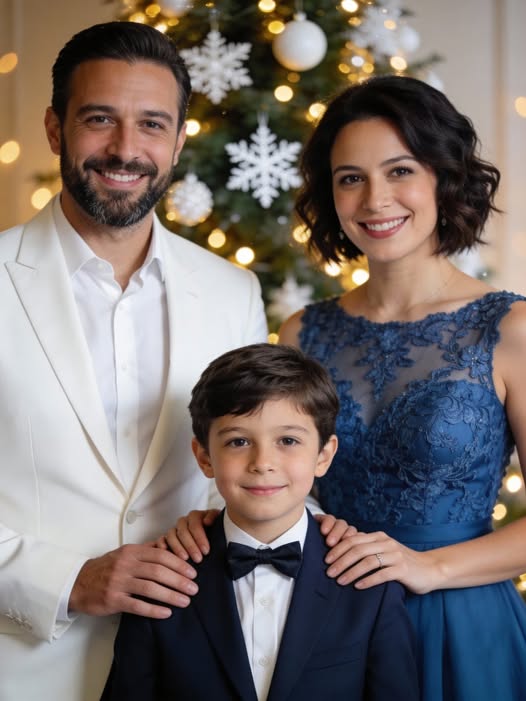
Ethan Hale did not grow up in a home filled with warmth or reassurance. He grew up in a home governed by rules, expectations, and an unspoken belief that love was conditional. His mother believed discipline was protection and control was care. When Ethan’s father left early in his childhood, she didn’t collapse or grieve openly. She tightened structure instead. Emotions became liabilities. Stability meant obedience. From a young age, Ethan learned that approval was something earned, not given, and that success mattered more than contentment. This shaped him into someone capable, driven, and independent, but also someone who quietly learned to live without praise.
By the time Ethan reached adulthood, he had stopped trying to impress his mother. Not because he didn’t want her approval, but because chasing it had become exhausting. He built a career, managed his finances responsibly, and lived within his means. On paper, he was exactly the kind of son she had wanted. What she never prepared for was the moment he chose love over legacy.
When Love Didn’t Fit the Rules
When Ethan told his mother about Lena, he did so calmly, without defensiveness. Lena was a hospital nurse, compassionate, practical, and resilient in ways that come only from responsibility. She was also a single mother raising a young son named Noah. Ethan described her kindness, her patience, and the way she carried exhaustion without bitterness. His mother listened like a judge hearing testimony. On paper, Lena sounded acceptable. Educated. Employed. Responsible. But the moment Ethan mentioned the child, everything changed. In his mother’s mind, Lena stopped being a person and became a risk. A complication. A liability that threatened the carefully constructed future she envisioned for her son.
Their first meeting confirmed what Ethan had feared. Lena arrived late, not out of carelessness, but because a double shift had run long and childcare had fallen through. She apologized sincerely, clearly uncomfortable. Ethan’s mother offered polite distance and nothing more. She barely acknowledged Noah, paid only for herself at the table, and left early under the guise of a prior commitment. Lena didn’t need an explanation. She understood immediately that this family did not include her, and likely never would.
An Ultimatum Disguised as Concern
Two years later, Ethan ran into his mother unexpectedly at a piano showroom, a place she associated with refinement, legacy, and control. Music had always been part of her vision of success, something that looked impressive from the outside and demanded discipline from within. She looked him over with practiced neutrality and asked whether the relationship was serious or just another phase he would eventually outgrow. Ethan told her he was engaged. Her response was calm, precise, and final. If he married Lena, he would lose her support permanently. There would be no inheritance. No safety net. No relationship. She framed it as concern, as guidance, as protection of his future. But Ethan heard what it really was. Control.
That night, Ethan chose love. He did not argue. He did not plead. He did not ask for understanding. He walked away. In that moment, he accepted the financial and emotional consequences of independence fully. He chose a life without guarantees but with honesty. It was not a dramatic decision. It was a quiet one, made after years of understanding that approval from someone unwilling to give it freely was not love.
Building a Life That Didn’t Impress Anyone
Ethan and Lena married quietly in a friend’s backyard. There were no speeches designed to impress, no guests who evaluated their choices, no performance of success. Just promises spoken plainly. Their life together was not impressive by Ethan’s mother’s standards. They rented a modest house. The refrigerator was cluttered with leftovers and school schedules. A lemon tree grew unevenly in the yard. Green handprints, painted by Noah during an afternoon of laughter, marked the bedroom wall. Nothing matched. Nothing was curated. Everything was lived in.
One afternoon, Noah called Ethan “Dad” without thinking. There was no ceremony, no hesitation. Just a word spoken naturally, as if it had always belonged there. That was the moment Ethan understood something fundamental. Real happiness could be both terrifying and healing. It required vulnerability, patience, and presence. It offered no guarantees, only meaning.
Three years passed without a word from his mother. No calls. No holidays. No messages. Ethan learned to live without anticipating her reaction to his choices. He managed finances carefully, built savings, and planned responsibly for the future. Life was stable, not glamorous. It was full.
The Call That Brought the Past Back
Then the phone rang. His mother announced she was coming to visit. Not to reconcile. Not to apologize. To see what he had “given everything up for.” The words were chosen carefully, as always. Lena was not nervous. She understood judgment well enough to know it could not be avoided. She told Ethan they should not clean or rearrange anything. They should not hide their life. The house would remain exactly as it was, imperfect and warm.
When Ethan’s mother arrived, she entered like a guest who did not plan to stay long. Her eyes scanned the room with quiet disapproval. She noticed the mismatched furniture, the worn sofa, the absence of anything designed to impress. Then she stopped in the hallway. On the wall were Noah’s painted handprints. In the corner sat an old, scratched piano, one Ethan had rescued and repaired himself rather than replacing.
Noah climbed onto the bench and began to play a Chopin piece. It was the same one Ethan’s mother had forced him to practice for years, measuring success by precision rather than joy. The notes filled the room, uneven in places but sincere. Her voice dropped. She asked who had taught him. Ethan answered simply. Noah had wanted to learn, so Ethan had taught him.
The Moment Control Lost Its Power
When Noah finished playing, he walked over and handed her a drawing. It was their family, drawn in uneven lines and bold colors. He spoke without fear. He told her they didn’t yell in their house. He said Ethan told him yelling made the house forget how to breathe. The words landed harder than any confrontation ever could. They carried innocence, truth, and an understanding of emotional safety that could not be argued with.
At dinner, Ethan’s mother told him he could have been exceptional. Her definition of exceptional was familiar. Prestige. Recognition. Control. Ethan smiled calmly and told her he already was. He had simply stopped auditioning for her. For the first time, she admitted something real. She confessed that she had tried to control everything because she was terrified of being left. And in doing so, she had driven everyone away.
Lena finally spoke. Not defensively. Not emotionally. Clearly. She told her this family was not a mistake or a punishment. And she did not have to be the villain unless she chose to be. The room was quiet. No one rushed to fill the silence.
Not Forgiveness, But Movement
Ethan’s mother left without hugs or apologies. There was no dramatic reconciliation. No promises were made. Days later, a package arrived. Inside was a gift card to a music store. Attached was a note. It was addressed to Noah. It said to let him play because he wanted to. It was not forgiveness. But it was movement. It was acknowledgment. It was a beginning that did not demand erasure of the past.
Ethan understood something important then. Independence does not mean rejection. Love does not require permission. And family, when built on respect rather than control, becomes something resilient. Financial security, inheritance, and legacy matter in practical ways, but they cannot replace emotional safety or dignity. People who confuse control with care eventually face a truth they cannot manage. Love chosen freely outlasts love demanded.
Sometimes the most meaningful change arrives quietly. Not with apologies, but with actions that admit growth. Not with control, but with release. And sometimes, that is enough to let the next chapter begin.