AnnaMaria
I can still remember the smell before I understood the sight. Wet earth. Old wood. The sharp, metallic tang of dry dog food.
I had come home early from a medical seminar in Chicago—exhausted, jet-lagged, but excited to see my son. I expected cartoons playing too loud, shoes kicked off in the hallway, maybe Aaron running toward me with a grin and a story I’d already heard twice.
Instead, the yard was silent.
Too silent.
“Aaron?” I called.
No answer. Just a faint, uneven sound—like someone trying very hard not to cry.
That’s when I saw him.
My six-year-old son was curled inside the doghouse.
Barefoot. Knees tucked to his chest. His clean school pants smeared with dirt. In his hands, a metal bowl filled with dry kibble.
For a moment, my brain refused to process it. I stood frozen, my heart slamming so hard I thought I might pass out.
“Aaron… what happened?” I asked, my voice breaking as I dropped to my knees.
He flinched when he looked up at me. His lips trembled.
“Mom,” he whispered, shaking, “Grandma said I’m not family. She said I had to stay outside.”
The world narrowed to a single, terrible point.
This wasn’t a misunderstanding. This wasn’t discipline. This was cruelty.
I lifted him out of the doghouse, and that’s when I saw the marks—faint but unmistakable—around his wrists. Rope burns. Crumbs of dog food clung to his shirt. He wouldn’t look at me, as if he was ashamed.
“Did she make you eat this?” I asked quietly.
He nodded. “She said I should get used to it.”
Something inside me went cold and clear.
My mother-in-law, Eleanor Hartwell, was adored in our Connecticut community. A donor. A patron of the arts. Always elegant. Always praised. People called her generous, refined, kind.
I had always felt something off about her—something sharp behind the smile—but nothing prepared me for this.
I carried Aaron into the house.
Eleanor sat on the leather couch, legs crossed, scrolling through her phone. Calm. Unbothered. Waiting.
She looked up and smiled.
“Welcome back, Emily,” she said lightly. “I arranged a place for your son. It fits his… background.”
I stared at her, unable to speak at first.
“You abused him,” I finally said. “You humiliated him. You tied him up. You made him eat dog food.”
She shrugged, unimpressed. “Children need to learn their place early. Yours simply needed a reminder.”
That was the moment something broke—but not in rage.
In certainty.
I turned without another word, Aaron still in my arms, and walked out. I didn’t pack. I didn’t argue. I drove straight to my parents’ house, shaking so badly I could barely keep the car on the road.
That night, my father—a retired federal attorney—looked at the photos I’d taken of Aaron’s injuries and said quietly, “This is felony child abuse.”
My mother held my son and cried.
“She won’t get away with this,” she said.
And she didn’t.
The next morning, my father gathered us in his study and asked for everything—exact words, exact times, every photo. Aaron sat wrapped in a blanket, small and exhausted.
“This wasn’t punishment,” my father said after reviewing the evidence. “It was deliberate humiliation. Judges don’t take that lightly.”
Eleanor’s power had always come from her image.
So that’s where the truth would meet her.
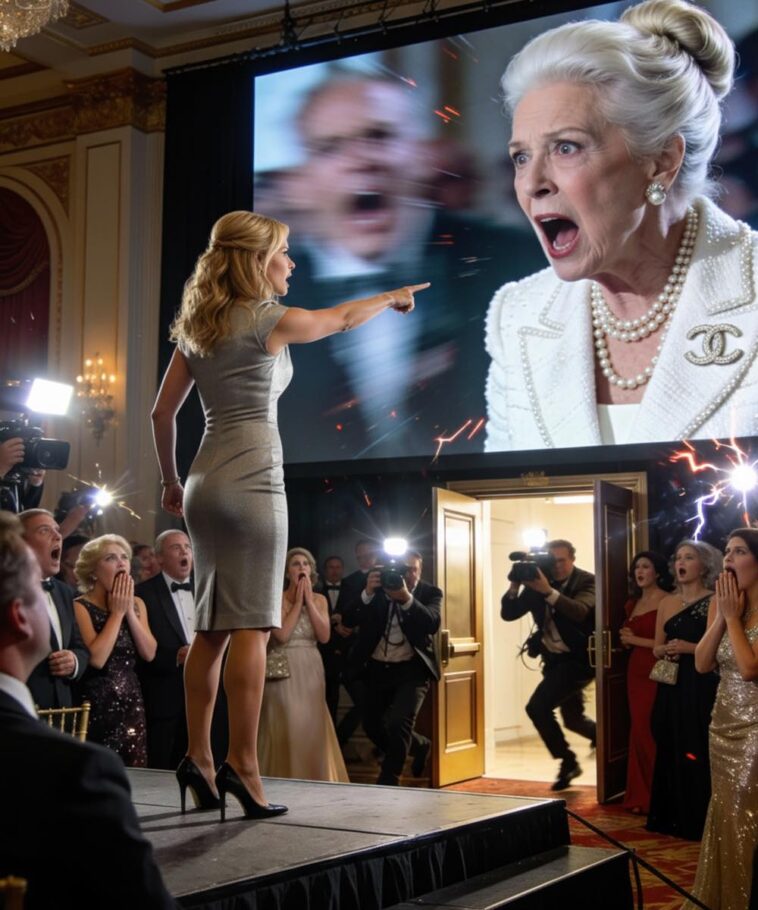
The next day, at her charity brunch—her favorite stage—the screen behind her lit up.
Photos of Aaron in the doghouse.
The bowl of kibble.
The marks on his wrists.
Gasps rippled through the room. Phones came out. Whispers turned into chaos.
“This,” I said calmly, stepping forward, “is what she did to my child.”
Her reputation collapsed in minutes.
By the next morning, headlines were everywhere. Investigations began. Boards resigned her. Friends vanished. Her lawyer tried to settle.
My father refused.
“This isn’t about money,” he said. “It’s about accountability.”
Aaron started therapy. We moved. My husband came home and held his son like he might disappear if he let go.
Some nights Aaron still wakes up crying. Loud barking scares him. But he laughs again now. He plays. He trusts.
One afternoon, he looked up at me and asked, “Mom… we’re safe now, right?”
“Yes,” I told him. “We are.”
And this time, it was true.
Because family isn’t blood.
It’s protection.
And anyone who forgets that doesn’t deserve the title.