AnnaMaria
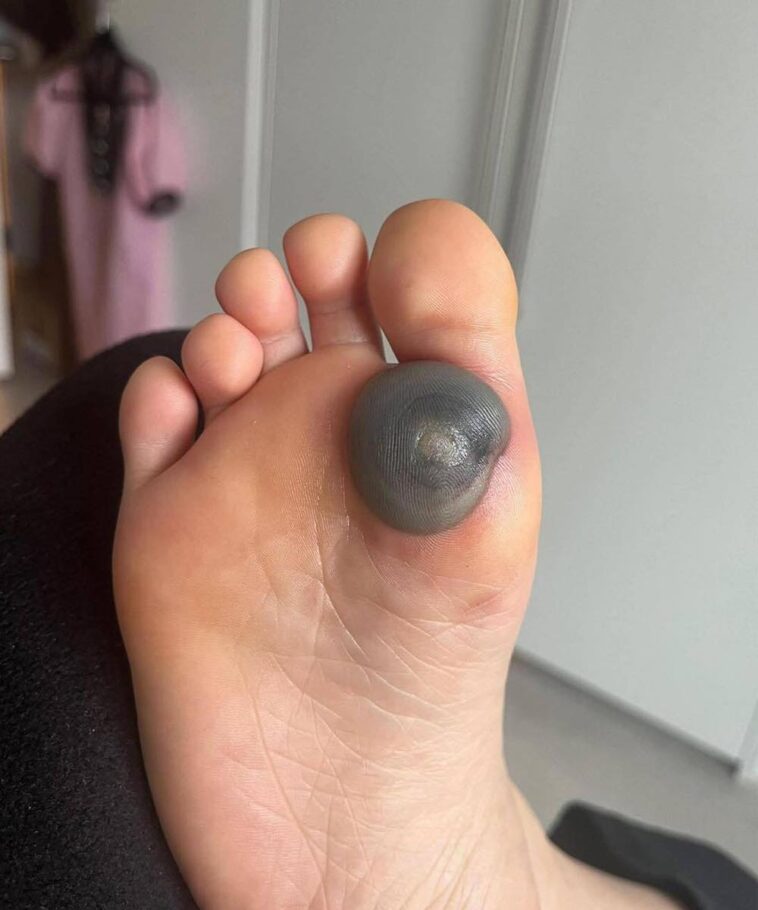
Waking up to see a large, dark spot on your child’s foot is terrifying. When that spot is painful, swollen, and makes it hard or impossible for her to move her foot, panic is a completely natural reaction. Many parents immediately worry about infections, broken bones, allergic reactions, or something far more serious. One common but often misunderstood possibility is a blood blister, yet the severity of pain and loss of movement means this situation deserves careful explanation and, in many cases, prompt medical evaluation.
This isn’t just about identifying a spot on the skin. It’s about understanding what could cause sudden pain, swelling, and limited mobility in a child, what signs are considered normal, and what signs are red flags that require professional medical care.
What a Blood Blister Actually Is
A blood blister forms when tiny blood vessels under the skin rupture, but the outer layer of skin remains intact. Blood leaks into the space beneath the skin, creating a dark red, purple, or maroon bubble that looks very different from a clear fluid blister.
Unlike ordinary blisters filled with clear fluid, blood blisters contain blood trapped under the skin. They can look dramatic, sometimes even alarming, especially when they appear suddenly or grow quickly.
Blood blisters most commonly appear on areas of the body that experience pressure, friction, or pinching, including the soles of the feet, toes, fingers, and palms. In children, the feet are a frequent location because of shoes, activity, running, jumping, and growth-related sensitivity.
Why Blood Blisters Can Be Extremely Painful
Blood blisters can hurt far more than people expect. The trapped blood creates pressure under the skin, pressing against nerves and sensitive tissue. On the foot, this pain can be amplified because the sole contains many nerve endings and bears body weight.
If the blood blister is large or located on a pressure point such as the heel, ball of the foot, or side of the sole, pain can become intense. This alone can make walking difficult. However, inability to move the foot at all suggests that something more may be happening beneath the surface.
Common Causes of Blood Blisters on the Foot
In children, blood blisters on the foot usually develop due to mechanical stress, even if the child doesn’t remember a specific injury.
Common causes include ill-fitting shoes that rub or pinch during walking or running, shoes that are too tight or too loose causing repeated friction, sudden increases in activity such as sports, playground activity, or long walks, pressure from hard surfaces like floors, stairs, or playground equipment, accidental pinching or crushing injuries, and repetitive motion that puts stress on one area of the foot.
Children often continue playing through discomfort and may not notice minor trauma at the time it occurs. The blister may then appear hours later or even the next morning, making it seem as if it appeared “out of nowhere.”
When a Blood Blister Is Likely Benign
In many cases, a blood blister is uncomfortable but not dangerous. Signs that suggest a simple blood blister include a well-defined dark red or purple bubble under intact skin, localized pain that worsens with pressure but improves at rest, no spreading redness around the area, no fever, and gradual improvement over several days.
Most uncomplicated blood blisters heal on their own within 7 to 14 days. The body slowly reabsorbs the blood, the color fades, and the skin returns to normal.
Why Severe Pain and Limited Movement Are Concerning
A child who cannot move her foot or is in significant pain is not experiencing a typical, mild blister scenario. This level of discomfort raises concern for additional or alternative conditions that require medical assessment.
Possibilities include a very deep blood blister causing nerve compression, a hematoma deeper in the tissue, a fracture or bone bruise, a soft tissue injury such as a ligament or tendon strain, cellulitis or early infection, an abscess beneath the skin, or an inflammatory condition affecting the foot or joints.
In children, pain severe enough to limit movement should never be ignored, regardless of how harmless the skin lesion may appear.
Could This Be an Infection Instead of a Blood Blister?
One of the biggest fears parents have is infection, and for good reason. Certain infections can cause swelling, pain, redness, and warmth in the foot. Unlike a blood blister, infections usually show progressive redness, warmth to the touch, increasing swelling, fever, and worsening pain over time.
If the spot looks more like a spreading red area rather than a contained bubble, if the skin feels hot, or if your child feels unwell overall, medical care is urgent. Infections such as cellulitis require antibiotic treatment and can worsen quickly if left untreated.
Other Conditions That Can Mimic a Blood Blister
Not every dark or painful spot on the foot is a blood blister. Other conditions can look similar at first glance.
A bruise can appear dark but usually isn’t raised like a blister. A plantar wart may be painful but develops slowly and has a rough texture rather than a fluid-filled appearance. An abscess may look swollen and painful but often has redness and warmth surrounding it. A fracture or bone bruise may cause swelling and pain without obvious skin changes initially. An allergic reaction can cause swelling and redness but usually affects larger areas and is itchy rather than deeply painful.
Because children may struggle to describe what they feel, visual appearance alone is not enough to make a diagnosis.
Why You Should Not Pop a Blood Blister
It can be tempting to relieve pressure by popping a blister, but this should not be done, especially on a child’s foot. The skin covering the blister acts as a natural barrier against bacteria. Breaking it creates an open wound that significantly increases the risk of infection.
In children, foot wounds are particularly vulnerable because feet are warm, often moist, and exposed to bacteria from floors, shoes, and socks.
If a blood blister breaks on its own, it should be gently cleaned with soap and water, treated with an antiseptic, covered with a sterile dressing, and monitored closely for signs of infection.
Safe At-Home Care While Waiting for Medical Advice
If you suspect a blood blister and your child is stable, certain measures can help reduce discomfort while you seek guidance from a healthcare professional.
Reduce pressure on the foot as much as possible. Encourage rest and avoid walking or standing. Apply a cold compress wrapped in a cloth for 10 to 15 minutes at a time to help reduce swelling. Keep the area clean and dry. Ensure she wears loose, soft socks or no shoes at all. Elevate the foot to help decrease swelling.
However, do not rely solely on home care if your child cannot move her foot or is in significant pain.
When to Seek Immediate Medical Care
You should seek urgent medical attention if your child is unable to move her foot, the pain is severe or worsening, the swelling is increasing rapidly, there is redness spreading beyond the spot, the area feels warm or hot, there is fever or signs of illness, the blister continues to grow, or there is numbness or tingling in the foot.
Children’s bodies can change quickly, and early evaluation can prevent complications.
How Doctors Evaluate a Painful Foot Lesion in a Child
A healthcare provider will start with a physical exam, checking the size, color, temperature, and tenderness of the spot. They will assess your child’s ability to move her foot, toes, and ankle, and check circulation and nerve response.
Depending on findings, they may recommend imaging such as an X-ray to rule out fractures, ultrasound to assess fluid collections, or blood tests if infection is suspected. In some cases, referral to a pediatric specialist or orthopedic doctor may be necessary.
Treatment Depends on the Underlying Cause
If it is confirmed to be a simple blood blister, treatment usually involves protection, pain management, and monitoring. If infection is present, antibiotics may be required. If a fracture or ligament injury is found, immobilization, rest, or physical therapy may be needed.
In rare cases, surgical drainage may be required if there is significant pressure or infection, but this is always done under sterile medical conditions.
Why Children Are More Vulnerable to Foot Injuries
Children’s skin is thinner and more delicate than adult skin. Their bones and soft tissues are still developing, making them more susceptible to injury from pressure and friction. They also tend to ignore discomfort while playing, which allows minor injuries to worsen before they are noticed.
This is why parents should trust their instincts. If something looks wrong or feels wrong, it usually is.
Can Blood Blisters Be Prevented in Children?
While not all blood blisters can be prevented, risk can be reduced by ensuring proper footwear that fits well and allows room for growth, using cushioned socks, avoiding shoes that rub or pinch, checking feet regularly for signs of irritation, and encouraging children to speak up when something hurts.
Maintaining good foot hygiene and monitoring for early signs of skin damage can help prevent small issues from becoming painful problems.
The Emotional Side Parents Often Overlook
Seeing your child in pain triggers fear, guilt, and helplessness. It’s important to remember that not all injuries are preventable, and acting quickly and responsibly is what matters most.
Pain that interferes with movement is your child’s way of saying something needs attention. Listening to that signal is not overreacting. It’s good parenting.
The Bottom Line for Your Situation
A blood blister can look dramatic and cause pain, but a child who cannot move her foot should always be evaluated by a healthcare professional. Even if the spot turns out to be benign, ruling out serious causes provides peace of mind and ensures proper treatment.
Skin changes are often the visible tip of a deeper issue, especially when pain and mobility are involved. Trust what you’re seeing, trust what your child is telling you, and don’t hesitate to seek medical care.
Sometimes the most important step is simply taking the concern seriously.