AnnaMaria
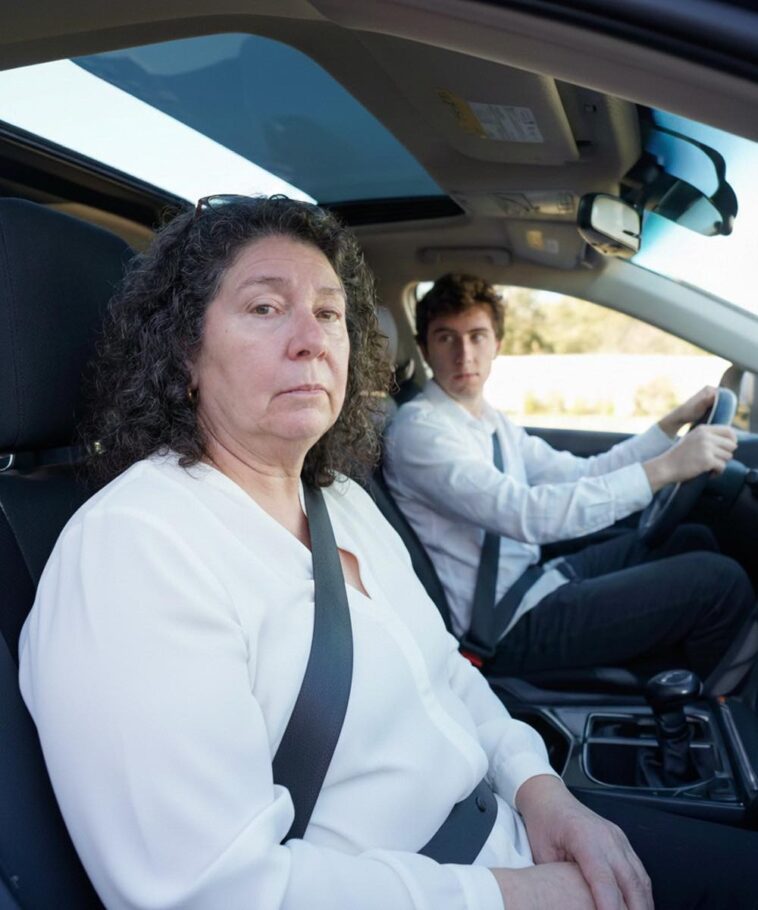
For a long time, I told myself I was being patient, understanding, mature. I told myself that marriage meant compromise, that love meant sacrifice, and that loyalty sometimes required swallowing discomfort without complaint. I repeated those ideas so often that they became excuses, and by the time I realized what they were costing me, I was already sitting in the back seat of my own life.
The moment my husband told me his mother deserved the front seat of our car more than I did, something inside me shattered. Not loudly. Not dramatically. It broke quietly, cleanly, like glass cracking in a straight line. I didn’t cry. I didn’t argue. I didn’t beg him to see what he was doing.
I started planning instead.
Before the Wedding, I Thought I Was Marrying an Independent Man
Before we got married, Harry was thoughtful, attentive, and seemed fully capable of living his own life. He made decisions, handled responsibilities, and spoke about the future as something we would build together. When he proposed, I truly believed I was choosing a partner, not stepping into an invisible competition with his mother.
There were signs, of course. Looking back, they were obvious, but at the time they felt small enough to dismiss.
He talked to his mother, Stephanie, every single day. Sometimes more than once. If she had an opinion about what shirt he should buy, which route he should drive, or whether it was time for a haircut, he absorbed it without question. Her voice carried weight. Authority. Finality.
I convinced myself it was sweet.
“She’s a widow,” I told myself. “She raised him alone. Of course they’re close.”
I didn’t understand then that closeness and dependency are not the same thing, and that confusing the two can quietly destroy a marriage.
Marriage Changed the Hierarchy Overnight
The shift happened almost immediately after the wedding, once we moved into our apartment. It was subtle at first, almost easy to miss if you weren’t paying attention.
If Stephanie called during dinner, Harry answered. It didn’t matter what I was saying or how important the conversation was. He would lift a finger at me as if I were the interruption, not the woman he had just promised to prioritize for life.
If we had plans and his mother suddenly needed help with groceries, errands, or furniture, our plans vanished without discussion. There was no “let me check with my wife.” No apology. Just an assumption that I would understand.
When I tried to talk about it, he shut the conversation down immediately.
“She gave up everything for me,” he’d say. “You don’t understand what that kind of sacrifice means.”
I did understand sacrifice. I just hadn’t realized I was the one expected to keep making it.
The Anniversary I Spent Alone
One of the moments that should have warned me, but didn’t, happened on our anniversary. We were at a restaurant I had been looking forward to for weeks. The table was small and intimate. A candle flickered between us.
We had barely touched our appetizers when his phone buzzed.
He glanced at the screen, stood up, and said, “Mom’s having a rough night. She’s lonely. I need to check on her.”
That was it.
No hesitation. No guilt. No acknowledgment of the woman sitting across from him.
I stayed seated as he walked out, watching the candle burn down between two untouched plates. When I brought it up later, he brushed it off.
“She raised me alone. She comes first.”
I swallowed my feelings again.
The Inheritance That Changed Everything
Then my grandmother died.
She had raised me after my parents passed away when I was seven. She was my stability, my safety, my example of love that didn’t demand constant proof. Losing her felt like losing the last solid ground beneath my feet.
When I learned she had left me some money, it felt like one final act of care. Not a fortune, but enough to matter. Enough to change things if used wisely.
Harry had a suggestion almost immediately.
“Why don’t you buy a car with it?” he said.
I hesitated. The money felt personal, almost sacred. “But I don’t even drive.”
“That’s fine,” he replied easily. “I’ll drive you everywhere. To work, errands, anything. It’ll make life easier for us.”
I wanted to trust him.
“That’s what good wives do,” he added, squeezing my hand. “They invest in their family.”
So I agreed. I used my grandmother’s money to buy a car outright, $20,000 paid in full. No loan. No debt. No financing. From a financial and legal standpoint, it was entirely mine.
For the first couple of weeks, Harry drove me to work every morning. I thought maybe things would improve.
They didn’t.
When My Car Became His Mother’s
His mother started needing rides.
At first it was groceries. Then hair appointments. Then doctor visits. Bible study. Lunches across town. Errands multiplied, and slowly, quietly, my car became Stephanie’s personal transportation service.
Harry still drove me to work for a while, but detours crept in.
“Mom needs me to stop by first.”
“I’ll pick you up after her appointment.”
Before long, I was standing at bus stops again, waiting in the rain, watching traffic pass while my own car carried someone else around town.
What hurt most wasn’t the inconvenience. It was knowing I had paid for that car with the last gift my grandmother ever gave me, and I wasn’t even allowed to sit in the front seat.
The Day I Asked for Help and Was Put in My Place
One morning, the bus broke down. I arrived at work late, stressed, embarrassed, and soaked from walking in drizzle. That evening, I came home exhausted. Harry was on the couch, watching television.
“The bus broke down,” I said. “I was late.”
“That’s rough,” he replied without looking away.
“Maybe tomorrow you could take me to work?”
“Can’t,” he said. “Mom has three errands.”
I stood there, waiting for him to hear himself. He never did.
When I finally addressed it directly, he sighed as if I were being unreasonable.
“I have real responsibilities,” he said. “I can’t be your personal driver like you’re a teenager.”
“It’s my car,” I said quietly. “My grandmother left me that money.”
“And I’m the one who knows how to drive,” he snapped. “What am I supposed to do, let the car sit unused while you take the bus? That makes no sense.”
That was the moment I realized logic was no longer part of the conversation. Control was.
The Front Seat That Ended My Marriage
The breaking point came on a Saturday afternoon.
The three of us were going out together. I walked toward the passenger side without thinking, more out of habit than expectation. A small part of me still hoped things might be different.
Harry reached the car first and opened the front door.
I stepped closer.
He stopped me with a casual shrug.
“That seat’s not for you. Mom’s riding up front.”
Then he smiled at her. “Come on, Mom. You deserve the front seat. You’re the most important woman in my life.”
Stephanie settled in comfortably and looked at me through the rearview mirror with a satisfied smile.
I climbed into the back seat.
In that moment, the truth became undeniable. I wasn’t his partner. I wasn’t his priority. I was an accessory in my own marriage.
And I was finished.
I Didn’t Argue—I Prepared
I didn’t cry that night. I had already cried too much. Instead, I made a decision.
The following week, I signed up for driving lessons without telling anyone. I told Harry I was staying late at work. Twice a week, I met my instructor a few blocks away after the office emptied.
His name was Miguel. He was patient, calm, and respectful. When I stalled, he didn’t sigh. When I asked questions, he didn’t belittle me.
“You’re doing well,” he’d say. “Most people take longer to get this.”
I practiced everything. Highway driving. Parallel parking. Three-point turns. Emergency braking. Situational awareness. I learned not just how to drive, but how to trust myself.
Slowly, something shifted. I stopped feeling helpless. I stopped waiting for permission.
The Freedom I Took Back
Three months later, I passed my driving test on the first attempt.
Miguel shook my hand. “I’m proud of you.”
No one had said that to me in a long time.
I didn’t tell Harry. I didn’t tell Stephanie. I waited.
The perfect moment arrived on my birthday.
We were supposed to go out for dinner, all three of us. As usual, Stephanie wouldn’t miss an opportunity to assert her place. Harry walked toward the driver’s side. Stephanie headed for the passenger seat.
I smiled.
“Oh, one second,” I said lightly. “There’s a surprise in the garage. White box. Could you grab it?”
Harry lit up. Stephanie smiled approvingly.
“Give me the keys,” I said. “I’ll unlock the car.”
He tossed them to me without a second thought.
They walked away together.
I got into the driver’s seat.
Inside the white box were divorce papers, already signed, filed, and ready.
I started the engine and drove away.
For the first time in my marriage, I sat in the front seat alone.
The Aftermath Was Predictable
My phone exploded with messages. Calls. Demands.
I sent one message. “Please contact my lawyer.”
Then I blocked them.
During the divorce, Harry tried to claim the car as a shared asset. My lawyer calmly presented the financial records showing it had been purchased entirely with my inheritance. From a legal and financial perspective, the case was simple.
Stephanie told anyone who would listen that I was heartless.
“She left him on her birthday,” she said.
The people who mattered knew the truth.
Life After the Back Seat
I began driving myself everywhere. To work. To therapy. To the ocean. To my grandmother’s grave.
I rebuilt my confidence. My independence. My sense of self.
Some people asked if I regretted it. If I’d been too harsh. If I should have tried harder.
I didn’t regret a single moment.
Once you stop sitting in the back seat of your own life, you never agree to less again.
Harry said his mother deserved the front seat more than I did.
So I gave it to her.
For good.
And then I drove straight into a future that finally belonged to me.
The front seat is mine now.