AnnaMaria
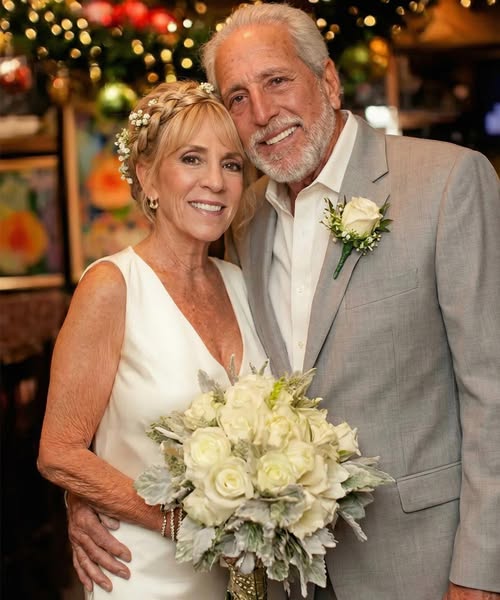
Three months after my mother’s funeral, my father married her sister. I kept telling myself that grief can distort judgment, that loss can push people into choices they never would have made otherwise. I repeated that explanation like a legal disclaimer, hoping it would protect me from what felt wrong in my bones. But then my brother arrived late to the wedding, pulled me aside with a look I had never seen on his face before, and placed a letter in my hands. It was written by our mother. And it was never meant to be read unless everything went terribly wrong.
I used to believe that watching my mother die would be the most painful experience of my life. I was mistaken.
She fought breast cancer for almost three years. Toward the end, her body weakened in ways that felt cruel and unfair, but her mind stayed sharp. Even when she struggled to sit upright, she worried about practical things. Whether I was eating enough. Whether my brother Robert had paid his bills. Whether Dad remembered his blood pressure medication. She was still managing the household emotionally, even as her own body failed her.
That was who she was. Responsible to the very end.
After the funeral, the house felt preserved in amber. Her lavender lotion still sat on the nightstand. Her coat hung by the door. Her slippers remained tucked under the couch as if she might return at any moment. Friends and relatives repeated the same comforting phrases. She’s not suffering anymore. She was so strong. Time will help.
Time did nothing except amplify the silence.
Exactly three months later, my father called and asked Robert and me to come over. He said he just wanted to talk. His voice sounded careful, measured in a way that immediately made my stomach tighten.
When we arrived, nothing had changed. The house looked exactly as it had the day we left it after the funeral. But one thing was different. My aunt Laura was sitting beside him on the couch. My mother’s younger sister. Her hands were clasped tightly in her lap, her posture rigid, her eyes red but dry, as if she had already cried enough earlier in private.
I remember thinking, why is she here?
“I want to be upfront with you both,” my father said. “I don’t want any secrets.”
That sentence should have warned me.
Laura reached for his hand, and he didn’t pull away.
“I’ve met someone,” he said. “I wasn’t looking for this. I didn’t plan it.”
Robert frowned. “What are you talking about?”
My father took a breath. “Laura and I are together.”
The room tilted. I stared at him, waiting for a punchline that never came.
“You’re… together?” I asked.
Laura rushed to speak. “Please understand. Grief changes people. We leaned on each other. We lost the same person.”
My brother stood up so fast his chair scraped loudly against the floor. “You’re telling us this three months after Mom died. Three months.”
“I know how it sounds,” Dad replied. “But losing your mother showed me how short life is.”
That sentence cut deeper than anything else. She lost her life. Not him.
Then Laura said the words that made everything irreversible. “We’re getting married.”
The speed of it felt wrong. Too smooth. Too rehearsed. I nodded, though I don’t remember deciding to. Robert didn’t say another word. He walked out.
That night, he called me and said, “This isn’t grief. Something is wrong.”
I told him people cope differently. I told him I was trying to be understanding. I don’t know if I was trying to convince him or myself.
The weeks that followed were quiet but relentless. Paperwork. Appointments. Conversations held just out of earshot. Laura tried to involve me in planning. Flowers. The venue. I declined every time. Dad asked if I was okay with it. I told him if he was happy, that was what mattered. The relief on his face made me uncomfortable in ways I couldn’t explain yet.
The wedding invitation arrived six weeks later. Intimate ceremony. Immediate family only. No mention of my mother. No acknowledgment of how recently she had been buried.
I went anyway.
I told myself it was maturity. That it was love. That it was what a good daughter would do.
The venue was filled with soft music and polite smiles. Champagne glasses clinked. Everything looked normal, almost celebratory. I kept repeating the same lie in my head. This is grief. This is just grief.
Then Robert arrived late.
He looked like someone who had been running. His jacket was half on. His eyes were frantic. He grabbed my arm and pulled me away from the reception.
“You don’t know who Dad really is,” he said.
The words landed like a physical blow.
He kept moving until we were near the coat racks, half-hidden by tall plants. Laughter drifted in from the reception hall. Someone clinked a glass. It felt obscene.
“What are you talking about?” I whispered.
“I almost didn’t come,” he said. “I was told not to.”
“Told by who?”
He lowered his voice. “Mom.”
I stared at him. “That’s not funny.”
“I’m serious. Before she died.”
He told me a lawyer had called him that morning. The man knew details no stranger could know. Mom’s illness. The day she died. He said she had instructed him to make contact if Dad ever married Laura.
My mouth went dry.
“She found out,” Robert said.
“Found out what?”
Instead of answering, he pulled an envelope from inside his jacket. Thick paper. Cream-colored. Sealed.
“She wrote this after she knew she was dying. She told him to hold it until the right moment.”
“What’s in it?” I asked.
“The truth about Dad.”
I laughed weakly. “Dad took care of her. He stayed.”
“That’s what she believed too,” my brother replied quietly.
“Read it,” I said.
“Not here,” he said. “Once you know, there’s no going back.”
Inside, someone called my name. They were about to cut the cake.
My hands shook as he pressed the envelope into my palm. It felt heavier than paper should.
We found a small side room and shut the door. Empty chairs. A coat rack. A cracked window.
“Promise you won’t interrupt,” Robert said.
I nodded.
He opened the letter and began to read.
“My children. If you are reading this, then my fears were justified. And I didn’t live long enough to protect you myself.”
I covered my mouth.
“I didn’t tell you while I was alive because I didn’t want my final months consumed by conflict. I was already exhausted. I wanted my last days to be filled with love, not confrontation.”
My chest tightened.
“I discovered the truth accidentally. Messages I wasn’t meant to see. Financial transfers that didn’t make sense. Dates that overlapped in ways that could not be explained away.”
Robert paused.
“At first, I doubted myself. Illness makes you question your mind. I wanted to believe I was imagining things.”
The paper rustled.
“But the truth does not disappear simply because you are too weak to face it. The person was not a stranger. It was my own sister.”
I felt dizzy.
“I gave him a chance to be honest. I asked calmly. I wanted to believe there was an explanation I could live with.”
Tears blurred my vision.
“He told me I was confused. That my illness was making me paranoid. That I should rest.”
My brother’s voice cracked.
“I believed him. Because when you love someone for decades, you learn to doubt yourself before you doubt them.”
Silence filled the room.
“But I continued watching quietly. And that is when I realized something worse. The child everyone believes belongs to someone else… is his.”
I whispered no without sound.
“She knew,” Robert said. “He’s Dad’s.”
My legs gave out. I sat down hard.
“She understood then that he stayed not out of love, but out of security. What I owned. What he would lose.”
My nails dug into my palms.
“She believed they were waiting for her to die,” Robert said. “Waiting to be together openly. Waiting to inherit.”
I stood abruptly. “So she changed the will.”
“Yes,” he said. “Everything goes to us.”
The door opened.
“Claire?” my father called.
“Yes,” I said evenly. “We’ll be right there.”
When we returned, Dad smiled with relief. Laura looked tense.
“We need to talk,” I said.
He tried to brush it off. I held up the envelope.
“She knew,” I said. “Everything.”
The color drained from his face. Laura stepped away from him.
Robert spoke clearly. “She changed the will. You get nothing.”
Dad whispered that it was impossible.
“It’s already done,” I replied.
Laura’s voice shook. “You told me it was taken care of.”
“This wedding didn’t secure your future,” I said. “It exposed it.”
We left without saying goodbye.
Laura left him months later. Love, it turns out, fades quickly when financial security, inheritance, and legal protections disappear.
My mother didn’t fight while she was dying. She prepared. She protected. She won quietly.
And sometimes, that is the strongest kind of justice.