AnnaMaria
I Had No Idea What He Meant—Until My Mother Confessed
My name is Natalia Reyes. I’m twenty-six years old, and for several months my life revolved around a women’s shelter on the edge of the city.
Not because I wanted to be there.
Because I had nowhere else to go.
I lost my job after the company downsized. Around the same time, my relationship with my mother collapsed into constant arguments—about money, independence, and what she called my “bad decisions.” One night, after a fight that spiraled out of control, she told me I needed to “figure life out on my own.”
And just like that, I was homeless.
I never told my grandfather.
Eduardo Reyes—a billionaire entrepreneur whose name appeared in business magazines and charity galas—was the last person I wanted to ask for help. Pride mattered to me. I wanted to survive on my own terms, even if that meant lining up for dinner and sleeping in a shared room with strangers.
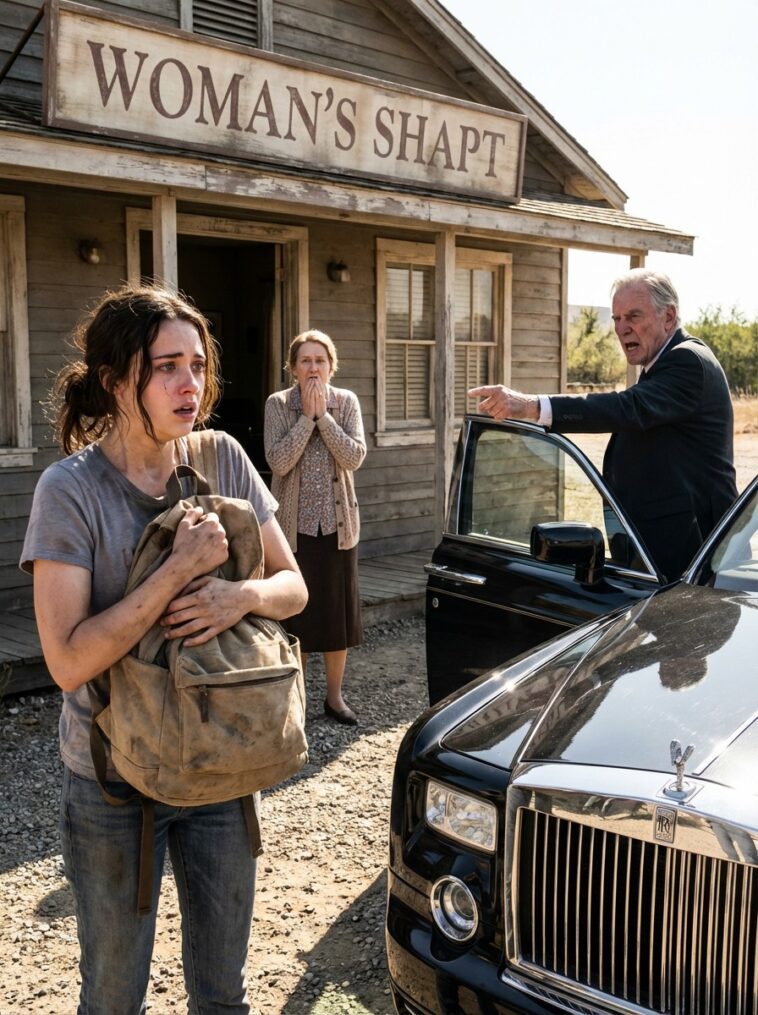
One afternoon, as I stepped out of the shelter with my worn backpack slung over my shoulder, a black luxury car screeched to a stop beside me.
The door opened.
It was my grandfather.
He stared at me like he was seeing a ghost.
“What are you doing here?” he demanded.
“Why aren’t you living in the house I gave you?”
My heart dropped straight into my stomach.
“What house?” I asked. I wasn’t pretending. I was genuinely confused.
My mother arrived moments later—she had been following him in her own car. The moment she heard his words, all the color drained from her face.
“I… I was going to tell you today,” she said quickly, panic flooding her voice.
“But I gave it to your aunt María. She needed it more.”
The street went silent.
My grandfather didn’t raise his voice. He didn’t argue.
He simply pulled out his phone, dialed one number, and said calmly:
“Come now.”
Thirty minutes later, police cars lined the street outside my aunt’s house.
The Truth My Family Thought Would Stay Buried
The officers weren’t there by accident.
Years earlier, my grandfather had legally transferred ownership of that house to me. The deed was signed, notarized, and officially registered in my name.
My mother had never had the right to give it away.
What she did was property misappropriation.
My aunt came outside crying, insisting she hadn’t known. She said my mother had promised everything was “handled.” The police took statements. I didn’t interrupt. I just listened.
That’s when my grandfather revealed something that shocked even me.
He had been quietly investigating for months.
There were other properties. Other “family favors.” Quiet sales. Transfers that were never authorized. The house meant for me wasn’t the only one that had disappeared behind my back.
My mother began to beg.
She said she was only trying to help her sister.
She said I was young.
She said I could “handle a little hardship.”
My grandfather looked at her, his voice steady and cold.
“Surviving,” he said, “is not the same as living.”
That night, for the first time in months, I slept under a roof that legally belonged to me.
I didn’t celebrate.
I was too exhausted.
What Justice Looked Like After the Sirens
The legal process moved quietly but firmly.
My mother and aunt didn’t go to prison—but they faced real consequences. Financial penalties. Loss of trust. Public exposure within the family.
My grandfather cut off all financial support.
Not as revenge.
As a boundary.
I started over slowly. I found work. I repaired the house room by room. I didn’t hold onto hatred—but I didn’t forget what happened either.
My grandfather and I talked for hours. He apologized for not seeing the signs sooner. I thanked him—not for the house, but for choosing truth over comfort.
This story isn’t about wealth.
It’s about dignity.
It’s about boundaries.
It’s about realizing that family doesn’t always protect you—and that speaking up doesn’t make you ungrateful.
So I ask you:
What would you have done in my place?
Do you believe family excuses everything?
Because somewhere, someone is sleeping in a place they don’t belong—while what’s rightfully theirs is being used by someone who never earned it.
And sometimes, justice only arrives when silence finally breaks.