AnnaMaria
I found him on a freezing winter morning in the hallway of my apartment building in Vallecas.
My name is María López. I was thirty years old then, working long shifts as a nursing assistant, living alone in a small apartment that smelled faintly of disinfectant and coffee. My life was simple, quiet, predictable.
That morning, I opened my door to take out the trash—and stopped.
At first, I thought I imagined the sound. A faint cry, almost swallowed by the thick concrete walls. But then I heard it again. Softer this time. Desperate.
I followed the sound down the hallway and saw a bundle near the stairwell. A baby. Wrapped in a thin, cheap blanket that offered little protection from the cold. His skin was icy. His cries were weak, like he had already spent too much energy trying to be heard.
Tucked into the blanket was a folded piece of paper. One word written in shaky handwriting.
“Forgive me.”
No name. No explanation. No footsteps retreating. Just silence.
I stood there trembling, my trash bag forgotten on the floor, staring at a life that had been left behind.
I called the police. I called social services. I did everything I was supposed to do. They searched for days. No one came forward. No missing person report. No desperate mother calling hospitals.
After weeks of paperwork and interviews, they asked if I would take him in temporarily as a foster parent.
I said yes without thinking.
I named him Daniel.
Temporary became permanent so quietly that I barely noticed when my life changed forever.
Daniel grew up in the rhythm of my shifts at the hospital. Homework spread across the kitchen table while I reheated leftovers. Mornings rushed and nights tired but full. Sundays meant soccer in the park, scraped knees, and cheap ice cream shared on a bench.
I never lied to him. He always knew I hadn’t given birth to him. But I told him something else too—that I chose him.
When he was twelve, he looked at me one night after I tucked him in and said, “You’re my mom because you stayed.”
That sentence carried me through every hard day.
We didn’t have much. But we had stability. I saved every euro I could. Daniel studied hard, not because I demanded it, but because he wanted to make me proud.
We were a family.
Then everything changed.
Daniel had just turned seventeen when the court summons arrived.
A woman was claiming custody.
Her name was Isabella Cruz.
A multimillionaire businesswoman. Owner of an international hotel chain. Her lawyer presented DNA results and a carefully polished story. Teenage panic. Family pressure. Fear. Regret.
She said she was grateful to me for raising her son. But now, she said, it was time for him to “come home.”
The courtroom was full. Cameras. Expensive suits. Whispered conversations. I sat there in my plain clothes, hands folded tightly in my lap, feeling small but unmovable.
I brought records. School grades. Medical files. Testimonies from neighbors and teachers. Proof of seventeen years of care that never asked for recognition.
Isabella cried gracefully. She spoke of opportunities, private education, travel, security. A life she said Daniel deserved.
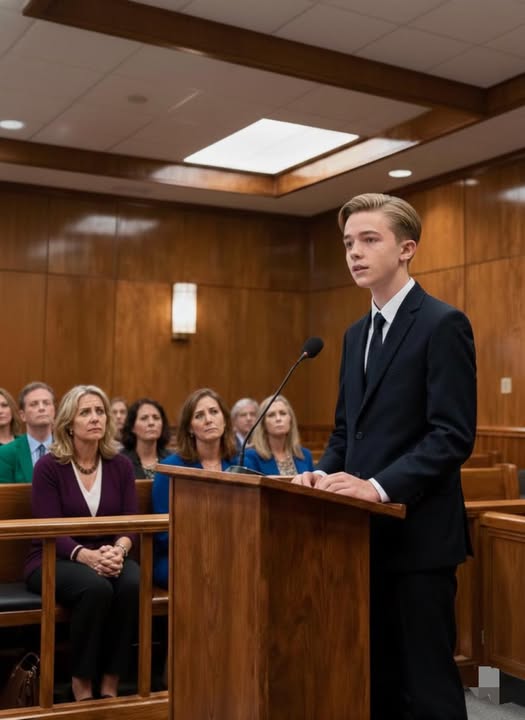
When it was Daniel’s turn, the judge told him he could speak freely.
He stood.
Tall. Calm. No trembling in his hands.
He looked at the room. At Isabella. At me.
And then he spoke.
He said he knew the truth. That he felt no hatred. That he thanked Isabella for giving him life.
Then he said something that shifted the air in the courtroom.
“Life doesn’t sustain itself,” he said. “It needs to be carried.”
He talked about watching me come home exhausted from night shifts and still sit beside him to study. About fevers in the middle of the night. About birthdays that weren’t expensive but were full of laughter. About presence. Not money.
Isabella’s expression tightened when Daniel revealed that, for months before the trial, she had tried to get close to him with gifts. Trips. Promises of elite universities. He said it made him uncomfortable. Pressured. Like something owed rather than offered.
The judge listened carefully. Objections were raised. Overruled.
Then Daniel said the words that ended the debate.
“I don’t want to be a prize or a correction,” he said. “Motherhood isn’t something you delegate and reclaim later. It’s something you practice every day.”
The courtroom was silent.
I cried quietly, my hands shaking.
The ruling came days later. Custody remained with me until Daniel reached adulthood. Visitation would be gradual, supervised, and always based on his well-being.
Isabella accepted the decision publicly.
Privately, she asked to meet me.
No lawyers. No cameras.
She told me abandoning him had been the greatest regret of her life. That money never filled that absence. We agreed on one thing only—to put Daniel first.
The months that followed were careful but steady. Isabella respected boundaries. She listened. She showed up without spectacle.
Daniel graduated with honors.
Today, he is eighteen and preparing to study law.
He says he wants to defend those who don’t have a voice, because once, someone listened to his.
I am still María. The one who texts him in the morning. The one who makes soup when he’s sick. The one who stayed.
I sometimes think about that winter morning in the hallway. How close I came to closing the door and continuing my life.
I didn’t.
And that choice changed three lives.
This isn’t a story about wealth or defeat. It’s about responsibility. About boundaries. About understanding that love isn’t proven by blood or money—but by presence, again and again, when no one is watching.
Daniel said it best.
The court only confirmed it.