AnnaMaria
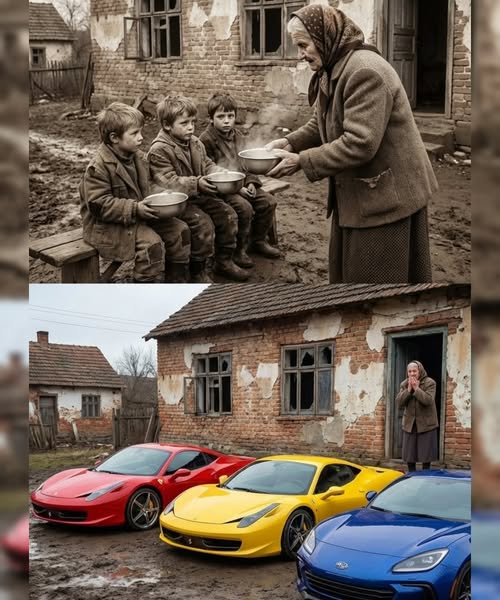
The Tent No One Noticed
The tent had been standing on that street longer than most people could remember. A narrow strip of faded canvas, patched in places with careful stitches, stretched over a simple metal frame. Beneath it sat a folding table, a dented aluminum pot, and three mismatched plastic chairs that wobbled if you leaned too hard.
This was Valentina Sergeyevna’s world.
She was sixty-three years old, thin as a winter branch, her back bent not by age alone but by decades of quiet labor. Every evening, as the sun slid behind the concrete buildings and the city softened into shadows, she stirred soup with a wooden ladle worn smooth by time. The broth was simple. Water. Bones. Potatoes. A handful of herbs when she could afford them. Nothing fancy. Nothing wasteful.
Yet the steam carried something richer than flavor. It carried warmth.
People walked past without slowing. Some glanced briefly, then looked away. Others pretended not to see her at all. Poverty made people uncomfortable. It always had.
Valentina never chased customers. Never begged. She simply stood there, ladle in hand, ready to serve anyone who asked.
She had no family left. No children. No pension worth mentioning. The tent paid for bread, for fuel, for survival. That was enough.
She had learned long ago not to expect more.
The Night Hunger Found Her
That evening, the air had turned sharp, the kind that crept under thin coats and settled in your bones. Valentina was just about to lower the flame when she sensed movement that didn’t belong.
Three figures stood at the edge of the light.
Children.
Identical.
At first glance, she thought her eyes were playing tricks on her. Then she noticed the details. The same narrow shoulders. The same hollowed cheeks. The same worn shoes held together with hope and frayed laces. Their clothes were too big and too thin, as if borrowed from a life that never quite fit.
They stood close together, like a single creature with three heads, frozen between fear and hunger.
One boy took a cautious step forward.
“Grandma,” he said, his voice barely audible. “Do you… do you have anything left? Even something cold. Or old. We don’t mind.”
The words were polite. Apologetic. As if asking for food was a crime he regretted committing.
Valentina’s hand tightened around the ladle.
She had seen hunger before. She had lived it. But there was something about the way those boys stood, the way they waited for rejection before it arrived, that struck her deeper than usual.
She looked at the pot. There was enough for three bowls. Not large. Not generous. But hot.
“Come here,” she said simply. “Sit.”
The boys didn’t move.
She repeated herself, firmer now. “Sit down before the soup cools.”
They obeyed.
She poured three bowls. Added bread to each. No questions. No lectures. No warnings. Then she turned back to her pot as if nothing extraordinary had happened.
But she noticed everything.
The way they ate quickly, then slowed, afraid the moment would end. The way one boy pushed his bread toward another when he thought she wasn’t looking. The way they kept glancing up, checking to see if she would change her mind.
When they finished, the bravest one whispered, “Thank you,” like it was a secret.
Valentina nodded.
That was all.
She did not ask their names. She did not ask where they came from. She did not tell them they owed her anything.
She believed it was just soup.
A Small Kindness That Didn’t Feel Small
That night, Valentina locked up the tent as she always did. She counted the coins in her pocket. Enough for tomorrow’s ingredients. Barely.
She went home to her tiny room, removed her coat, and sat quietly on the edge of the bed. For reasons she couldn’t explain, her chest felt heavy.
She pictured the boys walking into the dark.
She whispered a short prayer for them.
Then she slept.
By morning, life returned to its usual rhythm. No miracles. No rewards. Just another day.
Valentina never saw the boys again.
Or so she thought.
Twenty Years of Quiet Persistence
Time passed the way it always does for people who are too busy surviving to notice it. Seasons changed. Buildings were repainted. New faces replaced old ones.
The tent remained.
Valentina’s hands stiffened with age. Some mornings, she could barely grip the ladle until the warmth loosened her fingers. Her eyesight faded. Her steps slowed.
But she showed up.
Every evening.
Rain. Snow. Heat. It didn’t matter.
People came and went. Some stayed for years. Some vanished after a single meal. Valentina remembered none of their names, only their faces in moments of need.
She never told the story of the three boys. Not because she forgot, but because to her, it hadn’t been a story. It had been a choice. One of thousands she had made in quiet moments when no one was watching.
Kindness, she believed, wasn’t supposed to echo.
The Sound That Changed the Street
On an ordinary evening, just as she was adjusting the flame, the street changed.
First came the silence.
Then the sound.
Engines.
Low. Smooth. Expensive.
Three black supercars rolled slowly to a stop in front of the tent. Their paint reflected the streetlights like mirrors. The engines shut off almost in unison.
People stopped walking.
Someone whispered.
A shopkeeper leaned out of his doorway.
Three doors opened.
Three men stepped out.
They were tall. Broad-shouldered. Immaculately dressed. Watches glinted on their wrists. Their shoes cost more than Valentina’s monthly rent.
They did not belong there.
And yet, the moment their eyes landed on the tent, something softened in their expressions.
They approached.
Valentina’s heart began to race. Her hands trembled.
Had she done something wrong?
Then, without warning, the first man dropped to his knees on the pavement.
The second followed.
Then the third.
The street froze.
Recognition After Two Decades
“It’s you,” the first man said, his voice unsteady. “We finally found you.”
Valentina stepped back, fear tightening her chest. “Please,” she said. “If this is about money, I—”
The second man shook his head, tears shining openly now. “No. It’s about soup.”
The word sounded absurd in the air.
“Twenty years ago,” he continued, “three boys stood right there. Hungry. Homeless. Terrified.”
The third man placed a hand over his face, struggling to speak.
“You fed us,” he said. “You didn’t ask why we were alone. You didn’t tell us to leave. You didn’t make us feel like a problem.”
Valentina stared at them.
Memory rushed back like a sudden wind.
The thin faces. The identical eyes.
Her knees weakened.
“That night,” the first man said, “was the first time in months we slept without fear.”
What That Soup Became
They stood, helping her sit.
One of them placed a folder on the counter, beside the steaming pot.
Inside were documents. And not just papers — proof of safety. Proof of dignity. Proof of a future.
A small house. Fully paid.
A monthly income secured for life.
Medical care arranged in advance.
Legal protection.
“We built companies,” the second man said quietly. “Not because we were special. But because someone once treated us like we mattered.”
The third man met her eyes. “This isn’t charity. This is repayment.”
Valentina’s tears fell freely now.
“It was just soup,” she whispered.
“No,” the first man replied. “It was humanity.”
The Street Learns to Listen
No one spoke.
Cars didn’t move.
For a long moment, the world seemed to pause.
Valentina Sergeyevna had never been famous. She had never been rich. She had never believed her life would leave a mark.
Yet in that moment, an entire street understood something it had forgotten.
Kindness doesn’t vanish. It waits.
It travels quietly through time.
And when it returns, it returns whole.
Valentina looked at the pot, still steaming.
“Sit,” she said softly. “The soup will get cold.”
And just like that, the debt of a lifetime was paid — not with money, but with the dignity it had always deserved.