AnnaMaria
A Thought Experiment That Feels Simple—Until It Isn’t
Imagine waking up tomorrow and realizing that every piece of clothing you will ever wear must be the same color. Every shirt. Every jacket. Every coat. No patterns. No variations. No exceptions.
At first, the idea feels restrictive, maybe even unsettling. Clothing is one of the easiest ways people express mood, identity, and belonging. Taking that freedom away sounds like a punishment. But when you sit with the question a little longer, something interesting happens.
The color you’d choose isn’t random.
It reflects how you see the world, how you want to move through it, and what you value most. Stripped of trends, brands, and seasonal changes, color becomes a quiet psychological signature.
This isn’t really about fashion. It’s about self-perception, emotional priorities, and how you manage visibility, safety, and control in your life.
Why Color Choices Matter More Than We Admit
Color is one of the first things the human brain processes. Before words, before details, before logic, color sends a signal. It influences emotion, perception, and even trust. This is why color psychology is used in health environments, finance branding, insurance marketing, and legal design. It shapes comfort, authority, and reassurance long before facts are absorbed.
When you remove choice and imagine wearing only one color for life, you are forced to confront what you want your baseline presence to be. Not who you are on special occasions, but who you are every day, without explanation.
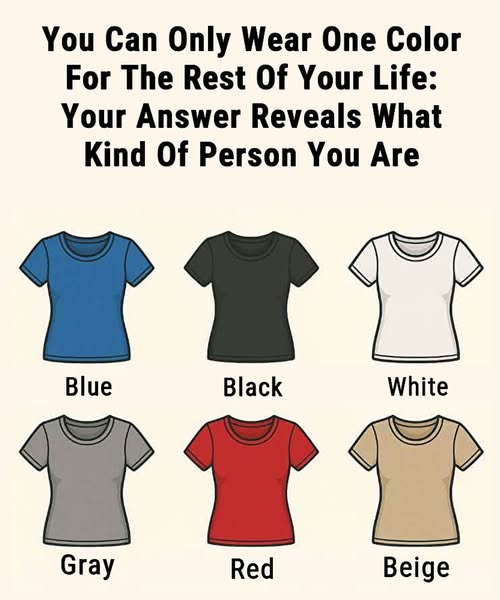
The image presents six simple options. No patterns. No accessories. Just plain T-shirts. Blue. Black. White. Gray. Red. Beige.
Minimal design. No distractions. Just color and choice.
And that is exactly the point.
Blue: The Calm Thinker
If blue is the color you would wear forever, you likely value stability, trust, and emotional balance above all else. Blue is strongly associated with calmness, reliability, and mental clarity. It’s the color used by institutions that want to appear dependable, from healthcare providers to financial services.
People drawn to blue are often thoughtful and introspective. You tend to listen more than you speak. Others may find it easy to open up to you because your presence feels safe rather than demanding.
You don’t need to dominate a room to feel secure. You prefer steady progress over dramatic change. Emotional regulation matters to you, and you likely avoid unnecessary conflict unless something truly important is at stake.
Blue choosers often prioritize harmony over chaos and depth over noise. You may not chase excitement, but you value meaning. Your confidence comes from consistency, not attention.
Black: The Controlled Individualist
Choosing black suggests confidence, independence, and a strong desire for control. Black doesn’t ask for permission. It doesn’t explain itself. It simply exists, solid and self-contained.
If black is your forever color, you are likely private, selective, and highly self-aware. You don’t feel the need to share everything about yourself, and you are comfortable maintaining boundaries. You may appear reserved, but that restraint is intentional, not insecure.
Black is timeless and authoritative, which is why it’s often used in legal, executive, and high-stakes professional environments. People who choose black often value strength, clarity, and personal sovereignty.
You likely dislike chaos, inefficiency, and emotional theatrics. You prefer structure, elegance, and self-mastery. When you speak, it’s because you have something worth saying. Silence doesn’t make you uncomfortable.
You don’t seek attention. If it comes, you handle it on your terms.
White: The Idealist
If white is the color you would commit to for life, you may crave clarity, honesty, and simplicity in a world that often feels unnecessarily complicated. White represents openness, transparency, and fresh starts. It leaves little room for hiding.
People who choose white often believe deeply in doing the right thing, even when it’s inconvenient. You value integrity and tend to hold yourself to high standards. You may be idealistic, but not naive. You simply refuse to accept cynicism as the default way of living.
White is associated with healthcare, ethical standards, and new beginnings for a reason. It communicates cleanliness, intention, and moral clarity. If white resonates with you, you likely dislike manipulation, half-truths, and unnecessary complexity.
You may struggle at times with disappointment when reality fails to meet your expectations, but your desire for peace and fairness remains strong. You believe life can be better, and you act accordingly.
Gray: The Realist
Gray is the color of balance, and choosing it suggests practical thinking, adaptability, and emotional regulation. If gray would be your lifelong choice, you are likely someone who lives comfortably in the middle ground.
You don’t rush into extremes. You weigh options carefully. You understand that most situations are complex and rarely fit into simple categories of right and wrong. Logic often guides your decisions more than impulse.
People who choose gray tend to be reliable under pressure. You are the one others turn to when emotions are running high and clear thinking is needed. You don’t panic easily, and you don’t dramatize challenges.
Gray is often underestimated, but it is incredibly resilient. It blends without disappearing and supports without overpowering. If this is your color, you likely value stability, fairness, and long-term thinking over short-term wins.
Red: The Bold Spirit
Red is impossible to ignore. If you choose red as your one lifelong color, you likely live with intensity, passion, and emotional depth. Red represents energy, movement, and strong feeling. It is the color of action and presence.
People drawn to red often experience life fully. You love deeply, react strongly, and engage wholeheartedly. You don’t want to fade into the background, and you are comfortable standing out, even if it invites judgment.
Red choosers often thrive on stimulation, challenge, and meaningful experience. You may get bored with routine and feel restless without momentum. For you, life isn’t about quiet survival. It’s about feeling alive.
While red can be associated with risk, it’s also associated with courage. You are willing to be seen, to be vulnerable, and to take emotional chances. Even when it’s uncomfortable, you prefer authenticity over safety.
Beige: The Quiet Strength
If beige is the color you’d wear forever, you likely value warmth, emotional safety, and understated confidence. Beige doesn’t compete for attention. It doesn’t demand recognition. It simply endures.
People who choose beige are often grounded and empathetic. You care deeply about comfort, both your own and others’. You value authenticity over trends and substance over appearance.
Beige suggests stability without rigidity. You are likely adaptable, emotionally intelligent, and content with simplicity. You don’t need validation from the outside world because your sense of self is internally anchored.
While others chase visibility, you prioritize peace. While others seek novelty, you seek meaning. You understand that strength doesn’t have to be loud to be real.
Why This Question Is Really About Identity
This question isn’t about style preferences or wardrobe planning. It’s about identity stripped to its essentials.
When you remove variety, branding, and performance, color becomes a mirror. It reflects how you protect yourself, how you express yourself, and how you navigate the world emotionally and socially.
In fields like health psychology, financial decision-making, insurance risk assessment, and even legal negotiation, understanding personality traits matters. The way someone presents themselves visually often aligns with how they manage responsibility, trust, and long-term commitment.
The color you’d wear forever says less about fashion and more about the kind of life you want to live.
Do you value calm or control? Transparency or balance? Passion or quiet stability?
There’s no right answer. Only honesty.
So if you had to choose just one color for the rest of your life, which one would it be?