AnnaMaria
When Cruelty Doesn’t Raise Its Voice
I used to believe cruelty always announced itself loudly. With shouting. With mockery. With dramatic confrontation. But the day my sister Allison looked directly at me and said, “You’re a fat woman,” it arrived quietly, calmly, and without hesitation. And somehow, that made it worse.
“I don’t want a fat family member at my wedding,” she continued, her voice flat and rehearsed. “It’s embarrassing. Stay away.”
There was no anger in her tone. No heat. Just certainty.
Something inside my chest cracked—not explosively, but deeply. Like a fracture you don’t feel right away, only to realize later that nothing will ever fit the same again.
When Silence Becomes Agreement
What hurt even more than Allison’s words was what followed.
Nothing.
My parents didn’t object. They didn’t ask questions. They didn’t even pause.
My mother crossed her arms, sighed, and said, “Listen to your sister, Emily. She wants her wedding perfect.”
My father nodded in agreement, as though this were a minor logistical issue rather than the public erasure of their daughter.
In that moment, I wasn’t thirty years old. I was ten again. The quiet child standing beside the golden one. Allison the cheerleader. Allison the achiever. Allison the daughter they bragged about. And me? The background presence. Acceptable only when I didn’t disrupt the picture.
Sitting in the Car, Letting Something End
That night, I sat alone in my car outside my parents’ house, gripping the steering wheel until my knuckles turned white. I felt small and grown at the same time, carrying decades of comparison, dismissal, and silent endurance.
But something else happened too.
I didn’t cry.
I didn’t beg.
Instead, a strange calm settled over me. A calm I didn’t recognize, but trusted.
Maybe it was because I had already built a life beyond them. A career as a child therapist. Clients who trusted me. Friends who saw me clearly. Or maybe I had simply reached the end of my willingness to absorb shame that wasn’t mine.
Either way, I understood one thing with startling clarity.
If they didn’t want me there, I wouldn’t fight to be included.
But I also wouldn’t disappear quietly.
Choosing a Different Kind of Presence
That night, I decided Allison would receive a surprise on her wedding day. Not out of revenge. Not out of rage. But out of self-respect.
A moment she would remember long after the flowers wilted, the photographs were edited, and the curated perfection of her wedding day faded.
In the weeks that followed, I worked quietly. Not on weight loss for approval, not on appearance for acceptance, but on health, confidence, and emotional repair. I confronted years of internalized shame with honesty and patience.
I documented everything.
Every cruel comment.
Every dismissive instruction.
Every moment they assumed I would remain silent.
Watching From the Outside
Meanwhile, the wedding unfolded publicly.
Allison modeling her designer dress on social media. My mother boasting about the venue. My father bragging about a guest list full of “important people.” Luxury cars. Cathedral reservations. High-profile connections.
Not once did anyone mention me.
That absence cut deeper than I expected.
Still, I stayed steady.
The One Person Who Always Saw Me
The night before the ceremony, my grandmother called.
She was the only one who had ever defended me without conditions. The only one who never treated my body, my emotions, or my presence as something inconvenient.
“Emily,” she asked gently, “are you sure you’re ready for whatever tomorrow brings?”
“I am,” I replied. “For the first time in my life.”
And I meant it.
A Perfect Morning for Imperfection
The wedding morning arrived bright and clear. The cathedral shimmered with silver accents and polished marble. Guests dressed like magazine spreads filled the pews. Everything looked flawless.
They were all waiting for the perfect bride.
They had no idea I was coming.
As the ceremony began, the priest’s voice echoed through the cathedral.
“If anyone objects to this marriage, speak now or forever hold their peace.”
My heart raced.
This was the moment everything I had carried came together.
Walking Into the Room I Was Never Meant to Enter
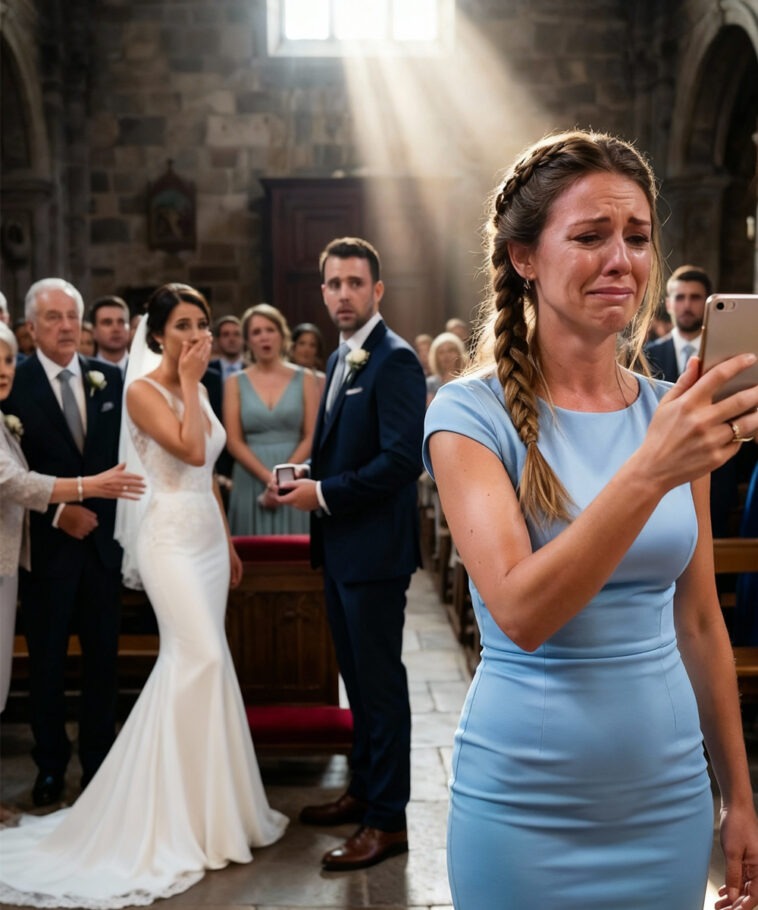
I pushed open the cathedral doors.
Every head turned.
Silence fell as I stepped inside and walked down the center aisle. My heels struck the marble floor, louder than the organ had been moments earlier. I wore a fitted emerald dress. My hair was swept back. My posture was tall.
Months of physical and emotional work had not turned me into someone new. It had revealed the woman I was never allowed to be.
I felt the weight of every gaze—curious, impressed, unsettled—but I watched only Allison.
She looked terrified.
“Emily?” she whispered, barely able to form the word.
When Power Shifts Without Violence
My parents stiffened in the front row. My mother clutched her pearls. My father’s face hardened—not with concern, but with anger that I dared disrupt the image he had so carefully constructed.
I stopped near the altar, turned calmly to the priest, and said, “Yes. I object.”
A ripple moved through the room. Cameras lifted. Whispers spread.
Jason, the groom, looked confused—but not angry. I saw something else in his eyes. Questions. The kind Allison had never allowed him to ask.
Letting the Truth Speak for Itself
I raised my phone.
“Allison told me not to attend today,” I said evenly. “She said I was too embarrassing for the photos. And my parents agreed.”
Gasps echoed through the pews.
My father stood abruptly. “Emily, that’s enough—”
I pressed play.
Allison’s voice filled the cathedral.
“I don’t want a fat woman in my family photos. Stay away.”
Then my mother’s.
“Listen to your sister. You’ll ruin the atmosphere.”
Then my father’s.
“Allison’s day matters more. Don’t show up.”
The room froze.
When Denial Has No Shelter
Guests stared openly now. Some shook their heads. Others whispered without restraint.
Allison’s color drained.
“Emily, how could you—”
“How could I?” I echoed quietly. “How could you?”
Jason stepped forward, devastated.
“Allison,” he asked, voice shaking, “did you really say those things?”
She clutched his arm desperately. “Jason, don’t listen—she’s twisting it—”
I met his gaze.
“I’m not twisting anything. I’m just done being silent.”
The Moment Everything Collapsed
Jason gently freed his arm.
“Allison,” he said, his voice breaking, “a wedding is supposed to be about love. Compassion. If this is how you treat your own sister…”
He shook his head.
“I can’t marry someone who believes cruelty is normal.”
Allison panicked.
“Jason, please—it was a joke—Jason!”
But it was over.
He removed the ring and placed it in her hand.
“I hope you learn from this someday.”
Leaving Without Apology
The cathedral buzzed with shock.
I turned away. My heart raced. I felt drained—but free.
I hadn’t come to ruin anything.
I had come to reclaim myself.
As I walked back up the aisle, my grandmother stood near the doors. Calm. Proud.
“You did it, sweetheart,” she whispered, taking my arm.
“For once,” I replied softly, “I chose myself.”
Outside, sunlight poured over us like an unexpected blessing.
What Came After Didn’t Look Like Revenge
Life didn’t suddenly become perfect.
But it shifted.
I moved out of my cramped apartment and into my grandmother’s cozy, book-filled home in Cambridge. The spare room, she said, had always been waiting.
The first morning, she made coffee and placed a plate of scones in front of me.
“No judgment,” she said quietly. “Not in this house.”
I nearly cried at how unfamiliar kindness felt.
Rebuilding From the Inside Out
My career blossomed. Parents referred me to other parents. Children opened up. My schedule filled. I opened a small private practice—my name on the door, calming blue walls, sunlight in the waiting room.
Helping children heal helped heal the child inside me.
Months later, Jason reached out. He had moved to San Francisco and was building an educational app for kids. We talked often. About work. About nothing. About life.
One autumn evening in Boston, he called.
“I’ll be on the East Coast next month,” he said. “I’d like to see you—if you want.”
Warmth surprised me.
“Yes,” I said. “I’d like that.”
Consequences Without Celebration
Allison’s life unraveled quietly and publicly. The recording spread. Guests shared it. Social media amplified it. Her company let her go. Her curated image collapsed.
Eventually, she moved to Los Angeles, chasing anonymity.
My parents fell too. Investors withdrew from my father’s business. Invitations stopped arriving. Their decline was slow and visible.
One afternoon, a letter arrived in Allison’s precise handwriting. Apologies filled the pages.
“I was jealous,” she wrote. “Of how Grandma loved you. Of how your kindness made people trust you. I’m ashamed.”
I forgave her.
Not for her sake.
For mine.
But I didn’t return.
Choosing the Life That Waited
My parents wrote next, asking to meet and “rebuild as a family.”
I replied with one sentence.
“I forgive, but I won’t return to who I was.”
Grandma and I planned a trip to Italy—her homeland, my new beginning. Tuscan vineyards. Coffee in Florence. The village from her childhood stories.
The night before we left, she sat beside me.
“You’re happier now,” she said.
“I’m finally living my own life,” I replied.
And I meant it.
As we boarded the plane, something extraordinary became clear.
My painful, humiliating, messy story had become my freedom.
And that was enough.