AnnaMaria
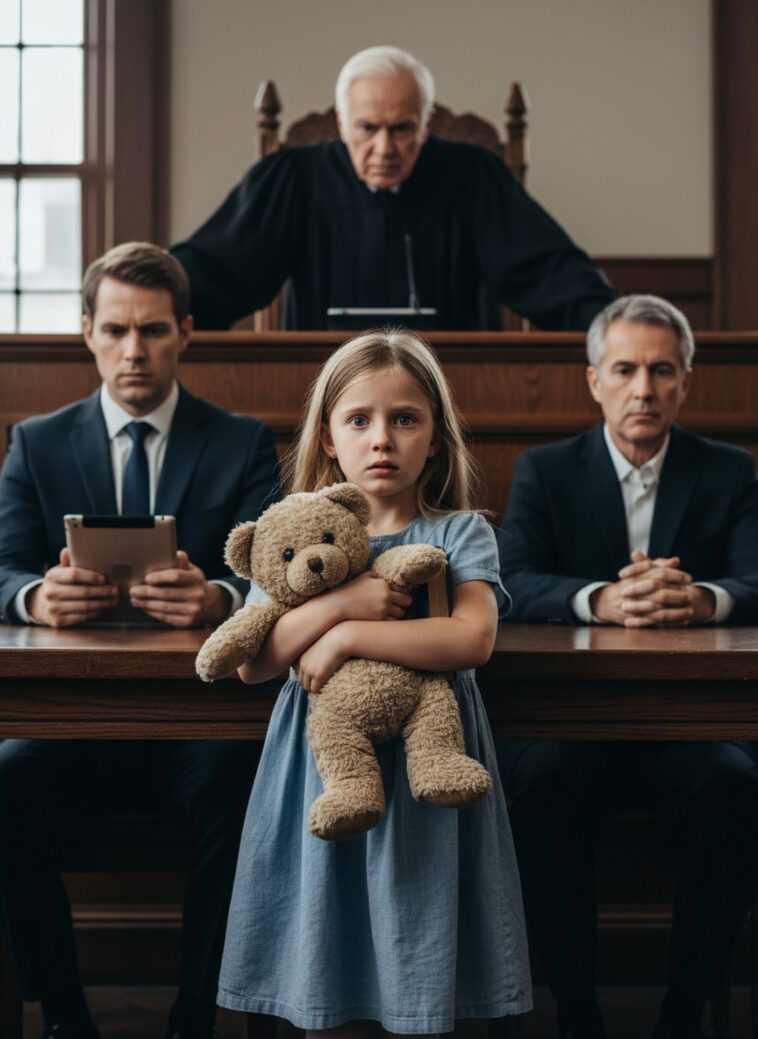
The Life That Looked Stable From the Outside
My name is Rachel Monroe. I was 34 years old when my marriage ended, not with shouting or dramatic scenes, but with quiet certainty that arrived far too late. From the outside, everything appeared stable. We lived in a modest suburban neighborhood outside Franklin, Tennessee. Tree-lined streets. Respectable schools. Neighbors who waved politely and minded their own business.
I worked as a school administrative coordinator. I handled schedules, student records, and endless paperwork. It wasn’t glamorous, but it was steady. It came with benefits, health coverage, and enough predictability to structure a life around a child. That mattered to me more than titles or recognition ever could.
My daughter Ava was eight years old then. She was my center. She had light brown curls that refused to stay neat, a habit of humming while she drew, and eyes that noticed details most adults overlooked. She paid attention when people thought she wasn’t listening. She remembered tone, not just words.
And then there was my husband, Thomas Monroe. For years, I believed he was dependable. Quiet. Responsible. The kind of man who didn’t draw attention to himself but showed up when needed.
What I didn’t realize was how long he had already emotionally checked out of our marriage.
The Envelope That Changed Everything
The divorce papers arrived on a Tuesday afternoon.
Ava was sitting at the kitchen table, carefully coloring a butterfly, concentrating so hard her tongue pressed lightly against her lip. I remember noticing how deliberate she was, how much effort she put into staying inside the lines.
Thomas didn’t wait for her to leave the room.
He placed the envelope on the table between my coffee mug and the mail. His movements were calm, almost rehearsed.
“Rachel, I’ve already filed,” he said flatly. “This marriage isn’t working.”
For a moment, the words didn’t make sense. They hovered in the air like a foreign language.
My hand tightened around the mug, and the coffee rippled.
“What?” was all I could say.
Ava looked up, sensing the shift immediately.
“Mom?” she asked softly. “Did I do something wrong?”
I forced a smile that didn’t belong on my face.
“No, sweetheart. Just keep coloring.”
But nothing was fine. Not anymore.
When He Walked Away Without Looking Back
Thomas moved out 48 hours later.
There were no arguments. No explanations. No real conversation with Ava.
He packed two suitcases, stood by the door, and avoided my eyes.
“I’ll call her,” he said vaguely.
He didn’t.
That night, I locked myself in the bathroom and cried into a towel so my daughter wouldn’t hear me. But she did anyway. Children always do. They hear what we try hardest to hide.
Later, she climbed into bed beside me, wrapping her small arms around my waist.
“Mommy,” she whispered, “Daddy isn’t mad at you. He’s just… wrong.”
I brushed her hair back gently.
“Why would you think that?”
She paused for a moment, then said quietly, “I just know.”
I thought she was trying to comfort me.
I didn’t understand she already knew more than I did.
A Custody Battle I Never Expected
The custody paperwork arrived shortly after.
Thomas wasn’t asking for shared custody.
He wanted primary custody.
His attorney claimed I was emotionally unstable. That my job wasn’t secure enough. That I was overwhelmed and unable to provide structure.
It felt surreal.
Thomas barely saw Ava anymore. He didn’t call. He didn’t ask about school projects or nightmares. He didn’t show up for parent meetings.
Why now?
My lawyer, Helen Brooks, had decades of family law experience. Calm. Direct. Strategic.
She looked at me over her glasses and said quietly, “Rachel, he’s building a narrative. Stay steady. There’s more happening here than you’re being told.”
When a Child Starts to Disappear
Ava changed during those weeks.
She stopped singing while brushing her teeth. She stopped dancing in the living room. Her drawings grew darker, quieter. Fewer colors. More empty space.
My child was shrinking inward.
And I didn’t know why.
I tried to compensate. More reassurance. More structure. More patience. But something had already lodged itself inside her.
The Morning of the Hearing
On the morning of the custody hearing, I dressed Ava in her favorite light-blue dress. She called it her cloud dress. She held her worn stuffed bear tightly as we drove to the courthouse.
Halfway there, she spoke without turning her head.
“Mom,” she said, staring out the window, “if the judge asks me something… can I tell the truth?”
My hands tightened on the steering wheel.
“Of course,” I said. “Why wouldn’t you?”
She nodded slowly.
“Okay.”
That was all she said.
But my stomach twisted.
Inside the Courtroom
The courtroom smelled like polished wood and old paper.
Thomas sat across from us at the petitioner’s table. Beside him sat Megan, a woman from his workplace. Well dressed. Confident. Sitting too close.
My chest tightened.
So that was it.
The judge, Honorable Samuel R. Collins, entered the room. He was in his late fifties, silver-haired, with a calm presence that seemed to steady the room.
The hearing began.
Thomas’s attorney described him as a devoted father seeking stability. I was portrayed as overwhelmed, emotionally fragile, and unsuitable for primary responsibility.
Every time my voice trembled, it was noted.
“Your Honor,” the attorney said smoothly, “Mr. Monroe is simply seeking what’s best for his daughter.”
That was when Ava stood up.
The Moment a Small Voice Changed Everything
“Excuse me,” she said.
The room stilled.
Judge Collins looked down at her kindly. “Yes, young lady?”
Ava swallowed, gripping her bear.
“May I show you something my mom doesn’t know about, Your Honor?”
My heart stopped.
I turned toward her, confused and suddenly afraid.
The judge leaned forward slightly.
“Is it important?”
She nodded. “Yes, sir.”
He glanced at the attorneys.
“Any objections?”
Thomas’s lawyer started to speak, but the judge raised his hand.
“She is the child at the center of this case. I will hear her.”
He looked back at Ava. “What would you like to show us?”
The Video That No One Prepared For
Ava reached into her backpack and pulled out a small tablet. The inexpensive one I had bought her for drawing.
She handed it to the clerk.
The screen lit up.
A video began to play.
The timestamp showed it had been recorded three weeks earlier.
First came sound.
A door slamming.
Then Thomas’s voice, sharp and angry.
“Stay in your room. I don’t want her hearing this.”
My breath caught.
Then my own voice, shaking.
“Please don’t leave tonight. Ava needs you.”
“She needs structure,” Thomas snapped. “Which she won’t get if you keep falling apart.”
Then Megan’s voice.
“Just finish it already. She’ll adjust.”
The camera shook.
Then Ava’s voice, barely audible.
“Daddy… why are you being mean to Mommy?”
Thomas turned toward the camera.
“Go to your room. Now.”
The video ended.
When Silence Becomes Evidence
No one spoke.
The silence was heavy, absolute.
Judge Collins removed his glasses slowly.
“Mr. Monroe,” he said evenly, “would you care to explain this?”
Thomas stammered.
“That was taken out of context. She was emotional. I was trying to—”
“Control?” the judge interrupted. “Dismiss? Intimidate?”
Megan stared at the table.
The judge turned to Ava.
“Why did you record this?”
She answered softly.
“I was scared he’d take me away. I wanted someone to know what really happened.”
Tears blurred my vision.
“Thank you,” the judge said gently. “You were very brave.”
The Ruling That Changed Our Lives
Judge Collins looked directly at Thomas.
“Based on this evidence, I am denying your request for primary custody.”
He paused.
“Custody will remain with Mrs. Monroe. Visitation will be supervised. Counseling is strongly recommended.”
Megan stood abruptly and left.
Thomas didn’t move.
After the Hearing
Outside the courtroom, I knelt in front of Ava.
“Why didn’t you tell me?” I asked quietly.
She wiped her eyes.
“You were already hurting. I didn’t want to make it worse.”
I hugged her tightly.
“You protected us,” I whispered.
She touched my cheek.
“You’re safe now, Mommy.”
Six Months Later
Life didn’t return to what it was.
It became something steadier.
Ava and I found our rhythm again. Pancakes on Saturdays. Quiet evenings. Therapy appointments covered by insurance that actually helped. Healing that didn’t rush itself.
One night, she said, “When I grow up, I want to be a judge.”
“Why?” I asked.
She smiled.
“Because he listened.”
And I understood something then.
Sometimes the bravest person in the room is the one small enough to be overlooked.