AnnaMaria
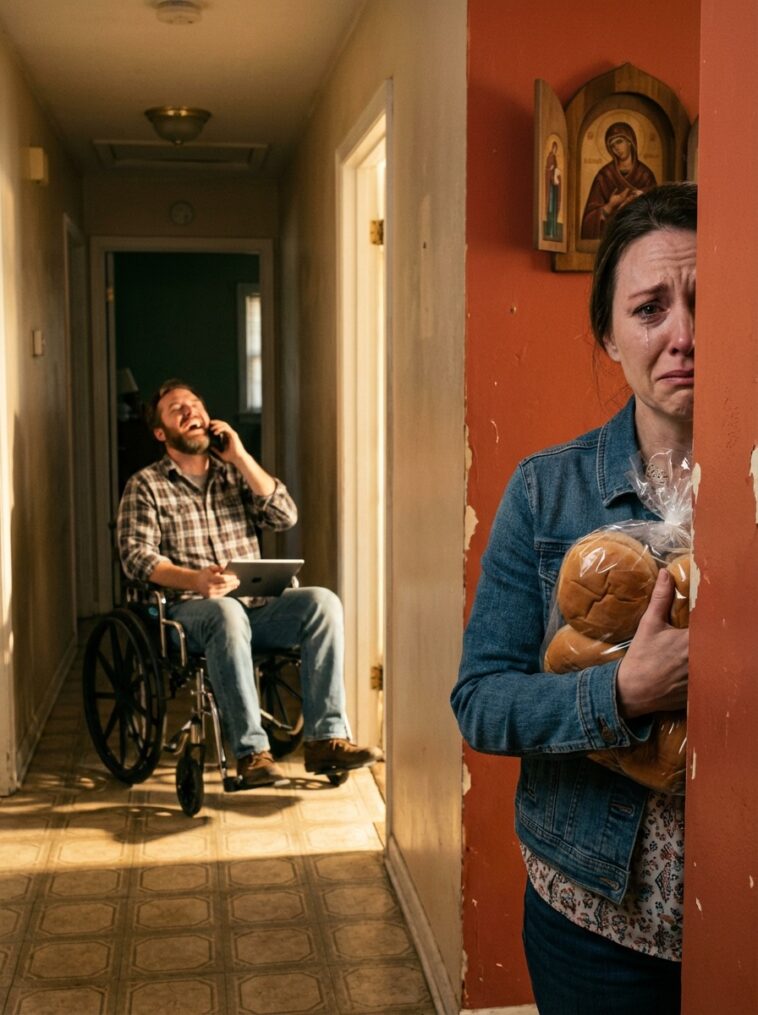
The Woman Who Didn’t Age—She Wore Down
Five years can be an eternity when every day smells like antiseptic, sweat, and surrender. Camila Reyes was only thirty years old, yet her hands looked decades older from lifting a wheelchair, turning a grown man in bed, measuring medications, managing appointments, and carrying a life that had quietly stopped being her own. Caregiving does that. It erodes time, posture, and identity at the same pace.
The accident had been sudden. A crash. Sirens. Hospital lights. Her husband, Ethan Reyes, survived—but the injury took his mobility. In the aftermath, Camila chose loyalty. She chose patience. She chose the vow everyone praises in theory: “for better or worse.” What she didn’t realize was that those words would slowly become a cage.
Her days revolved around insurance calls, physical therapy schedules, meal prep that fit medical guidelines, and nights broken into fragments by alarms and pain. She became his nurse, his cook, his cleaner, his scheduler, his emotional regulator. She became invisible.
The cruelty didn’t arrive loudly. It arrived in small dismissals, casual entitlement, and a growing certainty in Ethan’s voice that her presence was guaranteed. That certainty hardened into something uglier the day Camila heard the truth spoken aloud.
The Laugh That Ended Her Innocence
It was a Tuesday. She arrived at the hospital with Ethan’s favorite sweet bread, exhausted but still trying to be kind. As she crossed the courtyard, she heard his voice. It wasn’t weak. It wasn’t bitter. It was cheerful.
“Camila is a bargain,” Ethan laughed to another patient. “A full-time nurse, cook, maid—free. She’s got nowhere to go.” Then he added the sentence that killed the woman she had been: “She’s a useful idiot. I keep her hopeful so she stays. When I’m gone, my son gets it all.”
Camila didn’t cry. She didn’t confront him. She didn’t collapse. She dropped the bread into the nearest trash can and walked away with a steadiness that surprised even her. That moment didn’t turn her cold. It turned her clear.
The submissive woman didn’t scream. She died quietly. In her place, something patient and focused began to breathe.
The Mask He Thought She’d Keep Wearing
Camila returned later with red eyes and a calm face, offering a harmless lie about a flat tire. Ethan scolded her gently, performing helplessness with the confidence of a man who believed guilt was a leash. He had grown skilled at weaponizing disability, framing control as dependence and exploitation as necessity.
Back at the house in Coyoacán, his twenty-two-year-old son Tyler Reyes had turned the place into a landfill of pizza boxes, beer cans, and entitlement. Tyler spoke to Camila the way his father did, with the casual cruelty of someone who learned early that power meant never having to say thank you.
That night, after Ethan’s medications pulled him into sleep, Camila moved through the house like a shadow. She opened the study. A key hidden where only habit would find it. A drawer Ethan assumed she’d never touch.
Inside were receipts and statements that changed everything. A bank account with over seventy thousand dollars ($70,000) Ethan had claimed didn’t exist. A forty-five thousand dollar ($45,000) transfer to Tyler labeled “gift.” An insurance policy naming Tyler as the sole beneficiary, complete with a note about keeping Camila from “fighting” the house.
This wasn’t forgetfulness. It was planning.
Camila photographed every page, hands steady, heart cold. “You wanted a free servant,” she whispered into the dark. “Congratulations. You just hired your worst mistake.”
Leaving Without Announcing It
The next morning, Camila moved with precision. When Tyler barked at her to clean his mess and sneered, “If you hate it, the door’s right there,” something inside her finally unclenched.
“You’re right,” she said quietly, pleasantly.
Upstairs, she called her friend Nora and told her the truth in one shaking breath. She packed one bag with IDs, legal documents, essentials. Downstairs, Ethan demanded breakfast like always.
“Where are you going with that bag?” he snapped.
“Laundry,” Camila lied.
She walked out the front door and didn’t look back until she reached Nora’s small flower shop, where the weight of five years finally hit her and she collapsed into safe arms. This wasn’t abandonment. It was escape.
The Lawyer Who Spoke Like a Knife
Nora didn’t offer pity. She offered strategy and the number of her attorney, Vivian Carter. Vivian listened, reviewed the photos, and her expression sharpened into something precise and dangerous.
“This isn’t just a bad marriage,” Vivian said. “This is financial abuse. He used your unpaid caregiving as free labor, hid assets, and structured his estate to leave you with nothing. That has legal consequences.”
They filed for divorce and emergency motions to freeze accounts. The filings cited asset concealment, coercive control, and economic exploitation, terms that finally gave language to Camila’s lived reality.
Camila’s phone exploded with messages. Ethan’s rage. Tyler’s threats. Vivian didn’t let her respond.
“Do not reply,” she ordered. “Every message is evidence.”
Then Tyler took it public, posting online that Camila had “abandoned a disabled man.” The comments were brutal. Nora squeezed her hand and said, “Let them talk. Noise is what happens when control slips.”
When Money Stopped Working, So Did Their Love
The court granted the freeze within forty-eight hours. Ethan tried ordering expensive food deliveries. Declined. Tyler swiped his cards. Frozen.
They called Camila nonstop. She didn’t answer once.
Without money, the paid nurse quit. Tyler refused to do caregiving. Ethan sat in his own neglect, the reality exposed in real time. What he had called love was simply convenience with a budget line.
Camila joined a women’s support group and heard her story repeated in different accents. Different ages. Different houses. Same pattern. She realized something crucial: she hadn’t been foolish. She had been trained to endure.
The Frame-Up That Backfired
Ethan made one last attempt to control the narrative. He reported Camila for stealing a luxury watch and jewelry. Police arrived at Nora’s shop. Camila’s knees weakened until Vivian walked in, calm and prepared.
Vivian opened her laptop and turned the screen toward the prosecutor. A Marketplace listing from “TylerR_99” selling the exact watch days earlier.
The accusation collapsed instantly. False report. Attempted framing. Another mark added to the case.
The next day, Camila accepted a job at a small publishing company. For the first time in years, she had a title that wasn’t “caretaker.” She had benefits. A paycheck. A sense of direction. Work that required her mind, not her erasure.
The Day the “Free Servant” Sent an Invoice
At mediation, Ethan arrived pale and unkempt. Tyler was furious and cornered. Vivian spoke first, calm and clinical.
“My client will release a portion of the frozen funds only if the divorce and compensation agreement is signed today.”
Ethan tried guilt. “I gave you a roof…”
Camila met his eyes. Her voice didn’t shake. “You gave me a job you never paid for.”
He signed.
Camila received a substantial settlement, including a share of the home’s value and structured support recognizing years of unpaid medical caregiving. Tyler was ordered into repayment for the money he had taken.
The Door She Never Walked Back Through
Months later, a hospital emailed. Ethan had been admitted with a severe infection caused by neglect. Tyler wouldn’t answer calls. They asked Camila to come.
She stared at her clean apartment, her quiet mornings, her name on her own mailbox. Then she replied with one sentence: “I am legally divorced. Please contact his son.”
She didn’t go.
The old house was sold to cover debts and settlements. Camila invested with Nora and opened a small café-flower shop called Camila’s Garden, a place that smelled like sunlight instead of rubbing alcohol. She finished a book too. Not about revenge. About the moment a woman stops being a servant in her own life and chooses structure over sacrifice.
Because caregiving without consent is not love. Because financial clarity is protection. Because sometimes the most powerful revenge is a quiet life rebuilt on your own terms.