AnnaMaria
Aging Well Is Not What Most People Think
Many people assume they are aging well simply because they are not in constant pain or because they can still manage basic daily tasks. From a distance, everything appears fine. Medical checkups look acceptable. Blood tests fall within range. There are no alarming diagnoses.
But the true quality of aging is rarely revealed in a clinic.
It shows up in everyday moments that are easy to overlook. Standing up from a chair without effort. Walking confidently without fear of falling. Bending down instinctively without planning every movement. These simple actions quietly reflect how well the body, brain, and nervous system are working together.
Between the ages of 65 and 85, the difference between people who maintain independence and those who slowly lose it is not just genetics or luck. It comes down to a small group of functional physical and neurological abilities that signal whether the body still adapts, stabilizes, and protects itself.
What makes this especially important is that these abilities are often lost gradually and silently. The body compensates. The mind adapts. People change habits without realizing it. They use their hands more. They avoid certain movements. They sit longer. They stop challenging their balance.
By the time the decline is obvious, recovery becomes harder and more expensive, both physically and financially, especially when healthcare costs, insurance limitations, and long-term care planning enter the picture.
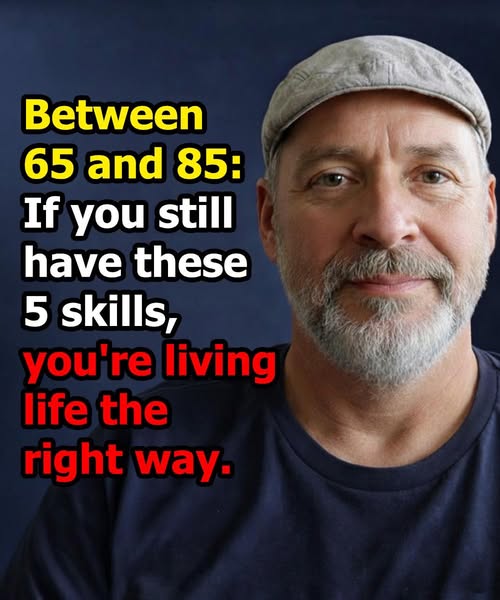
If you are between 65 and 85 and still retain the following five abilities, you are aging better than most people your age. More importantly, you still have a strong foundation for preserving independence, mobility, and quality of life.
Standing Up From a Chair Without Using Your Hands
This movement looks simple, almost insignificant. But from a medical and functional perspective, it is one of the clearest indicators of healthy aging.
Standing up from a chair without pushing off with your hands requires coordinated strength from the thighs, hips, core muscles, and stabilizing muscles around the knees and ankles. It also demands balance and proper neural signaling from the brain.
When people begin relying on their hands, armrests, or nearby furniture, it is often a sign that the large muscles of the lower body are weakening. Over time, unused muscles lose mass and power, a process known as age-related muscle loss, which plays a major role in falls, fractures, and loss of independence.
The problem is that the body adapts quickly. Once a person starts using their hands, the legs are challenged less, accelerating further decline. What begins as convenience slowly becomes necessity.
Preserving this ability means your legs can still support your full body weight. It means you are better prepared for climbing stairs, rising from low surfaces, and reacting quickly if you stumble. It also suggests that your metabolic health, joint integrity, and neuromuscular coordination are still functioning at a higher level than average for your age.
From a long-term health and insurance perspective, this single ability is strongly associated with lower risk of disability-related claims, fewer hospitalizations, and reduced need for assisted living.
Walking Backward Safely for Several Steps
Walking backward is not something most people practice. That is exactly why it is so revealing.
Unlike walking forward, which becomes automatic over a lifetime, walking backward demands conscious control. The brain must actively process spatial awareness, balance, coordination, and movement planning. The nervous system must respond quickly to subtle shifts in posture.
People who can walk backward smoothly for several steps tend to have better balance, faster reaction times, and stronger brain-body communication. Research consistently shows that this ability is linked to a lower risk of falls, which remain one of the leading causes of injury, hospitalization, and long-term disability in older adults.
Loss of backward walking ability often appears early, long before major balance problems are noticed. People unconsciously avoid it. They turn instead of stepping back. They reach for support. Over time, confidence shrinks.
Retaining this skill suggests not only physical stability but also preserved cognitive function. The brain is still capable of processing complex movement patterns, which is essential for driving safety, navigating crowded environments, and avoiding accidents at home.
From a health and legal planning standpoint, maintaining balance-related abilities can significantly delay the need for mobility aids, home modifications, or assisted care arrangements.
Bending Forward and Touching Your Toes Without Bending Your Knees
Flexibility is often dismissed as optional, something associated with athletes or younger people. In reality, flexibility is a key protective factor in aging.
Being able to bend forward and touch your toes without bending your knees reflects healthy mobility in the spine, hips, hamstrings, and connective tissues. It also indicates that joints are moving through their natural ranges without excessive stiffness or pain.
When flexibility declines, everyday tasks become harder. Putting on socks. Tying shoes. Picking something up from the floor. Getting in and out of a car. People begin compensating with awkward movements, increasing strain on the lower back and joints.
Chronic stiffness is not inevitable. It often develops after years of limited movement, prolonged sitting, and avoidance of stretching. Once lost, flexibility becomes harder to regain, and pain becomes more common.
Preserving this ability suggests that muscles and joints still retain elasticity. Movements require less effort. The risk of strains, disc issues, and balance disruptions decreases. People often experience fewer aches and better posture as well.
From a broader perspective, maintaining mobility can reduce long-term medical expenses, lower reliance on pain medications, and support active aging, which is increasingly important as healthcare systems and insurance models shift toward preventive care.
Standing on One Leg for 30 Seconds
Balance is one of the most critical components of independence in older age, and standing on one leg for 30 seconds is a powerful test of that system.
This ability requires strength in the legs and hips, coordination between muscles, stable vision, and a responsive nervous system. It also reflects how quickly the body can correct small shifts in position without conscious effort.
When balance begins to decline, people may not notice immediately. They widen their stance. They hold onto furniture. They avoid uneven surfaces. Over time, fear of falling sets in, leading to reduced activity and further physical decline.
Falls are not minor events. They are among the leading causes of fractures, head injuries, loss of independence, and even premature mortality in older adults. They also carry significant financial, insurance, and legal consequences, especially when long-term care becomes necessary.
The encouraging truth is that balance can be trained at almost any age. People who retain this ability show that their sensory systems, muscles, and reflexes are still working together effectively.
If you can stand on one leg for 30 seconds without gripping something, it is a strong sign that your body remains resilient and responsive, qualities that play a major role in aging safely and confidently.
Getting Up From the Floor Without Using Your Hands
This is one of the most comprehensive and overlooked indicators of functional health.
Getting up from the floor without using your hands requires strength, flexibility, balance, coordination, and problem-solving all at once. It reflects the body’s functional reserve, the capacity to handle unexpected situations.
This ability becomes especially important after a fall. People who can get up independently are far less likely to experience prolonged immobility, complications, or emergency interventions. Those who cannot often face longer recovery times, increased fear, and greater dependence on others.
Loss of this ability frequently marks a major turning point in physical autonomy. People begin avoiding the floor altogether. They hesitate to play with grandchildren. They limit activities without realizing it.
Retaining this skill indicates that the body still has options. It can adapt. It can recover. It can protect itself.
From a long-term planning perspective, maintaining functional reserve can delay or prevent the need for assisted living, home health services, and complex medical interventions that carry both emotional and financial costs.
Why These Abilities Matter More Than You Realize
Each of these abilities may seem minor on its own. Together, they form a powerful early warning system for aging.
When one ability begins to decline, others often follow. Loss of leg strength affects balance. Reduced flexibility impacts mobility. Poor balance increases fall risk. Over time, independence erodes quietly.
What makes this especially important is that none of these abilities disappear overnight. The body adapts, compensates, and hides decline until a critical threshold is crossed.
The good news is that the human body remains adaptable far longer than most people believe. With consistent, targeted movement, strength, balance, and coordination can be preserved and even improved well into advanced age.
Practical Ways to Preserve and Regain These Abilities
Assess yourself honestly once a month. Avoid assumptions and notice changes early. Practice functional movements daily, even if only for five minutes at a time. Focus on consistency rather than intensity. Small, regular challenges keep the nervous system engaged. Avoid excessive comfort. Always using supports accelerates decline. If you have medical conditions, injuries, or concerns, consult a qualified healthcare professional before starting new exercises.
Aging well does not mean avoiding aging. It means preserving autonomy, safety, and dignity for as long as possible. These abilities are not about performance. They are about freedom.
If you still have them, protect them. If you have lost some, know that it is rarely too late to begin rebuilding.