AnnaMaria
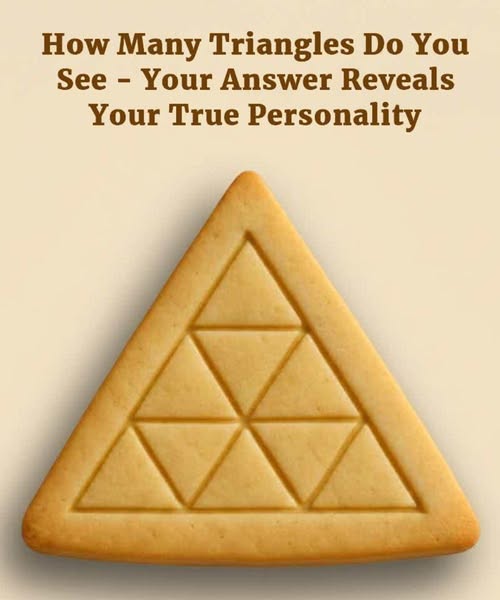
At first glance, the image looks simple: one large triangle, neatly divided into smaller ones. Clean lines. Symmetry. Nothing chaotic.
And yet—this puzzle has sparked endless arguments, comment wars, and countless “Wait… let me count again” moments across the internet.
So here’s the challenge:
How many triangles do you see?
Take a breath. Look closely. Count carefully before you move on.
Most people are convinced the answer is obvious.
That confidence usually lasts about ten seconds.
Why This Triangle Puzzle Is So Tricky
Our brains love shortcuts. When we recognize a familiar shape—like a triangle—we tend to lock onto the most obvious ones and move on. That’s efficient… but it’s also how we miss things.
This puzzle exploits that habit by layering triangles in subtle ways:
-
Small triangles inside larger ones
-
Triangles formed by combining smaller shapes
-
Inverted triangles hiding in negative space
-
Overlapping triangles your brain doesn’t immediately “group” together
Your eyes see everything.
Your brain filters most of it out.
That’s why people confidently land on very different answers.
-
Some see 9
-
Others insist it’s 13
-
A few keep counting and reach 18 or more
None of them feel unsure—until someone points out a triangle they missed.
What Your Answer Might Reveal (Just for Fun)
This isn’t psychology or science—just a playful reflection of how different minds approach the same visual problem. Still, the patterns are interesting.
If you saw a smaller number (around 6–9):
You’re a big-picture thinker. You spot the main structure quickly and don’t get bogged down in details. You value efficiency, trust your instincts, and prefer moving forward rather than double-checking everything.
If you saw a medium number (around 10–13):
You balance logic and creativity. You notice patterns others miss, but you also know when to stop. You’re methodical, patient, and good at breaking complex things into manageable pieces.
If you saw a high number (14 or more):
You’re detail-oriented and persistent. You don’t like leaving stones unturned and are willing to re-check your work. You might overanalyze at times—but you’re also the one who uncovers hidden solutions others overlook.
Again—this isn’t a label. Just a mirror you can smile at.
The Real Lesson Behind the Puzzle
The most fascinating moment isn’t when you finish counting.
It’s when someone casually says,
“Did you count this one?”
—and suddenly your certainty collapses.
That moment is the point.
This puzzle quietly reminds us that:
-
Different perspectives genuinely matter
-
Obvious answers aren’t always complete
-
Slowing down often reveals more than rushing
In life, just like in this image, what we see depends on how we look.
So… What’s the “Correct” Answer?
Here’s the honest truth:
There isn’t one universally agreed number.
It depends on what you count:
-
Only standalone triangles?
-
Triangles formed by combining smaller ones?
-
Inverted triangles?
-
Overlapping shapes created by shared lines?
Most accepted answers fall somewhere between 13 and 18, depending on the method.
And that ambiguity is exactly why this puzzle works so well.